Online Reporter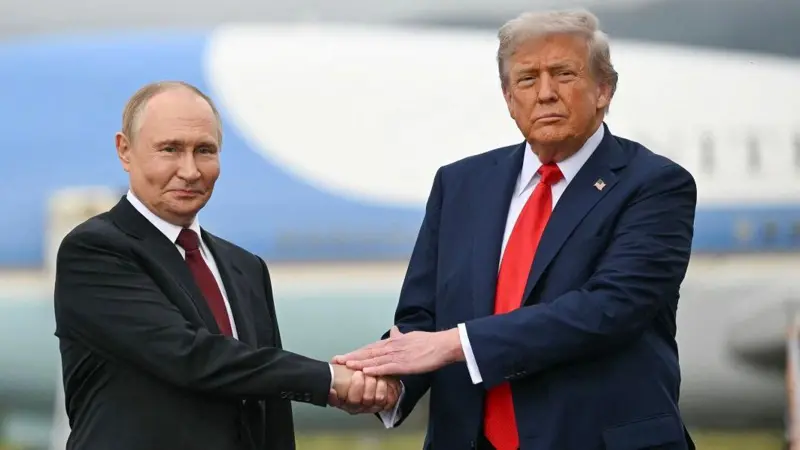
Tafadzwa Chinotimba
AUGUST 15, 2025, saw the United States President, Donald Trump and Russian President, Vladimir Putin meeting to discuss a possible ceasefire between Russia and Ukraine in the ongoing war, and revive diplomatic relations between the two super powers.
This was the first visit the Russian president made to the western country since its invasion of Ukraine in 2022, and was also the first meeting the two presidents had since Trump’s re-election in 2024.
The meeting was expected to last around seven hours, and was concluded in less than three hours without any formal agreement or ceasefire.
President Trump described the discussions as ‘extremely productive’, stating that many points were agreed upon and expressed hope about the prospect of a ceasefire.
However, he said ‘there is no agreement until it is finalised’, emphasising the complexity of the issues at hand.
The Russian president echoed a more measured tone, underscoring that Russia remained committed to ending the war, but only when the ‘root causes’ were addressed, and warned against any attempts by Ukraine or the European Union to undermine the peace process.
Although there was no achievement in this meeting, they ended it with an invitation from President Putin to President Trump for a future visit in Moscow. This left an opening for the possibility of continued dialogue.
The meeting may lay groundwork for future negotiations, but significant hurdles remain, especially regarding Ukrainian territorial integrity and the broader geopolitical conflict surrounding NATO and Western alliances.
When the United States president engages in discussions with the Russian president, the consequences reach well beyond just bilateral politics, as countries in Africa including Mali are observing with great interest.
There are diplomatic lessons that Africa and Mali in particular need to learn from this meeting.
As Mali is already altering its approach towards alliances with Russia and reassessing its ties with Western nations, the results of this high level diplomacy have the potential to transform regional security, economic influence and global alliances.
The meeting was choreographed as a high profile diplomatic spectacle rather than detailed negotiation.
There were symbolic gestures such as the red carpet that welcomed President Putin on the American land, the military flyover displays and carefully managed three on three format.
For President Putin, who faced years of western isolation, standing and shaking hands with the U.S. president on U.S. territory was a major symbolic victory, and it elevated President Putin’s international stature.
These performances are crucial in diplomacy because they shape global perceptions of legitimacy, influence and hierarchy among nation states.
This meeting also showcased that international diplomacy is, not only about substantive negotiations, but also about the projection of power, legitimacy and status.
Africa can learn the importance of carefully managing the optics and messaging of diplomatic engagements, recognising these symbolic gestures influence international perceptions and agendas significantly.
The United State’s diplomatic style heavily emphasised leader-to-leader diplomacy with a personalised and transactional approach, which sidelined institutional diplomatic channels.
This brings out both opportunities and risks of strong individual driven diplomacy, Mali and other African countries often navigating complex multilateral ties and diverse interests should balance personal diplomacy with robust institutional frameworks and multilateral cooperation to safeguard their interests sustainably.
Africa can balance between relations with Russia, at the same time relating with the United States of America by safeguarding its interests.
Russia has formed an alliance with Mali as its way of decolonisation, taking control of the nation politically and economically with the help of Russia.
Africa and Mali need to remember that the world is anarchic, faced with a choice: Russia will always safeguard its interests and Africa should do the same.
The United States of Africa is an Africa without borders and visas throughout, so this can be balanced when Russia is supporting this idea through helping the countries to stabilise economically.
Russia’s approach in Africa promotes itself as an anti-western partner opposing ‘imperialist’ dominance, which resonates with the decolonial rhetoric of resistance of western hegemony.
Mali can leverage this narrative to assert its autonomy and demand equitable partnerships that do not replicate colonial patterns of exploitation or dependency.
However, Mali must critically assess Russian engagement to avoid replacing one form of external influence with another, advocating for transparency, mutual benefit and respect for sovereignty.
Agenda 2063 is Africa’s long term blueprint for transformation into a global powerhouse, so Africa should implement it as a way to bolster its agency on the international scale.
Achieving its demands deepened integration, economic diversification, infrastructure development and social inclusion will boost Africa’s self-reliance and attractiveness as a partner in international diplomacy and trade, increasing its leverage on the global stage
Promoting justice and reparations is also a way to bolster Africa’s agency on the international scale like the 2025 African Union theme, ‘Justice for Africans and People of African Descent Through Reparations’.
This underlines the emphasis on addressing injustices and asserting Africa’s rightful place globally and also pushes for recognition, rights and agency in international forums, strengthening Africa’s moral and political voice.
They need to enhance multilateral and global cooperation by aligning with key multilateral institutions and forming partnerships that support Africa’s strategic interests while amplifying its influence.
The writer is a fourth year International Relations and Diplomacy student at Africa University