Chronicle Editor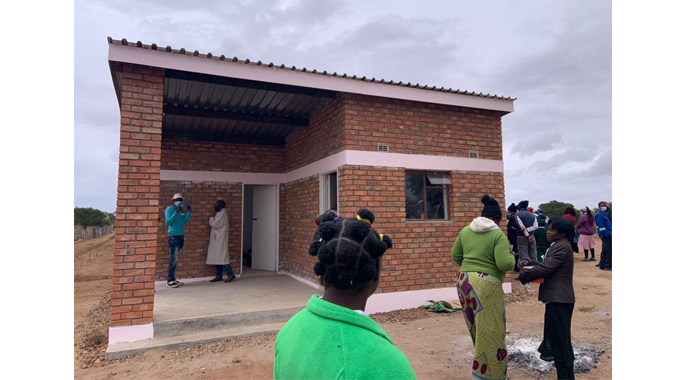
Yoliswa Dube-Moyo, Matabeleland South Bureau Chief
TSOELAPELE Balimi Garden in Matanangombe Village, Ward 16, Gwanda is proof that nutritional gardens in communities can not only become reliable sources of income but sources of nutritious diets as well.
The garden has an 80-strong membership, mostly comprising women, whose livelihoods are being sustained by proceeds generated from crop sales at the garden.
Members of the garden, which was established in 2019 through partnership with Practical Action, are also into poultry farming.
They say their lives have been transformed through the garden which has been an empowerment opportunity for them.
“As women, we pride ourselves in being able to take care of our families. Gone are the days when we used to sit and wait for the man of the house to provide. Now we have the chance to get up and work for the family,” said Ms Ruth Sibanda, one of the members.
She said using proceeds that come from selling produce from the garden, she can afford to send her children to school.
“I can now afford to buy my children clothes, pay school fees and make sure they’re well fed thanks to this garden,” said Ms Sibanda.
Tsoelapele Balimi Garden chairman Mr Timothy Nare said the garden had enabled members to provide for their families.
“We have two aspects to our project. On one end, we have cultivation of leafy vegetables, sorghum, tomatoes, butternut and other vegetables while on the other hand we have chickens. We also sell eggs that come from our layers,” said Mr Nare.
He said members were resolute in making sure the garden stays alive.
“We not only want to provide for our families but also uplift the whole community and ensure development around here,” said Mr Nare.
Another member, Mr Brian Moyo said Practical Action assisted with drilling of boreholes which has guaranteed a constant supply of water at the garden.
“Water is not a problem so we have no reason to fail. With commitment, we can ensure that there is always something in our garden and continue to provide for our families,” said Mr Moyo.
Communities in Matabeleland South Province have embraced the concept of nutritional gardens, which have not only become a reliable source of income for them, but also a source of nutrition.
Government and its various partners which include Non-Governmental Organisations and other institutions have facilitated the establishment of a number of nutritional gardens, mostly solar powered within communities in the province.
The gardens have assisted communities to access nutritious diets. They are also a source of livelihood for some households.
In the process, farmers have been equipped with enhanced farming and marketing skills which have become handy in managing their businesses.
Beneficiaries of these gardens have also been trained on fodder production for the purposes of growing stockfeed and agroforestry which encourages farmers to conduct their business in an environmentally friendly manner.
The Department of Agriculture and Livestock in the province is targeting to have at least one nutritional garden established in each ward to ensure food and nutrition security within households.
In a recent interview, Matabeleland South acting provincial agricultural director rural development services, Mr Mkhunjulelwa Ndlovu said communities had to shift from operating market gardens and focus on nutritional gardens.
He said farmers operating market gardens were only focusing on production of vegetables.
“The province has about 60 nutritional gardens that are productive. We want farmers to shift from operating gardens that only focus on production of leafy vegetables but also produce tubers, legumes and fruits in order to balance their diets,” said Mr Ndlovu.
He said the target was for each ward to have at least a one-hectare nutritional garden.
“This will help in terms of supplying communities with fresh farm produce at local level. This will also relieve villagers of the burden of travelling to towns for their farm produce.”
Mr Ndlovu said farmers that were operating nutritional gardens now appreciate the importance of nutrition hence were cultivating a number of crops.
These farmers, he said, are now producing tomatoes, butternut, onion, carrots, cucumbers, pepper, spinach, peas, green beans and water melons among other crops.
Mr Ndlovu said the collaborative work between Agritex and the Ministry of Health and Child Care through the nutrition department, has helped to disseminate information on nutrition.
Mr Ndlovu said where nutrition remains a challenge, they hold field days and cooking demonstrations to educate communities.
He said farmers were starting to realise that nutritious crops fetch more on the market and diversity creates a wide market for farmers which helps to improve their income.
“In order to bridge the gap and upscale nutrition levels within communities we have engaged partners to assist with resources where necessary. Government has said people should adopt a holistic approach to farming in order to derive maximum benefits.”
Mr Ndlovu said farmers should not only focus on crop production but also engage in poultry and fish farming among other projects.– @Yolisswa



 Online Reporter