admin
admin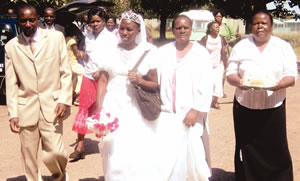
common misery, though for different reasons, after magistrates countrywide embarked on a strike to press for better salaries.
With the judicial officers dema-nding minimum salaries of between US$1 000 and US$3 300 depending on seniority, such everyday legal transactions as marriages and divorces were shelved as courts were not open for business.
Also not spared were those facing criminal charges whose trials and re-mand hearings did not proceed.
Magistrates earn between US$206 and US$300 monthly and are demand-ing a minimum salary of US$600 for trainees.
At the Harare Magistrates’ Courts along Rotten Row, several couples waited in vain for their unions to be legally recognised.
Anxious brides in wedding dresses, complete with retinues of bridesmaids and flower girls, were tearful while their grooms-to-be put on stoic faces when confronted by this setback after months of planning.
Miss Stella Makanda, who had gone to the Harare Magistrates Courts to wed her beau, Shacky, could not hide her frustration.
She said her dreams had been “shattered” as she had set aside yesterday as the day when she would get a marriage certificate after 22 years of customary union with the equally frustrated Shacky.
“I cannot believe this is happening to us . . . we were told magistrates are on strike and we should go back home and check with them for another date.
“Imagine, after hiring a wedding gown and inviting relatives and frie-nds from as far as Hwedza only to be turned away?”
She said food had been prepared for guests in Chitungwiza, but all this had now gone to waste.
Another couple sat haplessly under a tree and tried to take comfort from feasting on their “wedding” cake.
At the civil courts in Harare, a man who said he had been embroiled in di-vorce proceedings for the past few months said magistrates were not sensitive to their situation.
“It is the same as doctors going on strike. People suffer. Divorce is a pain-ful process you want over and done with as soon as possible so that every-one involved can move on.”
His estranged wife refused to comment.
Mr Michael Madondo, who had come for his son’s trial at Rotten Row, said: “I came in the morning from Mvurwi for my son’s trial, only to be informed that magistrates had downed their tools. I do not have relatives in Harare and this means I have to travel back to look for more money to enable me to return on another date,” he said.
Police detectives returned to their station with a truckload of marijuana that had been brought as evidence while the prison wardens shipped their wards back to remand prison without being attended to.
With justice delivery system grinding to a standstill, Zimbabwe Magistrates Association president Mr Douglas Chikwekwe told our Bulawayo Bureau that a meeting was scheduled for Harare today to resolve the impasse.
Last night the association’s secretary-general, Mr Munamato Mutevedzi, insisted the strike would continue until their grievances were addressed.
“We tabled our demands a long time back and nothing has been offered to us.
“With the disappointment we have, we are going to put down our tools until we reach consensus,” said Mr Mutevedzi.
Chief Magistrate Mrs Hlekani Mwayera said she could not comment and referred all questions to the Judicial Services Commission.
Representatives of the JSC said they could not comment at present but urged magistrates to “do the right thing for victims of crime and perpetrators too” and return to work.
When they first threatened to strike early this year, the officers proposed a salary of US$1 000 for junior magistrates, US$ 1500 for seniors, US$2 000 for senior provincial magistrates, and US$2 500 for regional magistrates.
Senior regional magistrates and deputy chief magistrates want US$3 000 while the chief magistrate’s salary should be US$3 300.
Court interpreters earn between US$147 and US$163 while a clerk of court earns around US$156.
There were no magistrate court sittings at Bulawayo’s at Tredgold Building and Western Commonage.
For suspects already in custody, prison officers were entering possible next remand dates on the warrant of detention forms.
Police found themselves in a catch-22 situation as suspects they were bringing to court for the first time were being referred back to holding cells.
Holding cells are not meant to house suspects for more than 48 hours as they do not have the requisite facilities.
Magistrates association president Mr Chikwekwe said their employer had invited them for a meeting in Harare today.
“We have been patient for long but now they have overstretched us and there is no going back until they meet our demands,” he said.
The acting deputy Secretary of the Judicial Services Commission, Mr Rex Shana, said they were yet to receive a formal notice about the strike.
“We just read in the press on Saturday that magistrates would tomorrow go on a nationwide strike.
“The Chief Magistrate’s Office has been tasked with finding out what their position is,” said Mr Shana.
Mr Chikwekwe countered saying: “We held a meeting with the employer and the provincial heads last Friday and we made our position clear.
“They have all along been aware that we are demanding an improvement in our remuneration and other conditions of service.”
The situation was the same in Mutare.
A woman, whose daughter is a rape complainant, said she was likely to miss the next sitting because she had to borrow money for bus fare.
“I am always borrowing money for bus fare to bring my daughter who was raped. It is now confusing because I was not even given the next trial date.”
A prosecutor who declined to be named said the magistrates’ strike was a blessing in disguise to them as they were also pressing for a pay rise.
“We are happy that magistrates are on strike. We also want an increment and the magistrates’ strike should be a wake up call to our employer,” said the prosecutor.
At Beitbridge magistrate courts, prosecutors proceeded with most matters by way of summons.
Beitbridge area prosecutor Mr Muchiwande Sithole said the situation had brought a lot of pressure to their office.
In Masvingo, only a few magistrates turned up for work but sat in their offices.
Masvingo lawyer Mr Charles Ndlovu said the strike had made their work difficult.
“The problems can only get worse for us, we had a very high backlog of cases to handle at the courts and the strike action will make it even more difficult for us because we are not even sure when they will come back to work,” said Mr Ndlovu.


 Online Reporter