Online Reporter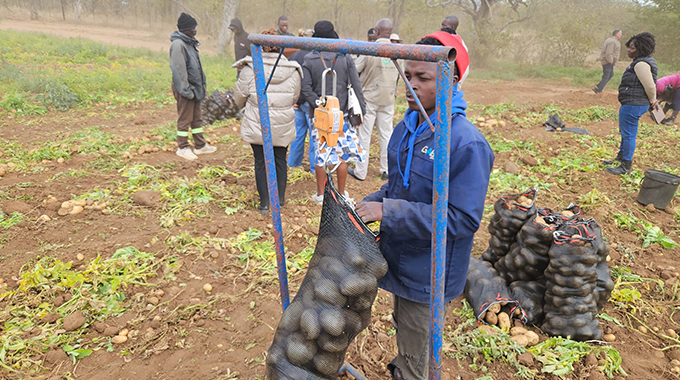
Theseus Shambare, Features Writer
THE sun in Silalatshani does not just shine — it scorches.
“The ground used to break open,” recalled Mr Absalom Tshuma, his weathered hands tracing deep cracks in the air.
“We planted maize, but the stalks would dry before they even formed cobs.”
For decades, farmers in this part of Insiza District, Matabeleland South Province — classified as Natural Region 5 — relied on small grains like sorghum and millet, hardy enough to survive the heat.
It was a resilience that initially led some to underestimate the Silalatshani Irrigation Scheme when it was first built.
“We thought we didn’t need it,” Mr Tshuma admitted.
“Small grains always gave us something.”
But climate change has rewritten the rules.
Rising temperatures and prolonged dry spells are now undermining even the toughest crops.
In the 2023/2024 El Niño season, the first rains came only on 26 December — and then stopped.
“That was that,” Mr Tshuma said, shaking his head.
“We lost everything.”
A lifeline restored
The Silalatshani Irrigation Scheme, drawing water from Silalabuhwa Dam, became a vital lifeline between survival and hunger.
At its peak, it covered 468 hectares.
By 2016, neglect and broken infrastructure had reduced production to a fraction of that.
Revival came in November 2017 through the Government’s Smallholder Irrigation Revitalisation Programme (SIRP).
New pumps were installed, canals cleared and farmers trained.
Slowly, the desert began to turn green again.
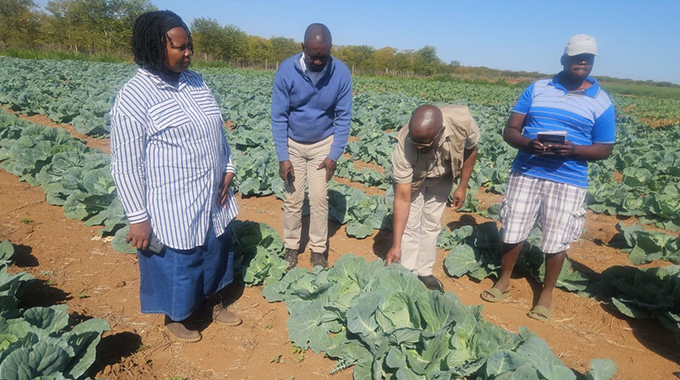
Today, 250 hectares of sugar beans and 100 hectares of green mealies sway in the breeze, destined for markets in Filabusi, Gwanda and Bulawayo.
“Without this water, we would be counting our losses, not our harvests,” Mr Tshuma reflected.
The bigger climate picture
Silalatshani’s revival mirrors the broader climate challenge in Matabeleland South Province.
According to FAO-backed ZimVAC assessments, 20 percent of households in the province faced food insecurity during the 2010/11 lean season.
In Beitbridge, that figure soared to 60 percent.
Climate expert with the University of Zimbabwe, Dr Walter Svinurai warns the threat is worsening.
“Since the 1950s, mean annual temperatures here have risen by nearly 2°C. Projections suggest water runoff in the Runde-Umzingwane catchment could decline by 50 percent by 2075.
“In Region 5, irrigation is not just a technology — it is the only way to survive.”
Fields of change
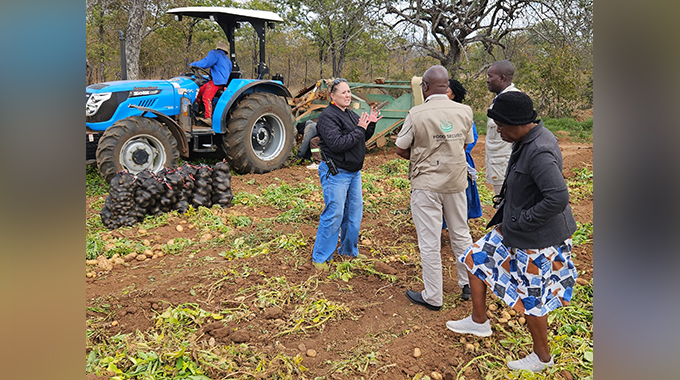
At Makhado Ranch in Gwanda, Acting Chief Director for Agricultural Rural Development Advisory Services, Mr Leonard Munamati, recently toured flourishing potato fields.
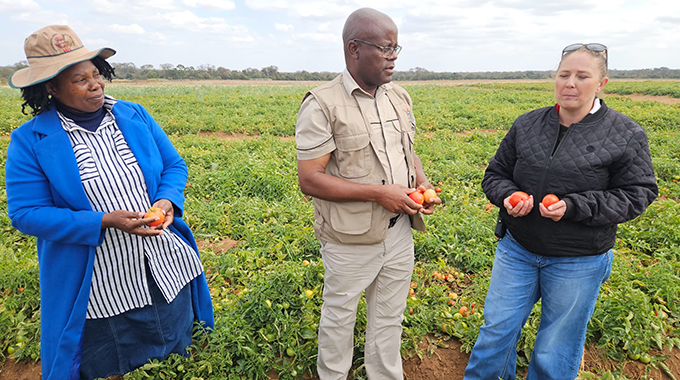
“We are seeing yields of 65 tonnes per hectare here,” he said.
“Our target this winter is 8 750 hectares of potatoes nationwide and Makhado is a key contributor. The produce is feeding Bulawayo, Beitbridge and local processors.”
Zimbabwe is now self-sufficient in potatoes.
“We stopped importing because our farmers can meet demand,” Mr Munamati said.
Farm owner Ms Jelani Watson said the change is tangible. “Before irrigation, people waited for the sky to decide their fate. Now, we make our own rain.”
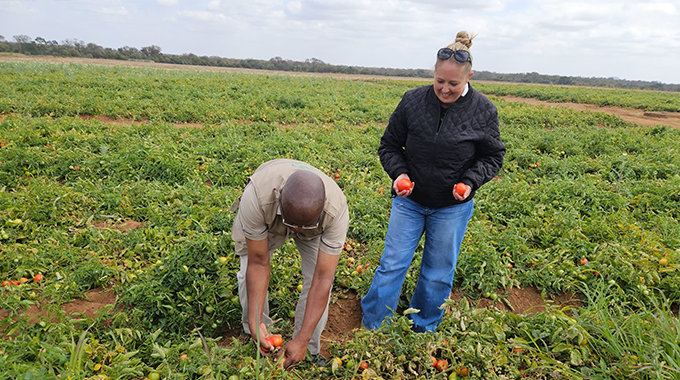
In Beitbridge, Topic Investments showcased 200 hectares of irrigated wheat approaching maturity.
Farm manager Mr Tendai Mupfumi said: “Without irrigation, wheat in this heat would be impossible. Now, we can plan and produce with confidence.”
Beyond food: Social change
The benefits reach far beyond harvests.
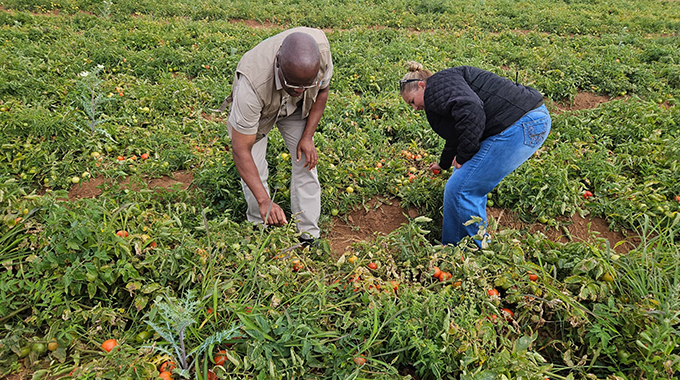
Economic security from irrigation is helping reduce child marriages in the region.
Unicef’s A Year of Progress for Every Child in Zimbabwe (2025) notes that 21,2 percent of girls aged 15 to 18 are married before 18.
The 2019 Mics survey found 43,7 percent of rural women aged 20 to 24 had married before 18, compared to 21,3 percent in urban areas.
In Beitbridge alone, 31 248 teenage marriages and 5 700 teenage pregnancies were recorded in 2024.
Community worker Ms Ruth Dube, sees a link.
“When there is no income, families marry off girls as a survival strategy. But when farming pays, parents keep children in school. Agriculture can protect our girls,” she said.
Partnerships for growth
The private sector is taking note.
Mrs Wendy Madzura, Head of Agronomy and Extension at SeedCo Zimbabwe, said: “We are looking for functional irrigation schemes, especially those revamped to contract for seed production. Success requires water security, market access and farmer training.”
Such collaborations are helping ensure that irrigation’s revival is sustainable — with secure markets and technical support for farmers.
A national vision
The Government is scaling up efforts.
Lands, Agriculture, Fisheries, Water and Rural Development Permanent Secretary Professor Obert Jiri said the vision is to grow irrigated land from 219 000 hectares in 2023 to 350 000 hectares by 2025 and 500 000 hectares by 2030.
“This will not only strengthen food security but create rural jobs and reduce poverty-driven child marriage,” Prof Jiri said.
For farmers like Mr Tshuma, the transformation is clear.
Where the land once cracked under the sun, now potatoes, wheat and green mealies grow.
Where young men once left in search of work, now they plant.
Where girls were once married off too soon, now they stay in school.
As the canals of Silalatshani and the pivots of Gwanda and Beitbridge turn, they carry not just water — but the promise of a future in Zimbabwe’s deep south.