Chronicle Editor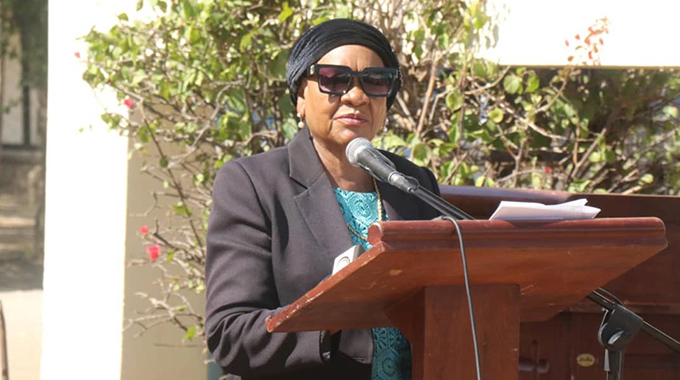
Sukulwenkosi Dube-Matutu, [email protected]
UMZINGWANE Rural District Council (RDC) has taken a significant step towards improving its road network by acquiring a motorised grader, funded through the devolution programme.
The new equipment is expected to enhance the local authority’s ability to maintain its roads, which had been suffering due to reliance on an outdated grader.
The acquisition of the grader, valued at US$382 000, marks a crucial development for the council, which has been grappling with high maintenance costs and operational challenges due to the ageing equipment.
Umzingwane RDC chief executive officer, Mrs Nzangane Sithembiso Sibanda expressed gratitude to the Government’s devolution initiative for enabling the purchase.
Devolution funds are assisting local authorities to fulfil their obligation of ensuring improved access to social amenities across the country through the development of key infrastructure such as clinics, classroom blocks, roads and bridges, among other facilities.
“As a local authority, our core mandate is service delivery and this motorised grader will help us to fulfil our mandate. This will ensure that we significantly contribute towards the realisation of Vision 2030,” she said.
“We have been facing challenges in maintaining the road network using an old grader, which had developed challenges. We bought this grader using devolution funds and we would like to thank the Second Republic for the devolution programme, which has helped to carry out our duties.’

Local authorities have also managed to purchase earth-moving equipment and machinery using devolution funds to improve service delivery.
Upgrading infrastructure is in line with the National Development Strategy One (NDS1), a national five-year economic management masterplan, running from 2021 to 2025.
Under NDS1, the Government is focusing on building, expanding and restoring key enabler infrastructure such as roads and energy.
Infrastructure development is expected to play a key role in ensuring the country attains the status of an upper-middle-income economy by 2030.
Mrs Sibanda said some of their roads are now trafficable after acquiring the grader.
She said the devolution funds have also enabled the council to buy a drilling rig, tractor, service vehicle, dumper, among other equipment.

Speaking recently while commissioning the motorised grader in Umzingwane District, Matabeleland South Provincial Affairs and Devolution Minster, Dr Evelyn Ndlovu emphasised the importance for local authorities to invest in earth moving equipment in response to the Call to Action — No compromise to service delivery.
She said improved roads have a significant impact on the development of communities.
“I would like to commend Umzingwane RDC for purchasing a motorised grader. I’m reliably informed that the grader was bought using devolution funds. This intervention came at a critical time as most of our roads in the district and the country at large are no longer traffic-able,” said Dr Ndlovu.
“The local authority then resolved to procure a new motorised grader to enable its road maintenance as the old one constantly broke down resulting in high maintenance costs. Maintenance of roads and improvement of road trafficability is one of the essential efforts towards the realisation of Vision 2030.”
The devolution programme has been a game-changer for many districts, providing the resources needed for key infrastructure development in line with the National Development Strategy One (NDS1). This initiative is central to the Government’s aim of transforming Zimbabwe into an upper-middle-income economy by 2030, while also aligning with global goals such as the Sustainable Development Goals (SDGs) and Africa Agenda 2063.
Devolution funds have empowered local authorities across the country to deliver improved services by building critical infrastructure like roads, clinics and schools, ensuring no one and no place is left behind. — @DubeMatutu


 Online Reporter