Chronicle Editor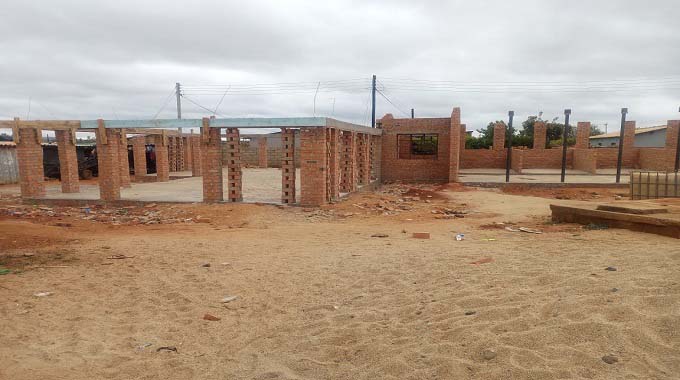
Sifelani Tsiko, Agric, Environment & Innovations Editor
Construction of a US$90 000 safe women’s market to help end violence against women and girls in Esigodini in Umzingwane rural district is nearing completion.
The safe market under construction at Habane Extension is intended to address issues of gender-based violence in public spaces.
It is part of the UN Women flagship programme on safe cities and safe public spaces which was being implemented in partnership with Katswe Sisterhood and the Ministry of Women Affairs, Community, Small and Medium Enterprises Development under the European Union – funded Spotlight Initiative.
Marvellous Mukoswa, a women’s affairs ministry business development officer said that the safe market would ensure that women and girls are safe and participate actively in the local economy.
“This open safe market is going to be an important facility for our vendors here. It will provide our vendors, mostly women, with a safe space and a good operating environment,” he said.
“We hope to accommodate about 40 vendors including seven kitchens. With such a structure, the vendors become better organised and we are able to provide them with training. It becomes easy for us to have clear structures for communication that can also help enhance their access to financiers and other investors.”
The new facility has seven kitchens, a locker room, a verandah, a common eating place, a play centre and a storeroom to safeguard the vendors products and wares.
Sexual harassment and other forms of violence in public spaces is a daily reality for women and girls in Zimbabwe and most parts of the world.
It often happens on the streets, in public transport, in and around schools or workplaces, public toilets, water and food distribution sites and parks.
“We face sexual and physical abuse from drunk artisanal miners here in Umzingwane,” said Winnie Ncube (38), a vendor at Habane Extension market.
“This market is important for us. We will be safe here. Magweja (artisanal miners) are a violent lot and often destroy our vending stalls made up of plastic and some roofing sheets. This is going to be a secure market for us, fenced and with proper cubicles for us.”
Their clothes, wares and other products they sell are often exposed to rain, wind, heat and dust.
“We always exposed to dust, wind, rain and heat in our plastic stalls. Dust and rain affects the clothes and other wares we sell here and most of the time we make losses as we are forced to reduce prices for damaged products,” Ncube said.
Chipo Samanyanga (35) another beneficiary said a safe market will help protect them and restore dignity to the women who toil daily in the vending business.
“This new market is good for us. It is going to improve business for us and help us to raise money to pay fees for our children and take care of orphans,” she said.
“Before the construction, whenever a fight broke out at a nearby bar, artisanal miners would tear down our stalls and destroy our wares. With a fenced market, renovated public toilets and secure stalls, things will change for the better.”
Sicelisile Khanye, a beneficiary from Habane Extension said better structures will attract good business for them.
“People at times mess up our stalls during the night. They urinate on our stalls. With good structures we will attract more business. We hope there will be water and good toilets for us.”
“These structures will help prevent the harassment of women by violent artisanal miners. We have a locker room and the place will be fenced. This will help secure our clothes and our wares,” said David Gotosa (39), a vendor.
“Toilets will also be important for public hygiene.”
The UN Women project on safe cities and safe public spaces is also being piloted in Epworth and in Chipinge district.
Abuse of women in public spaces limits their access to essential services, enjoyment of cultural and recreational activities, and negatively impacts their health and well-being.
UN Women has been working with various local NGOs and community based organisations under the Spotlight Initiative supported through a partnership between the European Union and the United Nations to end violence against women and girls and harmful practices.
Zimbabwe is among the 20 countries in Africa, Latin America, Asia-Pacific and the Caribbean which have benefited from the four-year programme supported by the EU to the tune of US$30 million.



 Online Reporter