admin
admin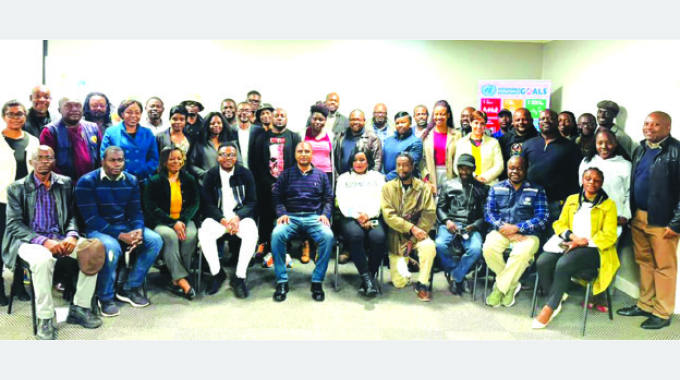
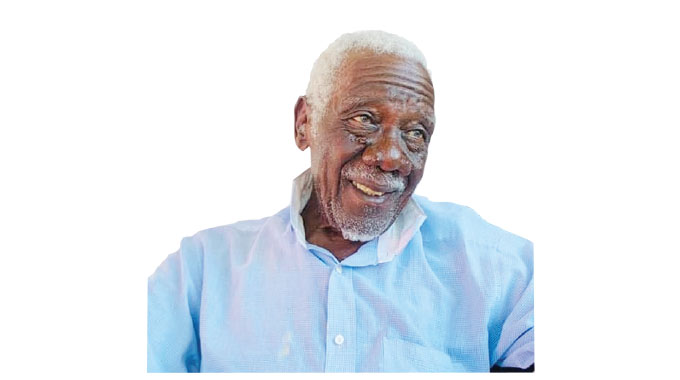
Edward Kallon-UN Resident and Humanitarian coordinator for Zimbabwe
It is a great pleasure to join representatives of most of the media industry, journalists, and independent media practitioners in Zimbabwe here in Mutare.
I would like to thank you all for taking time to come here and share your experiences on how best we could forge alliance in Zimbabwe to advance the 2030 Agenda for Sustainable Development and achieve the 17 goals.
I would like also to commend the Ministry of Information for its commitment to ensuring that the media plays its rightful role in the country’s development and social transformation.
The United Nations Development System in Zimbabwe supports the existence of a strong media that provides accurate, timely and objective reporting on development, recovery, and humanitarian issues.
Equally important, the media with specific reference to the collective entity of newsprint, electronic and web-based, plays a very important role in national development, which involves advancement in political, economic, social, and cultural rights and the well-being of people.
Every medium has a message; it has a target audience; it aims at influencing change, attitudes, perceptions, and decision making; and it generally influences behaviour.
As such, the United Nations is cognisant that the media represents the tool for shaping public opinion in the promotion of common good: inclusive and sustainable development, democracy, good governance and human rights, and facilitates nation-building and the advancement high quality of life.
In addition, over the years, media freedom has enabled the emergence of new ways to communicate, to share information and knowledge, and for people to widen their sense of participation, identity and belonging.
Zimbabweans today enjoy access to numerous channels of information, including newsprint, electronic media such as television, radio including community radios as well as web-based media such as the internet and mobile telephony. These channels, if utilised and valued responsibly, usher immense opportunities for the development of Zimbabwe.
The UN Development System in Zimbabwe appreciates the critical role of media in addressing public health crisis such as the Covid-19 pandemic, climate crisis like Cyclone Idai that wreaked havoc in this province three years ago, and in advancing national development within the 2030 Agenda for Sustainable Development.
The UN strongly affiliates with and appreciates the role of media in transforming society. Seventy-five years ago, in 1948, the UN General Assembly gave the right to information an international legal status enshrined under Article 19 of the Universal Declaration of Human Rights.
The Article states that the fundamental right of freedom of expression encompasses the freedom “to seek, receive and impart information and ideas through any media and regardless of frontiers”.
The UN supports Zimbabwe’s national development priorities and the achievement of the 17 SDGs.
The SDGs aim to end poverty, hunger, and boost shared prosperity in a sustainable manner. To achieve these goals and their 169 targets, a multi-stakeholder partnership including with the media is a must.
Allow me to share with you some examples of the UN in Zimbabwe’s engagement in the country:
The UN in support of Zimbabwe’s efforts towards attaining Agenda 2030 and the 17 Sustainable Development Goals by 2030, delivered USD 523 million in a form of various development and recovery projects in 2021. In this regard, the UN system supported food security; gender equality; water, hygiene, and sanitation; education; economic empowerment; community resilience and targeted relief assistance to those most in need amongst others.
In 2021, the UN facilitated through technical and financial support, the launch of the national policy on inclusion of persons with disability; established national mechanisms for the prevention of gender-based violence through the High-Level Political Compact; and the national policy on social protection, to provide coordinated support to vulnerable communities and those affected by Covid-19.
The UN facilitated a nationwide food systems dialogue and continued to implement sustainable resilience building projects, which made a significant contribution to the Food and Nutrition Security outcomes, i.e., equipping communities to adapt to climate change and build resilience for household food and nutrition security.
The UN in Zimbabwe implemented arguably the largest resilience programme in Zimbabwe, covering 18 districts and executed through seven (7) consortia. The programme strengthened the capacities of vulnerable communities to proactively make decisions in responding to severe economic, environmental, climatic, and social shocks and stresses.
Through the Socio-Economic Framework, the UN development system adopted a crisis modifier to address challenges caused by Covid-19. This entailed reprogramming and repurposing to deliver integrated support towards response and recovery. In addition, the UN collaborated with the Government of Zimbabwe, to strengthen key value chains, including value addition and enterprise development in small-scale gold mining and agriculture, targeting women and youth, as well as green skills development.
The UN supported Independent Commissions established under Chapter 12 of the Zimbabwean Constitution, to effectively discharge their mandates. The Commissions are essential in entrenching rule of law, accountability, democracy, human rights, gender equality, peace and reconciliation and social cohesion, which elements, are critical for achieving the SDGs.
During the year under review, the Government of Zimbabwe, and the United Nations system in the country, launched the Zimbabwe United Nations Sustainable Development Cooperation Framework (ZUNSDCF) 2022-2026 following extensive consultations with strategic development partners. The Cooperation Framework begun implementation beginning of this year, and I understand you have been updated on the focus areas and status of implementation this morning.
All these were made possible with the generous financial and technical support of development partners, among top ten include: the US, Global Fund, EU, UK, Germany, Japan, Sweden, Netherlands, Australia and Canada.
Allow me to share a few perspectives on why and how the media can engage on topical issues such as the Covid-19, Climate Action, national and international development frameworks such as the SDGs.
First: Media and journalists have been on the front lines not only in the fight against Covid-19 through sharing facts and dispelling myths, but also in the ongoing effort to recovering better from the effects of the pandemic.
Accurate and timely reporting is one of the best tools that we have at our disposal to stop the Covid-19 pandemic and infodemic. The Covid-19 pandemic has exposed how critical access to accurate and reliable information is for citizens to make informed decisions.
To contain the spread of Covid-19 and tackle misinformation, the UN and partners have been working with media to boost your role in reporting accurately on the coronavirus, prevention measures, and vaccine safety and efficacy.
Second: tackling climate change. There are now high levels of awareness of climate change. However, there remains misinformation about what actions are necessary.
Media plays critical role in engaging the public and shift negative or neutral attitudes towards appreciation of the dire climate crisis and the urgency for action.
In this regard, the UN will continue to work with media through providing timely and well researched climate adaptation publications.
Third: Media and journalists can contribute greatly to the attainment of national development and the SDGs by building public awareness, setting the agenda, and engaging Government, Parliament, the Judiciary, and other stakeholders including communities and individuals at grassroots level. Media as an important source of information and analysis helps shape citizens’ views, commitment, and their role on national development.
Fourth: media has responsibility to be the voice of the voiceless, vulnerable members of the society — children particularly girls, persons with disabilities, women, senior citizens, the poor and marginalised. Their stories can make an impact across the spectrum from modifying an individual’s own behaviour to generating popular support and action.
In this regard, media can play critical role through accurate and reliable information to inspire people to be part of solutions to national development challenges: advocating for quality education, universal healthcare, gender equality and to achieve the sustainable development goals in which no one is left behind.
The media should therefore maintain and strengthen public dialogue to empower people with information particularly in the rural areas. The media plays a big role by increasing awareness and engagement, by helping citizens to ask the right questions and to look for answers; it opens those democratic spaces for a more people-centred economic growth and development.
Finally, I would like to reiterate that the UN highly values the strong partnership with the media in advancing the agenda 2030 for Sustainable Development and its 17 goals and in our effort to support the Government and people of Zimbabwe achieve these goals and their aspirations for a strong and resilient Zimbabwe.
In this regard, for the media to succeed in its role, it must be and remain professional and objective.
Factors such as media bias, sensationalism and distortions negatively affect the contribution of media to national development. Freedom of the media must therefore go along with responsibility.
I trust that this workshop and subsequent field visits to UN supported development and recovery programmes will contribute to inspiring your audience to do great things in positively impacting the lives of all Zimbabweans.
Edward Kallon is the UN Resident and Humanitarian Coordinator for Zimbabwe. He made these remarks during a UN-Media Workshop on Development Reporting recently in Mutare.


 Online Reporter