Online Reporter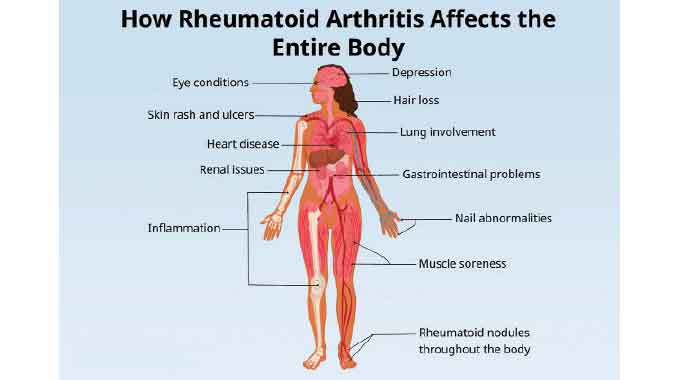
Rumbidzayi Zinyuke-Health Buzz
It might start subtly, perhaps when the fingers feel unusually stiff after waking up, or when they wince while gripping a cup of tea long after the morning chill has passed.
Most might brush it off as fatigue, aging, or “just one of those things” that comes with time.
But for millions of people around the world, and many right here in Zimbabwe, that persistent pain and swelling in the joints isn’t ordinary.
It could be rheumatoid arthritis (RA), a chronic autoimmune condition that affects not just the joints but the whole person’s well-being.
Rheumatoid arthritis is far more than just aching joints. At its core, RA is an autoimmune disease, a condition in which the body’s immune system mistakenly targets its own tissues, especially the lining of joints. Unlike the wear-and-tear damage seen in osteoarthritis, RA causes inflammation that can erode cartilage and bone, deform joints, and intrude into daily life.
The hands, wrists, feet and knees are common sites of early symptoms, making seemingly simple tasks like buttoning a shirt, walking to work or pinching a toothpaste tube feel laborious and painful.
Globally, RA is a significant public health concern. In 2019, the World Health Organisation estimated that about 18 million people worldwide were living with rheumatoid arthritis, with roughly 70 percent of them being women and more than half over the age of 55.
Untreated or poorly managed, RA can progress to moderate or severe disease in millions, leading to disability that affects not just physical mobility but mental wellbeing and livelihood.
Epidemiological studies suggest that RA affects about 0.24 percent to 1 percent of the world’s population, with variation across regions due to genetic, environmental and social factors.
In parts of Africa, reported prevalence varies from as low as 0.06 percent to as high as 3.4 percent in certain population groups, but most studies point toward figures near or below the global average. Urban populations and women generally show higher rates than rural areas and men, patterns that mirror global trends.
Locally, data on RA in Zimbabwe is limited, partly because many cases go undiagnosed. However, the available clinical evidence shows that RA is a common and impactful rheumatic disease in referral hospitals and clinics.
The condition has emerged in some studies as the most frequent rheumatic disorder among those seeking care, often presenting with aggressive features such as joint erosion and extra-articular complications.
Despite these findings, there remains a lack of comprehensive statistics on RA in Zimbabwe, a gap that can obscure both the true burden of the disease and the urgency of response.
What is clear, however, is that RA’s toll transcends physical discomfort. It can diminish income-earning capacity, strain families, and contribute to social isolation, especially without timely intervention.
Understanding RA’s root causes is complex because, as with many autoimmune diseases, a single trigger has yet to be identified. Genetics plays a role, certain inherited traits can increase susceptibility.
Environmental factors, especially cigarette smoking, have been linked to a heightened risk of developing RA, particularly in individuals with specific genetic backgrounds. Obesity, exposure to air pollution and even occupational exposures to dust and silica have also been implicated as risk enhancers. Women, for reasons not fully understood, are disproportionately affected, with RA occurring two to three times more often in females than males.
The tell-tale symptoms of RA, according to experts, usually begin gradually but persistently. Stiffness in affected joints that lasts more than 30 minutes in the morning, swelling that feels warm to the touch, and symmetrical discomfort (meaning the same joints on both sides of the body are involved) are classic signs.
Fatigue, fever, loss of appetite and general malaise are common partners to joint symptoms, and as the disease advances without treatment, chronic inflammation may lead to joint deformities and functional impairment that affect work and everyday life.
Because RA can affect more than joints, including the heart, lungs and blood vessels, its risks extend beyond musculoskeletal symptoms. Persistent systemic inflammation may increase the risk of cardiovascular complications, reduce lung function and exacerbate other health conditions, making early recognition and care all the more critical.
Early diagnosis and ongoing management are the cornerstones of preserving joint integrity and quality of life. While there is no cure yet, disease-modifying anti-rheumatic drugs (DMARDs) and other therapies can significantly reduce inflammation, slow joint damage and improve function when started early.
Other strategies such as physical and occupational therapy help maintain mobility and independence. Lifestyle changes, including smoking cessation, weight management and regular, joint-friendly exercise, also support overall health and may enhance treatment responses.
Despite advances in RA treatment internationally, access to care remains uneven in many parts of Africa, including Zimbabwe. Limited disease awareness among patients, delays in referral to specialists and difficulties accessing basic medications may hinder early intervention.
This gap underscores the need for improved training for health professionals, investment in diagnostic services and broader community education so that RA is recognised and treated before irreversible damage occurs.
Looking ahead, global trends indicate that the burden of RA is increasing. Research suggests that the number of people living with RA grew markedly between 1990 and 2021, and is projected to continue rising due to population growth and aging. Projections estimate that 31.7 million people worldwide could be living with RA by 2050, a scenario that calls for strengthened public health strategies dedicated to autoimmune and rheumatic diseases.
For Zimbabwe, this global trend highlights an urgent local imperative. The health system must be prepared not only to treat RA but to promote early detection, community awareness and supportive services that address both the physical and psychosocial dimensions of chronic disease.
At a time when non-communicable diseases increasingly challenge health infrastructure, RA deserves its place on the national health agenda.
Ultimately, RA is a condition where knowledge truly is power. Recognising the signs, seeking care early and engaging in strategies that support joint health can make the difference between a life constrained by disability and one lived with mobility and purpose.
Feedback: [email protected]