malvernmugadzikwa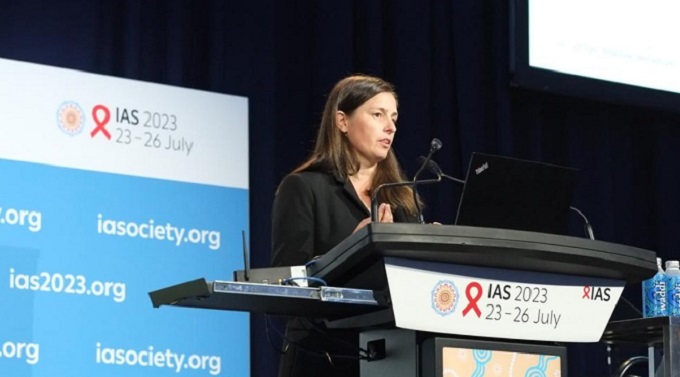
Roselyne Sachiti in BRISBANE, Australia
PEOPLE living with HIV who have an undetectable viral load have zero risk of transmitting HIV to their sexual partners, a top World Health Organisation (WHO) official announced last week.
Launching WHO’s new policy brief titled “The role of HIV viral suppression in improving individual health and reducing transmission” at the 12th IAS Conference on HIV Science here, WHO diagnostics adviser in the HIV, Hepatitis and STI programmes Dr Lara Vojnov said there is negligible, or almost zero, risk of transmitting HIV when a person has a viral load measurement of less than or equal to 1 000 copies per mL, also commonly referred to as having a suppressed viral load.
She said, in 2020, WHO commissioned a series of systematic reviews to look through and think about the role of lower levels of HIV in not just individual health but transmission.
“Today, the Lancet has published a systematic review that looked at the risk of sexual transmission when people living with HIV have lower viral loads,” she said.
Dr Vojnov said the systematic review comprised eight studies and over 7 500 sero-discordant couples.
“Three studies within the systematic review, including HTPN 052, showed no HIV transmission when a person living with HIV viral load of less than 200 copies/mL, and, in fact, most transmission events occurred when the person living with HIV had a viral load that well exceeded over 30 000 copies/mL,” she said.
Dr Vojnov added that across four additional prospective studies, there were 323 transmission events; none were in people living with HIV considered stably suppressed on antiretroviral therapy (ART).
“Among all studies, there were two cases of transmission when the person living with HIV’s most recent viral load was less than 1 000 copies/mL (-700 and -800 copies mL). However, and this is very important to note, in both cases, the viral load test was taken 50+ days prior to the transmission event, casting significant doubt on whether that viral load was truly 1 000 copies/mL at the time of transmission,” she said.
She added that no studies were identified evaluating the transmissibility of HIV through the sharing of injection drug use equipment when a person’s viral load is less than 1 000 copies/mL.
Dr Vojnov added that WHO convened a series of expert consultations to reflect upon the evidence, think about the benefits and potential harms, if any, how the impact of positive messaging could have on people living with HIV.
She also said WHO sought to understand some of the ongoing challenges that people living with HIV face with regard to stigma, discrimination and criminalisation.
The brief, she added, distinguishes among three viral load test results, which are “Undetectable, Suppressed and Unsuppressed”.
“Undetectable” (not detected) means no measurable virus; there is zero risk on transmission to sexual partner(s) and minimal risk of mother-to-child transmission.
“Suppressed, which means some virus replicating and present: Could be due to missing doses, recent treatment initiation or drug resistance. There is almost zero or negligible risk of transmission to sexual partner(s).
“Unsuppressed significant virus replicating and present: Could be due to missed doses, recent treatment initiation or drug resistance. Increased risk of falling ill and passing virus on to sexual partner(s),” she added.
Dr Vojnov emphasised that the ultimate goal for all people living with HIV is to reach and sustain undetectable viral loads.
“Taking antiretroviral therapy as prescribed will support this goal, prevent transmission to their sexual partner(s) and/or children, and improve their own clinical well-being,” she said.
She noted that “Suppressed” is the hinterland between the two definitions, whose significance WHO now feels it needs to clarify.
This is because some tests now being used in the field can detect the presence of HIV at viral loads below 1 000, but at such low levels that they cannot come up with a quantifiable viral load.
Dr Vojnov revealed that if someone’s viral load test places them in this “Suppressed” category, it means their risk of transmission is “almost zero or negligible”.
Having viral load test results, she added, can be a motivation for adhering to treatment and achieving the ultimate goal of being undetectable.
“Emphasising and strengthening adherence counselling during antiretroviral therapy initiation and throughout treatment are essential, including communicating about the prevention benefits of viral load suppression to all PLWHA (people living with HIV/AIDS,” she said.
She added that current WHO-pre-qualified tests, including point-of-care and alternative sample types such as dried blood spot samples, can support the goals of treatment programmes to accurately measure and report viral load results as unsuppressed, suppressed and undetectable.
A campaign that started in 2016, called “U=U,” which is short for “Undetectable equals to Untransmittable,” was essentially making the same argument and WHO has also included this information in its HIV treatment guidelines.
Responding to questions on the sidelines of the conference, director of the AIDS and TB programmes in the Ministry of Health and Child Care, Dr Owen Mugurungi, told this publication that the new refined WHO guidelines give more clarity.
“This is very good because we used to test people and say your viral load is suppressed or unsuppressed. With new guidance, we are saying those with a viral load of more than 1 000 copies/mL are not suppressed.
“There is another category, the suppressed but not undetectable.
“These are people with a viral load of between 200 and 1 000 copies/mL and those with a viral load of less than 200 copies/ml,” said Dr Mugurungi.
He said the latest clarification was much better. “This is a better clarification because we know that when you are undetectable, the viral load is under 200 copies/mL, you are unlikely to transmit HIV.
“This is where we are saying U=U.”
Those with viral loads that are suppressed but detectable can be assisted in two ways, he added.
“This can be someone who has just started to take treatment. So, if you are on treatment for less than six months and your viral load is coming down, we reinforce adherence and other things to ensure you become undetectable.
“But if you had been on treatment for more than six months, it could also mean you are beginning to fail treatment. You had been undetectable, but now detectable but still suppressed. We can put more effort and emphasis on trying to ensure adherence and turn around to make sure you are undetectable.
“And those detectable and/or unsuppressed, we need to change their treatment if they are failing treatment,” he said.
Speaking on the sidelines of the conference, National Aids Council (NAC) board member representing persons living with HIV Tendayi Westerhoff told this publication that the findings mean a lot, especially to women living with HIV.
“The results are talking about the “Undetectable = Untransmittable” (U=U) concept, indicating that if a person with HIV is on antiretroviral therapy, or ART, with a consistently undetectable HIV viral load, because of adherence to treatment, the virus cannot be transmitted to a sexual partner,” she said.
She further said this was important for many HIV-positive women, especially around issues of pregnancy and breastfeeding.
“Remember, Zimbabwe has made remarkable progress, increasing coverage of prevention of mother-to-child transmission services and reducing mother-to-child transmission. The U=U further gives a woman living with HIV the power to realise the right to motherhood. It gives them the possibility of giving birth without the risk of passing on HIV through vaginal delivery,” she said.
Twitter: @RoselyneSachiti



 Online Reporter