
Freeman Razemba in GENEVA, Switzerland
The 88th session of the United Nations (UN) Inland Transport Committee (ITC), attended by delegates from various countries, including Zimbabwe has ended here with member states emphasising that infrastructure, data and digitalisation must be treated as one as roads are evolving from static assets into performance-based systems that must operate reliably under climate pressure and rising mobility demand.
The session ran under the theme, “Driving innovation for the future of inland transport”.
Transport and Infrastructural Development Minister Felix Mhona led the Zimbabwean delegation, which included the ministry’s legal advisor, Advocate Kingston Magaya; Traffic Safety Council of Zimbabwe (TSCZ) board chairperson, Mr Kura Sibanda; TSCZ managing director, Mr Munesu Munodawafa and senior Government officials.
The Inland Transport Committee serves as the UN platform for inland transport, aiming to effectively address global and regional needs in the sector.
It was held amid significant transformations within the United Nations system and the global transport sector.
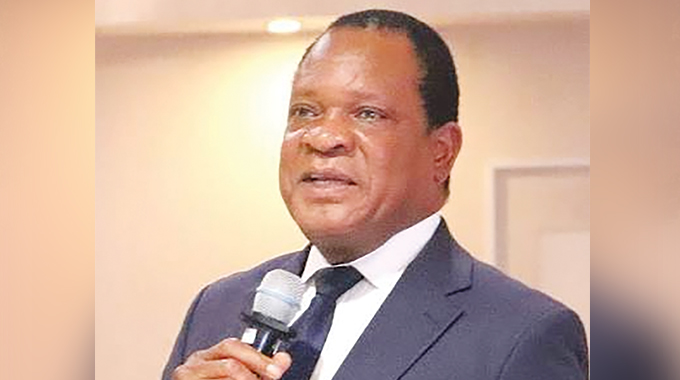
In his address, the International Road Federation (IRF) president, Mr Dimitrios Mandalozis, highlighted the role of digital tools in extending asset life, improving safety and strengthening resilience.
Drawing on IRF’s global evidence base, including the IRF World Road Statistics, Mr Mandalozis underscored the importance of harmonised data for benchmarking and informed policymaking.
He also outlined IRF’s commitment to practical implementation roadmaps that support countries in planning, designing and managing roads to meet social, environmental and economic objectives.
The International Road Federation, active since 1948 and headquartered in Geneva, works to support countries in delivering road systems that are inclusive, safe, green and efficient.
“In today’s context, infrastructure, data and digitalisation must be treated as one. Roads are no longer static assets,” he said.
“They are performance-based systems that must operate reliably under growing climate risks, rising mobility demand and increasing expectations for transparency and efficiency. Digital tools and data are essential to extending asset life, improving safety outcomes, reducing lifecycle emissions and ensuring resilience.
“IRF has contributed to the global evidence base through our World Road Statistics, published annually since 1964. Drawing on national data and aligned with internationally harmonised definitions, WRS now covers more than 200 countries and territories and over 200 indicators across 11 thematic areas.
“It supports benchmarking, policy evaluation and planning at national and international levels. The IRF WRS Data Warehouse further enhances accessibility through interactive dashboards and analytical tools, enabling decision-makers to translate data into informed action.”
Chairperson Global Road Safety Forum, Luciana Iorio, said they were focusing on all the elements in the conventions and resolutions which could improve road safety.
“So, we are dealing with the driving permit, with harmonisation of training of the trainer of drivers, and with the update of the conventions as far as automated vehicles are concerned,” she said.
“And, of course, with the risky behaviour and other issues. But what is really important inside road safety and inside the global effort is also to have the global voices, to have a global contribution.
“And we are very happy that one of our, let’s say, biggest contributors, the colleague from Zimbabwe, and he (Minister Mhona) has always been very active. Let’s not forget that Zimbabwe became a full member last year, and this, of course, is empowering its voice and so on.
“Voices from Africa are not many, so, whoever is bringing the message, also emerging with Asia voices, the voices from Latin America, that will be welcome to empower global form on road traffic safety.”
Mr Munodawafa said the main thrust was now to reduce the human factor and see how technology can be harnessed to enhance road safety issues, including the use of artificial intelligence.
“We are happy that Zimbabwe already has a policy on AI so now the thrust as we go forward is to say how do we harness what we already have, the platform that the Government has already put in place in terms of the AI policy, and then deploy it now to enhance road safety and to save lives,” he said.
“And of course, there are other issues like the response in the event of an accident, the golden hour, how do we enhance our capacities as nations to respond to that. So, all these issues are coming up and these are practical issues that I believe as a country we should now be able to harness, deploy and reduce road deaths on our roads going forward.”