admin
admin
Over the past two decades, Zimbabwe has been under sanctions imposed by the European Union (EU), the US and their allies.
While the EU lifted the economic sanctions under Article 96 of the Cotonou Partnership Agreement, the remaining measures on the Zimbabwe Defence Industries and on some of our top Government officials continue to affect the image of the country.
The US vehemently continues to progressively tighten its sanctions regime.
On October 18 2021, the US Senate Committee on Appropriations issued a State and Foreign Operations Appropriations Bill, which maintains the continuation of sanctions on Zimbabwe in 2022.
The Zimbabwe Anti-Sanctions Trust (ZAST) is concerned that the situation is exacerbated by some among our citizenry, who openly portray behaviour that promotes illegal sanctions.
Zimbabwe, as many other countries, has become a victim of isolated citizens or groupings, co-operating or conniving with certain hostile foreign governments to inflict suffering on its citizens, Government and generally its national interests.
The behaviour by such self-appointed individuals who are not shy to speak against their own country on issues of foreign relations without bothering to verify facts or engage domestic authorities also include unwarranted asylum seeking, informal, false, derogatory press statements that are usually meant to seek attention, as well as planned and timed protests by Government opponents whenever a major international, continental, or regional event is to commence in the country.
A substantial number wilfully misinform foreign governments to gain self-favour and discredit the Government.
Given the foregoing, it is evident that such citizens would have been working for their self-interest while discrediting Government efforts to promote and protect the national interests that include Zimbabwe’s foreign relations and policy agenda.
It is disturbing, that all these shenanigans undermine Government efforts to execute its mandate.
It is also known reality that the primary objective of the sanctions imposing nations is the crippling effect, in the first place.
The crippling effect is unfavourable for any Government, be it the present one or any other that may reign.
As the nation is fully aware, the imposition of sanctions on Zimbabwe was a direct response to the country’s historical black-empowering land reform programme.
Most Zimbabweans and several other fair-minded observers across the globe have correctly observed that the sanctions are an angry response to our pursuit of total independence and self-determination as a people.
Zimbabwean law currently lacks explicit provisions that prescribe or criminalise private persons’ unauthorised communication or negotiation with foreign sovereign governments that has a direct or indirect impact on the country’s foreign relations and policies.
There is no other legislation, statutory or common law, that regulates this field of citizen activity.
As a result, our legal system has a gap when it comes to private persons interfering in international relations matters.
Individuals or groups who engage in unofficial self-serving citizen or private diplomacy and discussions with other sovereign governments not only violate the Constitution, but also customary international law, which is incorporated into our legislation under Section 326(1) of the Constitution.
Needless to say, such a gap can be detrimental to the official position of governmental diplomacy and foreign policy and has the following potential effects: undermining an elected Government, creating lack of confidence in the Government of the day, undermining foreign policy thrust by civilians, altering foreign national expectations based on assumptions that are inconsistent with prevailing foreign policy set by the Government, alienating the country from the international community and allies; and affecting the interests of everyone for the benefit of a few.
Cognisant of the foregoing, the current situation cries out for implementation of necessary reforms to the law aimed at regulating communications and negotiations with foreign sovereign Governments by unauthorised private citizens.
With full understanding and appreciation of the fact that the Parliament has the full mandate to make laws, ZAST presented to them a petition in August 2021, beseeching the House to enact legislation that criminalises calling for imposition of sanctions on Zimbabwe by individuals or organisations.
In the petition, ZAST noted that, sanctions have caused an adverse ripple effect on the Zimbabwean economy and the enjoyment of fundamental human rights, including the right to health, food, safe drinking water and sanitation.
Thus, the need for a law that ensures Zimbabweans desist from unpatriotic behaviour that supports imposition of illegal sanctions on their nation to the detriment of its development can by no means be over-emphasised.
The envisaged law will form a strong legal foundation to encourage patriotic behaviour as well as acting as a panacea to curb undesirable acts.
It is through the proposed law that efforts by Zimbabweans to denounce illegal sanctions and their negative impact on the Zimbabwean economy, life and property will become laudable in Zimbabwe.
The anti-sanctions law petition by ZAST was received in good standing.
The Parliamentary Portfolio Committee on Foreign Affairs and International Trade has since analysed the petition and after consultations with several stakeholders (including ZAST), recommended that the Ministry of Justice, Legal and Parliamentary Affairs brings the necessary amendment Bill to Parliament by 30 November 2022.
Notwithstanding the fact that the purpose of the law is not to ensure that fellow Zimbabweans get incarcerated or penalised, the proposed law, if enacted, will be instrumental in preventing undesirable behaviour.
Let us hope as a nation that the bill will sail through and ultimately become a law which should encourage Zimbabweans to communicate and behave in a way which promotes national cohesion.
It is noteworthy that the envisaged law is consistent with contemporary global trends and is not entirely new as other countries such as the US, Australia, Singapore and China already had laws that prohibit communicating messages intended to harm the country’s positive image and its integrity.
Also, such regressive acts usually result in stiff penalties such as imprisonment.
It remains incumbent upon Zimbabweans at home and abroad, to work towards national unity and send a clear message to the sanctions imposing nations that we know our identity and will not allow external forces to determine our destiny.
We cannot be assisting bullies to accomplish their mission among us; that of dividing us and making us suffer simply because we chose to reclaim our birth right.
It is our inexorable duty as Zimbabweans to always stay alive to issues that threaten our right to life, property, sovereignty and self-determination.
We need to start and continue working together towards redressing those threats rather than perpetuating them.
Unity is key. Dialogue between our Government and the sanctions-imposing nations can only yield the results that we desire when we, the citizens are united.
United we stand, and the fact remains: With or without sanctions, Zimbabwe is for Zimbabweans!
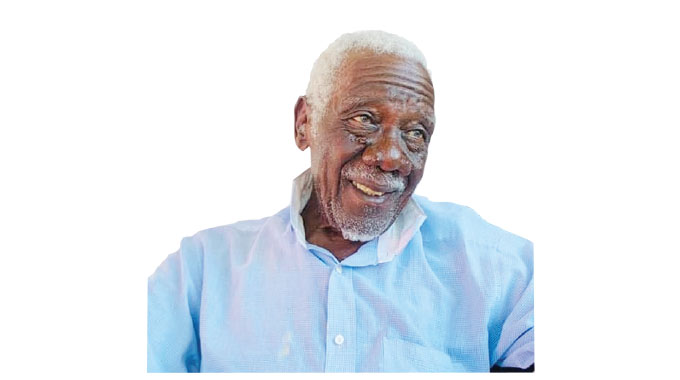
Dr Norbert Hosho is the president and founder of Zimbabwe Anti-Sanctions Trust (ZAST), an educationist and trainer in economic empowerment and entrepreneurial leadership.


 Online Reporter