


 malvernmugadzikwa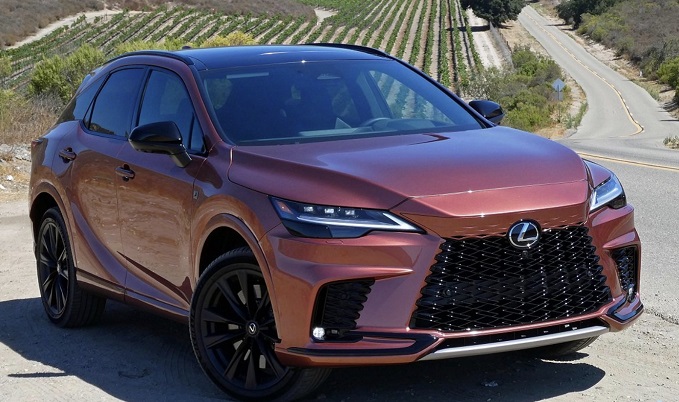
Talking Automotive On Sunday
Taurayi Raymond Sewera
IN the previous article, I wrote about how mild hybrid electric vehicles (MHEVs) and the 48-volt technology application work.
This type of system allows for the reduction of internal combustion engine size without affecting vehicle performance and enhancing fuel economy, while using an intermediate voltage system — less than 60 volts, direct current — which will minimise the possibility of electrical injury on the technician.
The power supplied by the 48-volt system reduces the cost of the hybrid system, when compared to full hybrid electric vehicles (HEVS) and battery electric vehicles (BEVs) application, because it can easily integrate into the conventional vehicle structure with minimal modification and significantly less cost.
With the e-Assist and MHEV battery pack capacity and physical size being significantly smaller than what is utilised in an HEV and BEV application, there is no need to charge the battery pack with an external charging station.
This is an intermediate between a 12-volt and a high-voltage BEV system.
Additionally, vehicle range has always been a concern with BEV application, and an intermediate step provides a bridge to help garner the trust of the vehicle owner and build positive experiences with hybrid drive-train technology, especially here in Zimbabwe.
EVT Low and EVT High
Each of these two has a low and high mode that will control how much torque is delivered from the engine and each of the two electric machines in the transmission.
The first mode is a conventional HEV system, where the engine operates to generate power for propulsion or to drive one of the two transmission electric machines, or the controller can shut off the engine, and the vehicle will continue using electric power only.
In the second mode, the engine supplies more torque for propulsion and the torque from the electric machine is variable and may come from one or both machines.
On two-mode GM vehicles with a V8 internal combustion engine, the system can operate on a continuous basis and employ variable valve timing (VVT) or active fuel management (AFM) to maximise the efficacy of the internal combustion engine (ICE).
Along with the power generated by the ICE, the controller can phase in and out motor A and motor B, depending on the torque and performance needs of the vehicle.
This system was revolutionary in the vehicle market, as it allowed for a larger vehicle to match the fuel mileage of a smaller variant.
Utilising both the ICE and the electric drive in different situations allows the vehicle to meet any operating mode desired by the operator.
With the ICE providing the mechanical power for propulsion, and the motor generator units (MGUs) providing electrical help for the ICE, the vehicle can continuously meet the demands of the
operator.
The ICE strategy includes the AFM, which
helps increase efficiency and performance by selecting how many engine cylinders are used for propulsion.
The use of the Atkinson cycle (or VVT) with late intake valve closing (LIVC) further increases the efficiency of this application by keeping the engine pumping losses to a minimum.
When the LIVC is utilised, the engine performance losses are overcome by increasing the MGU operation.
Depending on the situation, the vehicle will more or less use the ICE, as well as the electric propulsion system, for generation of propulsion torque, or shut off the engine when the operator comes to a traffic light.
In most cases, the engine may operate in tandem with the electric drive system to provide the required torque and speed to the driveline.
The use of advanced engine technologies like LIVC, VVT and AFM combines all the fuel-saving features of these technologies to help increase two-mode efficiency and fuel economy.
Coordinating all the engine powertrain mode strategies, along with employing transmission MGUs, requires significant and sophisticated control software programming.
When there is a major failure, the powertrain control module (PCM) must be able to control the other components in the propulsion system to minimise the possibility of damage, while providing minimal performance and efficiency.
Increasing the complexity of the propulsion system also increases the possibility of failure modes within the systems.
Examples of two-mode hybrid systems in Zimbabwe are Toyota Aqua hybrids, Honda Vezel hybrids, Mazda Axela hybrids, Toyota Prius hybrids, Toyota C-HR hybrids, Lexus RX 400h, Rx 405h and Toyota Axio hybrids.
The challenges we are facing in the country with these imported used vehicles, 10 years old or more, are that most of them come with already depleted high-voltage battery packs, which will reduce fuel efficiency and performance significantly.
Most Toyota hybrid vehicles come with nickel metal hydride (NiMH) batteries, which lose capacity over time.
NiMH batteries’ common failure is apparent capacity loss (ACL), which basically means they suffer from memory loss.
We have since developed ways to reverse ACL in most cases.
This then improves fuel efficiency and performance on these used vehicles.
Other hybrid families — like Honda, in the form of Honda Vezel hybrids, Honda Fit GP5 and GP6, etcetera — come with dry dual clutch manual transmissions, which are the major failure on these vehicles, but we have since developed a solution.
Taurayi Raymond Sewera is ASE and AutoCate Association-certified World Class Master Technician with 39ASEs, ASE Advanced Level Specialist L1, L2, L3 and L4, AMI-Accredited Master Electric Vehicles and Master Automotive Manager, and ACDC-certified Master Hybrid and Electric Vehicles Technician. He is the founder and CEO of TauRay Automotive. He can be contacted on: +263772341193, +263772357296 or [email protected]


 Bongani Ndlovu
 Online Reporter