Online Reporter
Solomon Bhumu
Post Reporter
UNREGISTERED car washes have become an eyesore in Mutare’s Central Business District (CBD), with informal operators establishing makeshift washing bays along pavements, near intersections, and on vacant pieces of land.
Every avenue and parking lot in the city has been transformed into a makeshift car wash business, operated by either street children or men and women seeking to earn a living.
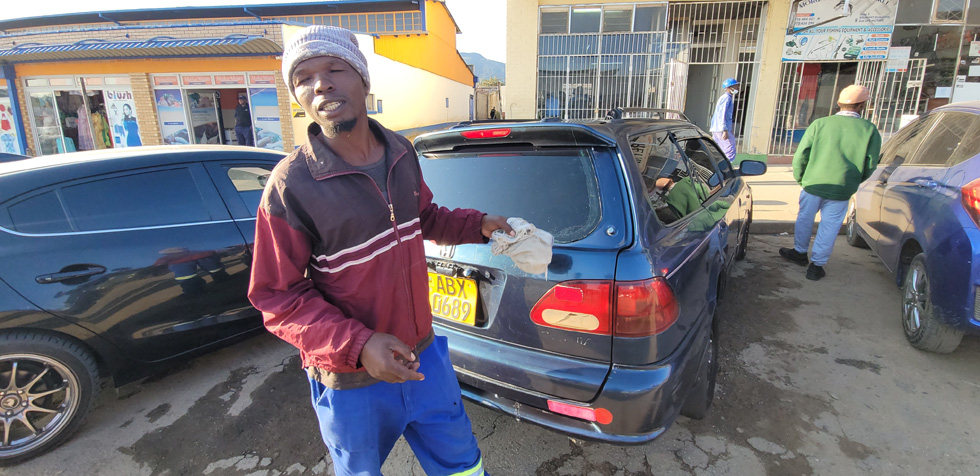
The situation appears to be particularly dire along ‘B’ Avenue, near Nandos food outlet and Spar Supermarket, where unscrupulous teenagers running these informal car washes often wash shoppers’ and dinners’ cars without their consent.
“You will be shocked when you exit the restaurant or supermarket to find that your car has been washed without your consent. Young boys will then approach you, begging for payment for a service you did not request. You can either walk away without paying, as they cannot force you to do so, or you may choose to pay out of a sense of guilty. We implore the council to take note of this issue and put a stop to such operations. We should be able to enjoy our day out in the city without being emotionally harassed by children in this manner,” said one car owner, Mr Joel Timire.
Some car owners voluntarily engage with these unofficial washers, offering small sums in exchange for their cleaning services.
However, since these operations are unauthorised, there are risks for both the service providers and the vehicle owners.
At other car wash locations on different avenues, drivers are charged between US$1 and US$10 to have their cars washed.
Although these temporary car washes provide a source of income for many unemployed youths, their unchecked proliferation is becoming a significant urban challenge, posing health, environmental, and regulatory concerns for the city.
These car washes often operate without licences or municipal approval, with operators tapping into water sources illegally or using handheld tanks.
The subsequent discharge of soapy water into roads and drains carries chemicals and oils that pollute the environment and compromise road infrastructure.
Municipal regulations stipulate that car wash businesses must be registered, zoned correctly, and comply with environmental standards.
However, in practice, many of these informal setups flout these rules.
City officials have acknowledged the issue, but their response has been limited.
Mutare City Council spokesperson, Mr Charles Sadondo admitted the existence of the problem, adding that the local authority will soon take action.
“The problem of unregulated car washes has been ongoing, and the city council is taking action against informal businesses, including those cooking food. We are launching a joint operation with various stakeholders, including the police, to eradicate these informal businesses. We will provide further details after the operation,” he said.
Environmental experts have raised concerns over the serious health and environmental concerns that are caused by the stagnant water pools that can become breeding grounds for mosquitoes and bacteria, increasing the risk of diseases.
Environmental Management Agency (EMA) Manicaland provincial manager, Mr Rambwayi Mapako said car wash operators throughout the country must register and operate in designated areas, complying with environmental regulations.
He emphasised that those in Mutare are no exception, and must adhere to regulations set by the city council.
“All car wash operators in Mutare are required to register properly and operate strictly within designated areas, as outlined by Mutare City Council. As EMA, it is our responsibility to ensure that all environmental regulations are followed to protect our city’s infrastructure. We urge all individuals involved in this activity to formalise their operations and comply with the necessary guidelines,” said Mr Mapako.
He also said when informal car washes operate outside the established rules and regulations, they pose a danger to both the environment and society.
Despite this, many unregistered car washes continue to operate unlawfully in public spaces.
The Manica Post spoke to unregistered car wash operators on the streets, for whom survival is the primary concern.
In an interview, Mr Fungai Mashonjowa, who works along Second Avenue, highlighted the importance of his informal work to his livelihood.
“Washing people’s cars in car bays is how I earn a living. I am simply trying to survive, and I hope that one day I will be able to formalise my business and improve my circumstances. We do not earn a significant amount of money here, as many people are now operating car washes. On an avenue like this, you will typically find two or three people engaged in car washing,” he explained.
He added that he uses water from broken municipal pipes to clean the vehicles.
“We typically face challenges with the municipal police, who occasionally clamp our clients’ vehicles, resulting in us not getting paid,” he said.
The consequences of inaction are becoming increasingly apparent, with many streets in the CBD, including Herbert Chitepo and Robert Mugabe avenues, frequently flooded with wastewater.
However, some car washers purchase water from nearby businesses where they operate.
Mr Collen Piyasi, who operates along Third Street, said they pay US$5 per week for water at a nearby business.
He added that he maintains clean premises because environmental cleanliness is a top priority for him.
“We hope to be allocated designated areas to conduct our businesses and obtain licences, enabling us to operate lawfully. We do not want to continue evading the municipal police. Although we are aware that our current operations are illegal, we have no alternative sources of employment. I undertake this work because I do not wish to resort to begging for money and becoming a burden on others,” he said.
Local business owners also expressed concerns that customers are avoiding certain areas due to the mess and congestion.
In an interview, Ms Tafadzwa Goto, a boutique owner along Second Street had this to say: “This is detrimental to our business. The dirty water flows past my doorway all day, emitting a foul odor that discourages people from entering my boutique. Council should do something, maybe get them designated areas, and not for someone to just come from nowhere and start a business near my business.”
A local resident, Mr Farai Makomwa commented: “Honestly, shutting down these car washes is not a viable solution, as many operators rely on them for survival. I believe we need a more sustainable approach to the problem. Potential solutions include designating proper wash zones with drainage systems, providing training on water management, and offering affordable licensing options.”