Andrew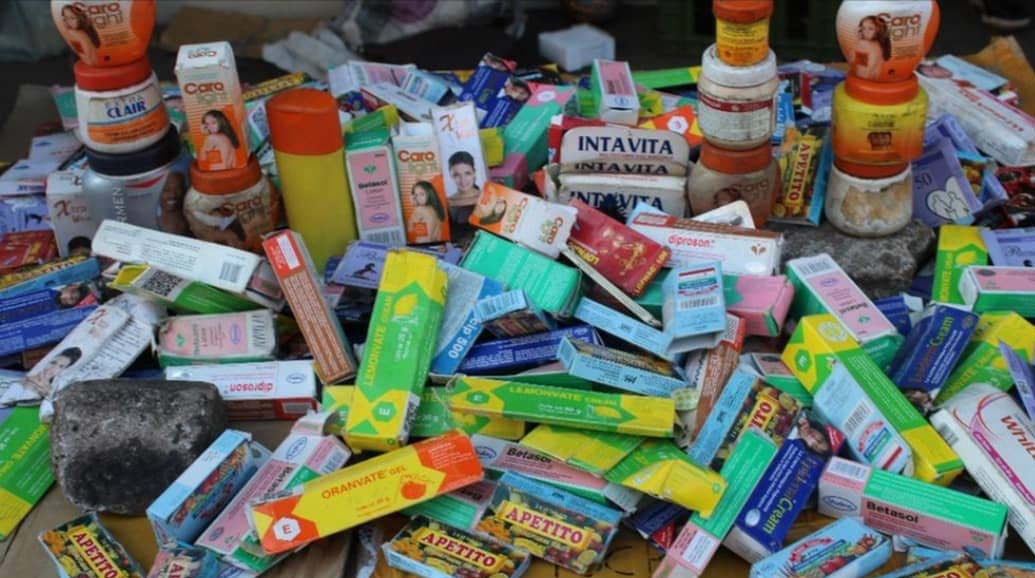
If you walk down busy market streets in Niger, you are likely to see dozens of kinds of medicine displayed in small hand carts or spread out on mats.
Many people buy medicine from these street vendors, even though the products they sell are completely unregulated and sometimes even dangerous.
Lahcen B. (not his real name) is a telephone technician in Tahoua, a region in western Niger.
Every day, he sees street vendors peddling medicine at cut-rate prices.
“Here, medicine is sold like sweets”
You can find almost any medicine for sale in the streets. I took photos of hand carts full of medicine. You can also buy medicine from street vendors or go to the market.
It’s clear that this medicine has not been kept in proper conditions.
It’s exposed to the sun, even though temperatures can climb to a scorching 45° Celsius and there is dust all over.
Street vendors sell antibiotics, paracetamol and anti-inflammatories.
The vendors sell them like sweets.
They don’t require prescriptions.
Instead, they act like pharmacists and explain to the customers how much to take.
Generally, they tell the customers to take more than they should so they will buy more.
Street vendors often hawk a mix of real and fake medicine.
Sometimes, Nigerien authorities seize large stocks of fake medicine during raids against the illegal medicines market, a big global problem that is especially rampant across on the African continent.
Lahcen says that this is much more than a public health crisis.
These vendors have no problem selling their wares for two main reasons: first of all, the medicine that you can buy in the street is much cheaper.
In a pharmacy, a box of paracetamol might cost 400 francs CFA (equivalent to about 60-euro cents), while you can buy it for just 100 francs in the street.
Secondly, in the countryside or in small, rural villages, it is rare to find a pharmacy that keeps medicine in its recommended conditions by keeping it away from heat and humidity.
So people are used to buying medicine in poor conditions and so they don’t see a big difference between pharmacies and street vendors.
According to research into the illegal medicine market in Niger, about 75 percent of medicine imported into the country ends up in the informal circuit.
This rate is so high, in part, because of Niger’s porous borders but also because of a lack of personnel in the ministry that is supposed to regulate the medicine market.
Counterfeit drugs are a deadly, and growing, problem in Africa.
According to the World Health Organisation, as many as one in ten medical products circulating in developing countries are substandard or falsified.
This leaches money from healthcare systems and kills thousands of people, mostly within vulnerable communities.
While it’s hard to put a figure on the scale of the problem, it is thought that fake drugs for pneumonia and malaria may be killing around 250,000 children every year.
Some of the drugs are poorly manufactured or have been sold past their shelf life, while others are made and disseminated by criminal gangs.
From the counterfeiters’ point of view, this is a lucrative industry, worth roughly US$200 billion a year.
The problem is particularly rife within Africa. Of all the fake drugs reported to the WHO between 2013 and 2017, 42 percent of the reports came from the African region.
In March 2019 alone, the WHO raised alerts for fake meningitis vaccines in Niger and fake hypertension drugs in Cameroon.
Then in August, falsified versions of the antibiotic Augmentin were discovered in Uganda and Kenya. — Online.



 Online Reporter