Online Reporter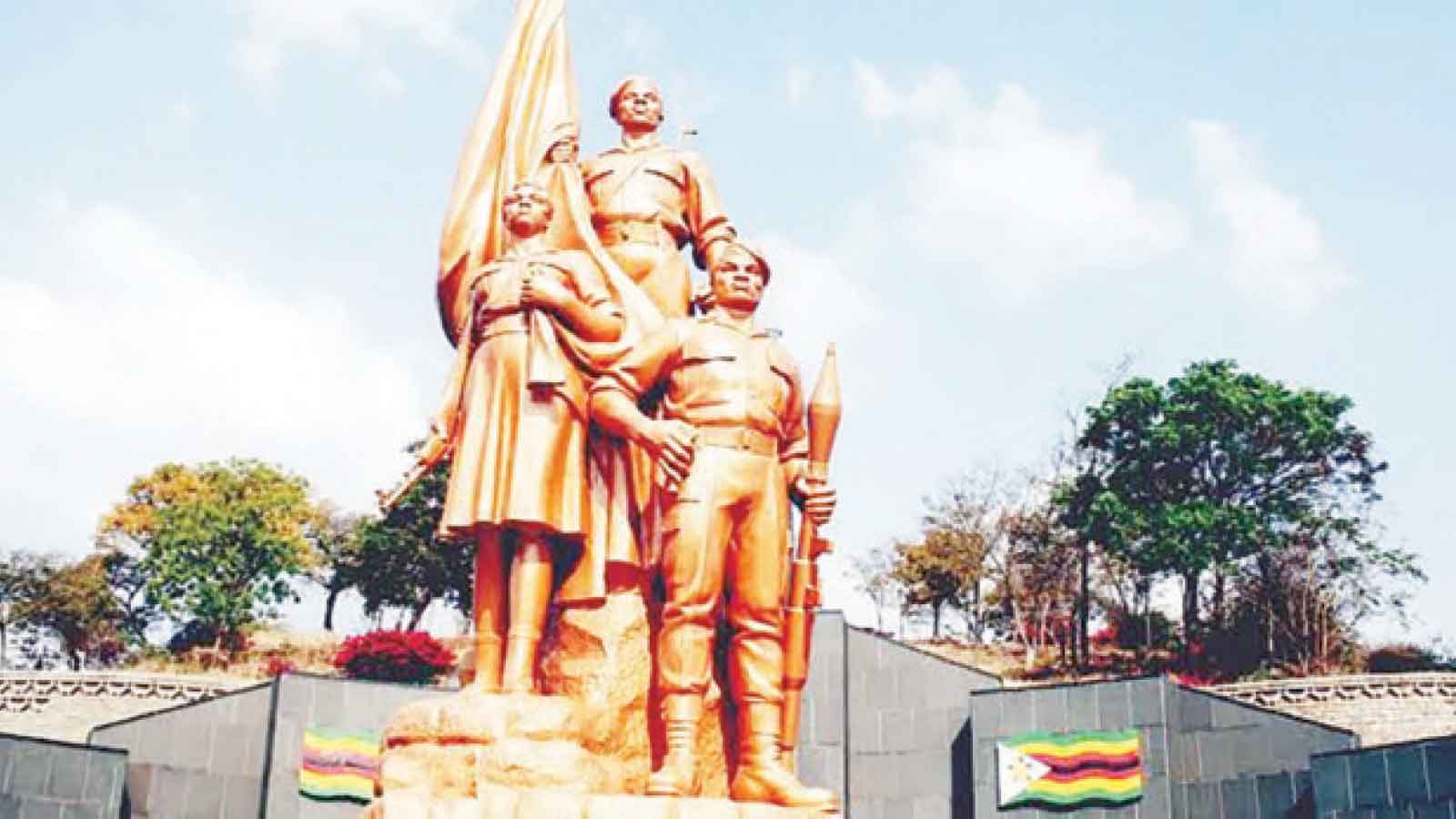
Elliot Ziwira
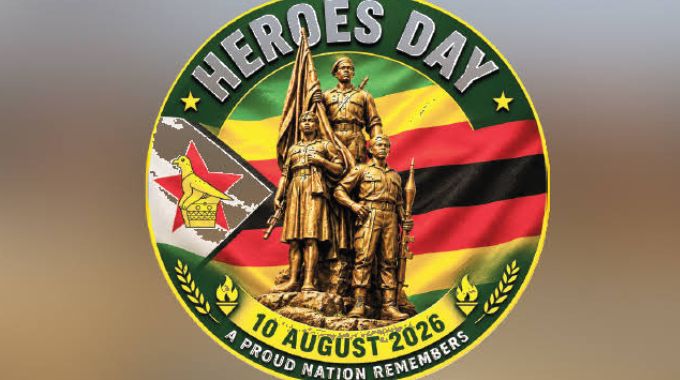
AS Zimbabwe celebrates Heroes Day and Defence Forces Day this August, it is only pertinent to pause and reflect on the bravery and selflessness of those who fought for the nation’s freedom.
Their sacrifices, struggles and triumphs were not in vain as their legacy continues to inspire and shape our identity as Zimbabweans.
But remembrance must go beyond ceremony. It must also compel us to confront the dark legacy of colonialism and the villains who sought to erase our identity, culture, heritage and existence.
As collective memory recalls, in 1896, a young Matabele chief dared to question Cecil John Rhodes’ claim to our land, only to be met with condescension and deceit.
As witnessed by Vere Stent, a journalist cited in Julie Frederikse’s None But Ourselves (1990), the young chief asked:
“Where are we to live when it is over? The white man claims all the land.”
Rhodes’ response, “We will give you settlements. . . we will set apart locations for you”, was a thinly veiled attempt to mask the true intentions of colonialism: dispossession, oppression and exploitation.
Yet, the young chief’s courage embodied the spirit of resistance that would inspire generations to fight for their rights, their land and their freedom.
Every year in August, we honour the heroes who fought against colonial oppression, their bones scattered across the land and beyond, their memories etched into our collective history.
We remember the gallantry of those who lie at the National Heroes Acre, a symbol of our nation’s pride and resilience.
We remember Mbuya Nehanda, Sekuru Kaguvi, Queen Lozikeyi Dlodlo, and many others who refused to be silenced, who refused to accept oppression and fought to the end for liberation.
However, as we move forward, remembrance must be accompanied by responsibility.
We must honour our heroes and heroines, confront the villains who sought to silence our story, acknowledge the injustices of the past and work towards a future that is just, equitable, peaceful and prosperous.
Confronting the legacy of villainy
We cannot properly honour our heroes without confronting the colonial legacy against which they fought.
Cecil John Rhodes and his cohorts claimed to have “founded” a country, but in reality, they stole our land, displaced our ancestors and sought to destroy our heritage.
The hoisting of the union Jack on Harare Hill on September 12, 1890, marked the beginning of a brutal era of colonisation, with Rhodes and his Pioneer Column declaring themselves the rightful owners of our land.
For decades, from 1903 to 1980, colonial governments celebrated Rhodes and Founders Day, honouring the legacy of a man who believed in the superiority of the white race and the subjugation of Africans.
The day was originally celebrated on July 5 and 6 to coincide with Rhodes’ birthday and the date the Pioneer Column crossed the Shashe River in 1890.
In 1910, Colonel Raleigh Grey, a member of the Legislative Council and officer commanding the Southern Rhodesia Volunteers, proposed that the day be celebrated on the first Monday and Tuesday in July.
His concern was largely logistical — allowing four clear days for the annual camp and military training of his volunteers without courting the ire of employers.
After further debate, the Legislative Council eventually moved the celebrations to the second Monday and second Tuesday of July.
However, for the indigenous majority this was no innocuous celebration. It was a painful reminder of oppression and a celebration of a colonial order built on dispossession. The attempt to rebrand the occasion as a celebration of “founders” could not erase that history.
Rhodes and his associates did not “find” an unpossessed land. They invaded a land inhabited by people with their own political systems, cultures, traditions and institutions.
Their legacy must, therefore, be understood within the historical reality of bloodshed, displacement and cultural destruction.
It is only by confronting this past that we can reclaim our true history and assert our identity, culture and heritage.
Heroes’ Acre: A beacon of resistance
Interestingly, the importance of preserving this memory was articulated by President Mnangagwa long before he assumed the highest office in the land.
On May 15, 1982, at a rally at Dewa, Zvishavane, then Minister of State in the Prime Minister’s Office Emmerson Mnangagwa declared: “If we forget the struggle and the people who died for our freedom, we shall drift aimlessly.
“We who are alive link with those who have died and those who have yet to be born; and we must look after the heritage of our country, and teach our children what that heritage is and what it means.”
The words, spoken in the formative years of the young country, remain relevant today.
They speak to a responsibility that transcends political administrations and generations: the duty to remember where the nation came from and to safeguard what was won through sacrifice.
Today, President Mnangagwa occupies a different position, but the principle remains the same.
As the country celebrates Heroes Day and Defence Forces Day, his role as Head of State and Commander-in-Chief of the Zimbabwe Defence Forces places him at the centre of the national responsibility to safeguard Zimbabwe’s sovereignty, territorial integrity and Independence — the very ideals for which the liberation struggle was fought.
Therefore, the National Heroes’ Acre remains a revered shrine and a demonstration of the bravery and selflessness of those who fought against colonial oppression.
The 57-acre sacred site, built on a ridge at Warren Hills near Warren Park, Harare, is a symbol of resistance and gallantry.
The graves of our fallen heroes symbolise the ultimate sacrifice made for national liberation.
With settler rule out of the way, the Patriotic Front Government led by Prime Minister Robert Mugabe obliterated from the calendar the days that celebrated colonial bastions of oppression, including Rhodes and Founders Day.
The national hero accolade was mooted and adopted soon after Independence in 1980, leading to the construction of the National Heroes’ Acre.
Heroes Day was initially celebrated on August 11 and 12, though the dates had no special significance.
There was heated debate around the dates, with white Members of Parliament arguing that celebrations should fall on Monday and Tuesday instead of midweek because of their perceived impact on business.
Contributing to the debate in Parliament on July 28, 1980, Senator Joseph Culverwell reminded white MPs that, for decades, blacks, who were in the majority, had been forced to observe holidays that had no meaning to them.
Home Affairs Deputy Minister Senator Tarisai Ziyambi argued that the celebrations should be given significance independent of capitalistic considerations of production and the desire for a “long weekend”.
This view was also shared by Home Affairs Minister Dr Joshua Nkomo.
Through a Bill passed into law in August 2001, Heroes Day was moved to the second Monday and Defence Forces
Day, which had been celebrated on August 12 since 1990, to the second Tuesday of August.
The pairing of the two days is itself instructive.
Heroes Day looks back at those who made the definitive sacrifice, while Defence Forces Day reminds us that sovereignty and Independence must be defended and protected by succeeding generations.
The first burial at the National Heroes’ Acre took place on August 12, 1980, when about 40 000 people gathered as the late ZANLA Commander General Josiah Magama Tongogara and ZAPU Vice President Jason Ziyaphapha Moyo were finally laid to rest, having initially been interred in Mozambique and Zambia, respectively.
Father Alexio Muchabayiwa of the Roman Catholic Church presided.
The construction of the National Heroes Acre was a collective effort involving Zimbabwean and North Korean architects, artists and local communities, beginning in September 1981.
Its design, featuring two AK-47 rifles lying back-to-back, remains a powerful statement of the nation’s resolve to defend its sovereignty.
The principal structures were built from black granite quarried in Mutoko.
Other features include the Tomb of the Unknown Soldier, the Eternal Flame lit at the Independence celebrations in 1980 and taken to Harare Hill to mark the end of colonial rule, wall murals on either side of the shrine and the museum.
A living responsibility
As we celebrate Heroes Day and Defence Forces Day, therefore, the question is not just who our heroes are.
It is also what we are doing with what they sacrificed for.
The sacrifices of the liberation struggle gave Zimbabweans the right to determine their own destiny. That freedom came at a tremendous cost, and the responsibility of each generation is to ensure that the sacrifice does not become meaningless.
This is where the words of the young then Minister of State in the Prime Minister’s Office, Emmerson Mnangagwa, in 1982 acquire renewed significance.
Those who died, those who are alive and those yet to be born are connected by a common national heritage. As
President Mnangagwa philosophically pointed out back then, the living are custodians of what the dead bequeathed them, while posterity will judge whether that inheritance was protected, strengthened or squandered.
The Zimbabwe Defence Forces, whose day follows Heroes Day, embody one dimension of that responsibility. They stand as a reminder that independence is not just a historical event, but a continuing national condition requiring vigilance, patriotism and commitment.
Therefore, the defence of the country is inseparable from the preservation of its history, identity and sovereignty.
Hence, as Zimbabwe celebrates its heroes, it must continue to tell its own story. The colonial narrative must not become the only archive through which the nation understands itself.
The names at the National Heroes’ Acre and all other shrines across the country, the stories of the liberation war, the memories carried by surviving veterans and the national institutions created after Independence all form part of the inheritance.
And as President Mnangagwa once observed more than four decades ago, if we forget the struggle and those who died for our freedom, we risk drifting aimlessly.
Heroes Day gives us the opportunity to remember and Defence Forces Day gives us the opportunity to reaffirm our duty to protect. Together, they provide a bridge between sacrifice and responsibility, between the past and the future.
Our heroes gave us a country. The least we can do is remember them, protect their legacy and ensure that Zimbabwe remains firmly in the hands of its people.
Lest we forget