admin
admin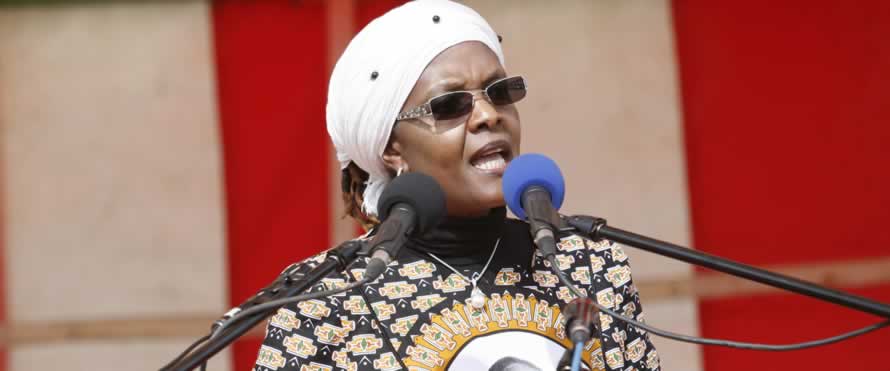
Vusumuzi Dube/Tinomuda Chakanyuka Sunday News Reporters
“IT is my job to declare the town open. Gentlemen I don’t think we want to waste any talk on it. I make the declaration now. There is plenty of whisky and soda inside, come in.” These were the historic words said by Leander Starr Jameson, the administrator for Matabeleland, 120 years ago to mark the opening of Bulawayo as a town.
2014 is a year that this historical moment was once again revisited as Bulawayo celebrated 120 years since it was established, various festivities were put in place right through the year as a way of celebrating this milestone activity.
So as we begin our reflection on the past year, it is essential to revisit these celebrations before going over a number of key events locally and internationally, which will continue to linger in our minds.
Byo @ 120 celebrations
1 June 2014 was set as the day when people from all walks of life regardless of race or tribe, converged on the city centre to be part of the pomp and fanfare.
Bulawayo was founded in 1894 after the defeat of the Ndebele army in what is popularly known as the Ndebele uprising. in 1897, the new town of Bulawayo acquired the status of municipality with Colonel Harry White becoming the first mayor, and in 1943, Bulawayo became a city.
Over the years the city has been Christened various names these ranging from Kontuthuziyathunqa (a place where smoke bellows) — this in reference to the city’s one time status of being the industrial hub — to komfazi utshay’ indoda (where wives beat up their husbands) up to the City of Kings and Queens.
Bulawayo attained the status of being a city in 1943.
The city’s mayor, Councillor Martin Moyo, summed up the celebrations when he said; “The past 120 years have not been easy. We have faced economic challenges that have left a huge dent in the city. However, we have not given up, let us keep the spirit of resilience.”
Chronicle also comes of age
October 2014 also saw our sister paper; Chronicle marking 120 years of existence. The Chronicle first hit the dusty streets of Bulawayo on a Saturday morning of 12 October 1894. It was one of seven newspapers that were serving the early settler community. But it was not the first paper to be published in Bulawayo.
In its early days, Chronicle, which the colonialists called Buluwayo Chronicle, was a weekly, published on Saturdays.
The following year, it started coming out twice a week. In 1897, it turned into a daily after having changed the spelling from Buluwayo Chronicle to Bulawayo Chronicle the previous year. The newspaper was then housed in a long wood and corrugated iron structure with a single door and six windows on its avenue frontage.
The building was demolished in 1906 to be replaced by another. The present building was built in 1928. Several alterations have been made at the rear of the building but the frontage has remained the same.
At the helm of the Chronicle in the beginning was an English-born Irishman, John William Howard and the first editor was F J Summers.
In his first editorial comment, Summers wrote; “Bulawayo, long the centre of unspeakable crimes against humanity, has already taken its place as one of the brightest spots in a civilised and virile state, and the journal which makes its first appearance today is launched with unbounded confidence in the future of the country whose fortunes it must plough.”
In commemorating Chronicle’s achievements, Zimpapers Bulawayo branch general manager, Mr Marks Shayamano, noted that despite the fact that a number of industries were shutting down, the newspaper would remain forever.
“We’ve managed to withstand the test of time and want to be known for truthful, relevant news. Investigative reportage has been the mainstay of Chronicle. A newspaper should keep those in power in check and that’s what we seek to do. We’ve in the past seen Chronicle exposing the Willowgate scandal and in recent times keeping an eye on the Government,” said Mr Shayamano.
President Mugabe rises to the helm of AU, Sadc
2014 proved to be yet another colourful good year for President Mugabe, as he was appointed First Deputy Chair of the African Union (AU) executive council and also chairperson of Sadc.
The AU position means this year the President will chair the executive council. The appointment was made at the AU assembly summit in Ethiopia. The council is made up of Foreign Affairs Ministers and meets twice a year.
The 34th Ordinary Meeting of the Summit of the Heads of State and Government of the Southern African Development Community (Sadc) was also held in Victoria Falls on 17 and 18 August 2014.
The Summit took place under the theme: “Sadc Strategy for Economic Transformation: Leveraging the Region’s Diverse Resources for Sustainable Economic and Social Development through Value Addition and Beneficiation.”
The summit elected President Mugabe and Lieutenant General Seretse Khama Ian Khama, President of Botswana as Chairperson and Deputy Chairperson of Sadc, respectively.
The summit also elected South Africa’s Cde Jacob Zuma and Lesotho’s Prime Minister Cde Thomas Thabane, as Chairperson and Deputy Chairperson of the Sadc Organ on Politics, Defence and Security Co-operation, respectively.
Among a host of major highlights during the summit was the launch of the Sadc Hashim Mbita Project Publication outlining the history of the national liberation struggles in Southern Africa and the Sadc Statistical Year Book.
To this end, the summit urged Member States to honour Brigadier General Hashim Mbita as demonstrated by Zimbabwe which conferred the highest honour for a foreign national, the Order of Munhumutapa.
With regards to the theme of the summit it was directed that industrialisation should take centre stage in Sadc’s regional integration agenda with Ministerial Task Force on Regional Economic Integration tasked with developing a strategy and roadmap for industrialisation in the region.
Four legal instruments were signed by the Heads of States these including the Protocol on the Tribunal in the Southern African Development Community, the Protocol on Environmental Management for Sustainable Development; the Protocol on Employment and Labour; and the Declaration on Regional Infrastructure Development.
Mujuru sacking
The year 2014 will go down in history as one of the most eventful years, particularly on the political arena where a lot of surprises were sprung, records set, coup plots uncovered and dwarfs masquerading as giants were unmasked.
The sacking of Vice-President Joice Mujuru from Government in December perhaps ranks as the biggest political event in the country in years. It was the first time in the country’s 34-year-old history that a Vice-President was fired.
Cde Mujuru was sent packing on accusations of leading a faction in Zanu-PF that was planning to topple President Mugabe and elevate her to the helm of the party and Government.
She and her cabal, made up of some quite senior Government and party officials, were shown the exit after their heinous plot was uncovered, a plot that involved hiring assassins and witchcraft.
The Mujuru faction operated on the premise that the West would inject money into the country, if their plot had sailed through.
Cde Mujuru’s sacking saw several ministers and their deputies, perceived to be party to her cabal, being also fired.
Those fired together with Cde Mujuru are Ministers Didymus Mutasa (Presidential Affairs), Webster Shamu (Information Communication Technology, Postal and Courier Services), Francis Nhema (Youth, Indigenisation and Economic Empowerment), Olivia Muchena (Higher and Tertiary Education, Science and Technology Development), Dzikamai Mavhaire (Energy and Power Development), Nicholas Goche (Public Service, Labour and Social Welfare), Simbaneuta Mudarikwa (Mashonaland East Provincial Affairs Minister) and Munacho Mutezo (Energy and Power Development Deputy Minister).
Also shown the exit were Flora Buka (Minister of State for Presidential Affairs), Paul Chimedza (Health and Child Care Deputy Minister), Sylvester Nguni (Minister of State in former Vice-President Mujuru’s Office), Tongai Muzenda (Public Service, Labour and Social Welfare Deputy Minister), Petronella Kagonye (Transport Deputy Minister), Fortune Chasi (Justice Deputy Minister) and Tendai Savanhu (Lands and Rural Resettlement Deputy Minister).
Nine party provincial chairpersons who were also working with Cde Mujuru in her plot to unseat President Mugabe had no confidence votes passed on them during the run up to the 6th Zanu-PF National People’s Congress.
This, without doubt would go down as one of the most topical issues in 2014.
First Lady’s grand entrance into mainstream politics
The year was once again one of firsts for the First Lady Dr Grace Mugabe.
It saw her entering the political arena in a trailblazing fashion that brought a paradigm shift in the country’s and Zanu-PF’s politics.
Her entry into the political fray, after being nominated to lead the Zanu-PF’s Women’s League, created a mixture of excitement, anxiety, suspense and consternation in the country’s politics, particularly in the ruling party.
She was later confirmed and elevated to the position of Secretary for Women’s Affairs in the party, at the 6th Zanu-PF National People’s Congress in December last year.
Dr Mugabe brought a fresh dimension to the country’s politics after she went on a “Meet the People Tour” of the country’s 10 provinces during which she named and shamed politicians who were involved in illicit activities, fanning factionalism in the party and plotting against President Mugabe.
Her entrance into politics marked the beginning of Mujuru’s empire crumbling in her face after the First Lady unearthed Cde Mujuru’s plot to oust President Mugabe.
Following the First Lady’s revelation of Cde Mujuru’s plot, the writing was now on the wall for Cde Mujuru that her days in the party’s leadership structures were numbered.
Dr Mugabe urged Cde Mujuru to step down before she was fired, but the latter remained adamant, held on and even made vain attempts to defend herself through Press statements, some of which were just good enough to expose her inadequacies and misplaced ambitions.
Dr Mugabe graduates with PhD
Yet another first scored by Dr Mugabe to cap a defining year for her already prominent profile.
She added another jewel to her crown when she graduated with a Doctor of Philosophy Degree at the 59th University of Zimbabwe graduation ceremony in September last year.
Dr Mugabe’s thesis was on the changing social structure, the functions of the family and she carried out a case study on children’s homes in Zimbabwe.
She said the choice of the topic was motivated by her interest in issues affecting children in Zimbabwe.
Dr Mugabe runs the Grace Mugabe Children’s Home in Mazowe, where she takes care of orphaned children.The orphanage project is a significant departure from the conventional homes for orphans and it has been applauded as the structures built at the orphanage are state-of-the-art.
Vice Presidents’ appointment
After Cde Mujuru’s dismissal, President Mugabe appointed Cdes Emmerson Mnangagwa and Phelekezela Mphoko as the First and Second Vice-Presidents respectively.
The two were appointed on 10 December last year, with Cde Mnangagwa replacing the fired Cde Mujuru while Cde Mphoko replaced the late National Hero John Nkomo.
Appointment of the two VPs came together with President Mugabe’s Cabinet reshuffle and replacement of some of the 15 Ministers who were fired for working with Cde Mujuru.
Before President Mugabe announced his deputies, a lot of names had been thrown around as candidates with former PF Zapu cadres, Cde Kembo Mohadi, Cde Simon Khaya Moyo and Retired Brigadier General Ambrose Mutinhiri vying for the post.
When President Mugabe announced his deputies, there were some sections which questioned Cde Mphoko’s appointment, arguing that the former Zipra chief of logistics was not suitable to occupy the post as he had a “checkered” history.
Zapu leader, Dr Dumiso Dabengwa led the chorus of criticism, whose fires were, however, doused by other liberation war cadres who worked with Cde Mphoko during the liberation war and gave detailed accounts of the VP’s role in the country’s fight for self rule.
Conjoined twins separated
The year 2014 saw the country break new ground in its medical history by successfully performing the first major operation on Siamese twins born in April last year.
A team of 50 medical personnel and other staff worked on the eight-hour delicate procedure at Harare Children’s Hospital and successfully separated the twin boys.
Born on 22 April last year to a Murehwa couple, the twin boys christened Kupakwashe and Tapiwanashe, were joined from the lower chest to the upper abdomen and shared a liver.
President Mugabe visited the twin boys in hospital and paid tribute to the team of over 50 professionals who successfully performed the operation to separate conjoined twins saying they did the country proud and deserved to be honoured.
Siamese twins result from either fission, in which the fertilised egg splits partially; or fusion, in which a fertilised egg completely separates but stem cells search for similar cells on the other embryo and fuse the twins.
So rare are conjoined twins that their occurrence is estimated to range from 1 in 50 000 births to 1 in 200 000 births in the world.
The overall survival rate for conjoined twins is approximately one in four.
They are known as “Siamese twins” after the famous pair of Chang and Eng Bunker from Siam, now Thailand.
The only known local operation on Siamese twins was a “very minor” one successfully done at the same hospital in the 80s.
Zimbabwe has had five documented cases of conjoined twins since independence and only one was referred outside the country, while in two instances the babies died before surgery.
Israeli fugitive Rabbi in Bulawayo hide out
The arrest and subsequent deportation of a fugitive Israeli Rabbi Eliezer Berland in April last year was yet another of the year’s highlights.
Rabbi Eliezer Berland (72), who is head of Shuvu Banim, one of the largest Jewish educational institutions in Jerusalem, sneaked into the country around March last year, fleeing alleged sex crimes in his home land.
For a number of weeks, the Rabbi together with a handful of his followers had been living lavishly in various upmarket lodges in Bulawayo until Sunday News blew their cover, leading to Zimbabwean officials moving in to arrest the cleric.
Rabbi Eliezer Berland appeared before magistrate Sibongile Msipa being charged with remaining in Zimbabwe without a permit following the expiry of his visitor’s visa.
He pleaded guilty to the crime and was fined $200 before being ordered to leave the country.
It is believed that Rabbi Berland’s stay in the country was being taken care of by some Israeli businessman based in the country, who was suspected to be having underhand dealings with some locals, one of them being former Zifa CEO Henrieta Rushwaya.



 Online Reporter