admin
admin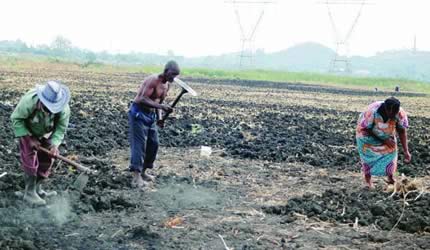
Road.
Two years ago, a woman was struck by lightning while working in her field in Mufakose.
Between December 2009 and January 2010, residents of Kuwadzana 1 and 2 discovered three corpses in maize fields.
These three unfortunate incidents highlight some of the dangers or risks associated with urban farming, urban agriculture or A3 farming as it is called in some circles.
Urban agriculture refers to the growing of crops, and in some cases, the keeping of small livestock and poultry for subsistence or commercial purposes within urban and peri-urban areas.
It takes many dimensions, which include on-plot farming (carried out in one’s backyard), residential plot farming and off-plot, which takes place in open spaces within built-up areas.
Despite by-laws restricting urban agriculture more and more Harare residents, like their counterparts in Bulawayo, Mutare, Gweru, Kwekwe, Masvingo, etc, are busy preparing their small plots hoping to put food on the table in light of the high cost of living.
One of those who have taken urban farming to heart is Gogo Mushunje, a widow who lives in Kuwadzana Extension.
Wearing a sun hat with the logo of a leading seed company to shield herself from the blazing sun, Gogo Mushunje works diligently on her one-hectare piece of land on the vast open space between Kuwadzana and Dzivaresekwa.
“In the past,” she recalls, “growing crops on these small fields was for struggling housewives like myself. Nowadays, even those in formal employment are scrambling for the small pieces of land. Some even engage other people to work on their pieces of land for them.”
Indeed, in the next field is Dennis Hatidani, who says he is unemployed but earns a livelihood by tilling the land for “briefcase farmers” or those whose farming instincts clash with their 8 am to 5pm jobs.
“I charge a minimum of US$10 or the equivalent in harvested maize to prepare the land as well as to weed. I have my own equipment,” he said pointing to an assortment of implements that included a pick axe, a harrow and shovel.
His only regret is that he does not have a field of his own. “When you grow your own crops, you won’t need to spend a lot on buying food,” sighed the father of two.
Urban agriculture has attracted its fair share of bad publicity in recent years. “Urban farmers defy cancel order” (Herald, January 2007), “Land row in Kambuzuma” (H-Metro, January 2010), “Urban farmers face tough times ahead” (Herald, December 2009), “Businessman keeps slashing spirit alive” (H-Metro, January 2011) are some of the headlines which have dominated newspaper pages.
Why is this so?
First and foremost, there is no proper land allocation system in place. As one social commentator put it: “There are no kraal heads in the city to allocate land and the municipality certainly doesn’t have any official mechanism. It is the same in urban areas all over Zimbabwe.”
This has given rise to a free-for-all situation where access to land is basically through informal means such as self-allocation, inheritance, mutual sub-division or outright dispossession, putting urban farmers on collision course with the local authorities, whose only tried and tested remedy is to slash the maize.
Haphazard urban farming has been blamed for defacing the city and in most cases led to land degradation as land scarcity often forces residents to grow crops in ecologically sensitive areas such as stream banks or wetlands.
According city by-laws, it is an offence to cultivate on land within 30 metres of naturally defined banks or highest flood level of a stream or wetland without a permit from the authority.
Despite this, streambank cultivation is rife in most of Harare’s high-density suburbs such as Budiriro, Kuwadzana, Mufakose, Glen View, Mabvuku, Dzivarasekwa and Tafara as well as along Chitungwiza’s Nyatsime River.
The habitual growing of one crop (monoculture) also sacrifices the benefits of soil rotation, reduces soil nutrition and encourages pests and diseases, all which reduce yields even more.
Fertiliser used in farming is often leached into the ground and ends up being washed into water bodies. In the case of Harare, most of the agri-chemicals find their way into Lake Chivero, adding impetus to the spread of water hyacinth and escalating the already astronomical costs of water treatment.
At the height of the summer cropping season maize fields also become havens for muggers and robbers, who take advantage of the tall maize plants to waylay their prey.
As a result of the dangers lurking in the maize fields, some residents now impose curfews on themselves.
Despite the negative Press, urban agriculture contributes significantly towards food security in two ways: first, it increases the amount of food available to city dwellers, and secondly, it eliminates the high transport costs.
A 2008 study by one Corinne Kisner established that open spaces in Harare accounted for 10 percent of land in the city and “though the Government ignored and at times represses it, urban agriculture serves as a coping mechanism for the poor”.
Urban agriculture also provides directly the much needed supplementary food or even cash to families. Households also save money by producing their own food rather than buying.”
Besides contributing to food security urban farming also plays a pivotal role in waste management. City authorities face insurmountable challenges in waste disposal but urban agriculture can help contain it as kitchen waste can be turned into organic fertiliser.
There are additional social benefits. For example, through agriculture, urban dwellers are constantly interacting with nature and thus directly learning to value the vital role of ecosystem services.
Through intergenerational knowledge transfer in urban fields, parents pass on impart useful knowledge to their offspring who might otherwise lose touch with their rural roots and the natural environment.
It also provides a nucleus for downstream industries which have the potential to empower the masses.
A notable example are the grinding mills which are now a common sight in the high-density suburbs. That most of them operate seven days a week in the post-harvest months is ample testimony that there is good money to be made from urban farming.
No doubt, urban farming is a highly emotive issue, whose existence will continue to exercise the minds of local authorities for years to come, just like it has done since the dawn of urbanisation.
The bottom line is urban farming is here to stay for the simple reason that it is a proven poverty reduction strategy.
The late Harare Metropolitan Governor and Resident Minister Dr David Karimanzira, himself a staunch supporter of urban farming, once said: “Although farming was regarded as dirty and only for rural people, it can also be done in urban areas to supplement families’ income.”
The late governor was speaking in June 2010, at Highfield District Dry Show, where urban farmers were exhibiting their crops in preparation for the Harare Agricultural Show.
He went to urge the City Fathers to complement the Government’s land reform programme by allocating idle land to residents. But despite such noble calls local authorities — Harare included — continue to criminalise urban farming.
According to social commentator and city watcher Malcolm Leppard, the way forward is simple.
“Municipal authorities must, instead of the present uncontrolled and haphazard approach, identify and allocate appropriate land, taking into consideration all ratepayers’ needs,” he recently said in one of his newspaper articles.
He suggested that plot size be no greater than 250 square metres in order to accommodate as many families as possible.
Agricultural expert Ivan Graig is on record as saying peri-urban agriculture is one of the several tools for making productive use of urban open spaces, treating and recovering waste and managing fresh water resources more effectively.
To conserve the environment, other experts have suggested that urban farmers plant trees in the open spaces they are utilising.
Since urban farming is clearly here to stay, there is need for the City Fathers and ratepayers representative bodies to sit down and map the way forward so that they come up with a clear policy framework that guarantees a win-win situation.
Tawanda Ngena is a freelance journalist with an interest in the arts and environment.



 leeroy