Online Reporter
Nqobile Bhebhe, Senior Business Reporter
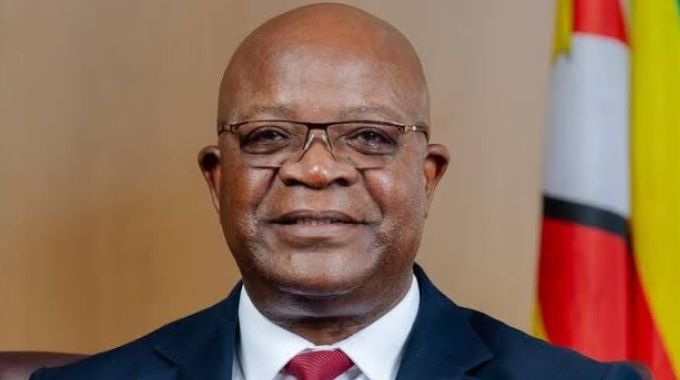
THE Minister of Finance, Economic Development and Investment Promotion, Professor Mthuli Ncube, has welcomed the introduction of a legislative Bill in the United States House of Representatives proposing the repeal of the Zimbabwe Democracy and Economic Recovery Act (Zdera) of 2001, a sanctions law that has, for over two decades, severely curtailed Zimbabwe’s access to global financial support.
Prof Ncube said the development signals “a potential major thaw” in relations between Harare and Washington and paves the way for Zimbabwe’s reintegration into international financial systems, including access to funding from multilateral lenders such as the International Monetary Fund (IMF) and the World Bank.
Speaking on the sidelines of the Zimbabwe Economic Development Conference (Zedcon) in Bulawayo, the Minister expressed cautious optimism.
“It’s a positive development. Of course, it’s going through the motions, we are not in control of those motions, unfortunately, but it’s a positive development and we hope that the outcome will be as requested by whoever is sponsoring that Bill,” said Prof Ncube.
“We look forward to that Bill being successfully concluded.”
The proposed legislation, known as the Department of State Policy Provisions Act, was introduced last week in the US House of Representatives by Congressman, Brian Mast (R-FL).
It contains a specific clause to fully repeal Zdera, the law enacted in 2001, which legally bound the US Government to oppose financial support for Zimbabwe through multilateral institutions.
Zdera has, for more than 20 years, effectively isolated Zimbabwe from much-needed global financial support, frustrating debt restructuring and undermining access to development financing.
The proposed repeal marks a potentially seismic shift in US foreign policy towards Zimbabwe and comes at a time when the Second Republic, under President Mnangagwa, is pursuing reforms and a re-engagement agenda.
Reads part of the Bill: “In general — The Zimbabwe Democracy and Economic Recovery Act of 2001 (Zdera Act), as amended, Public Law 107–99 (115 Statute 962), is hereby repealed.”
However, the Bill stipulates that future US support for Zimbabwe’s access to IMF and World Bank funding will be contingent upon Harare’s compliance with the 2020 Global Compensation Deed — a US$3,5 billion agreement signed between the Government of Zimbabwe and representatives of dispossessed former commercial farmers.
“The United States shall not support any new or expanded funding . . . unless the Government of Zimbabwe shall commit, within 12 months . . . to remit all outstanding arrears owed under the Global Compensation Deed . . . compensation shall not be in the form of Zimbabwe-issued securities. Failure to comply with this provision shall result in an immediate cessation of all United States support,” the Bill states.
The Bill has since been referred to the House Foreign Affairs Committee for further deliberation.
Observers say the move represents a critical opportunity for Zimbabwe to consolidate its economic reform trajectory and attract new capital, provided it addresses outstanding legacy issues with clarity and commitment.
Addressing delegates, Prof Ncube illustrated the direct impact of Zdera on Zimbabwe’s financing prospects:
“When I was vice president at the African Development Bank, whenever it came to projects on Zimbabwe, the representative from the US Government was obliged to vote no because of Zdera. It is still happening.
“The same happens at the World Bank now, it’s still happening. So, clearly, any set aside of the data can only be positive. Being that same representative, once this is cleared, would be more supportive if the project made sense in the first place.
“Currently, even if the project makes sense, they are obliged to vote no. And we are not going to progress much with that.”
He added that removing Zdera would make it easier for Zimbabwe to clear arrears and unlock concessional financing.
“You can imagine now, if you are trying to clear arrears . . . If you have Zdera, it means the US representative cannot vote in favour. So, you can see clearly the direct impact, or in fact the negative direct impact of Zdera, on our arrears clearance road map.”
Prof Ncube said the proposed repeal also aligns with a broader US policy recalibration towards Africa.
“So, any set aside can only be positive, it’s also a strategic moment. It’s clear that they seek to make better relations with Zimbabwe, they seek to have a new dawn, long-term relationship with all of Africa. So, clearly, there’s almost a reset in terms of relations with Africa, and it means we have to seize the opportunity and position ourselves accordingly and benefit.”
He stressed that the repeal would improve Zimbabwe’s ability to attract foreign investment and credit lines.
“You can imagine the banks that are issued advisories against Zimbabwe in terms of giving us credit lines. Once you set aside Zdera, that will change, especially if we start then dealing with the arrears. Then both the Zdera and arrears are off the table. So, you see, the banks actually access credit lines a lot easier, the Government is still able to access credit lines and borrow cheaper concessionary finance.
“Everything will change, practically everything will change. So, when we all, fingers crossed, go to the Senate, then I think a lot will change.”