Online Reporter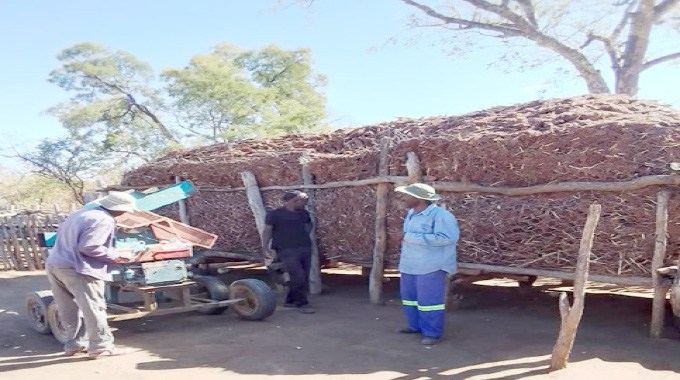
Angeline Mujeyi and Thabani Dube, Bubi District, Zimbabwe
Introduction
Small-scale producers and other rural people are at the heart of food systems transformation and efforts to achieve the SDGs. However, there are so many complex challenges & an unknown future. There is high risk from climate change impacts, given the magnitude of existing stresses and vulnerabilities in the continents, stresses including socio-economic issues and technological challenges. In order to achieve agricultural growth, poverty reduction, as well as climate mitigation and land degradation neutrality goals, there is a need to transform agriculture through sustainable intensification production. Mechanisation is an essential integral part of the agricultural intensification process and has a key role in achieving several SDGs
Farm mechanisation is an essential agricultural input with the potential to transform the lives and economies of millions of rural families. Farm mechanisation promises to help raise labour productivity and reduce the heavy toil of farming on the world’s millions of smallholder farms, hence contributing to socio-economic development in the Global South. If agricultural mechanisation efforts are to succeed, there is an urgent need for all concerned, be they farmers, supporters, researchers, extension agents, planners or policy makers, to understand and contribute to agricultural mechanisation efforts across the entire farming system and with a value chain perspective
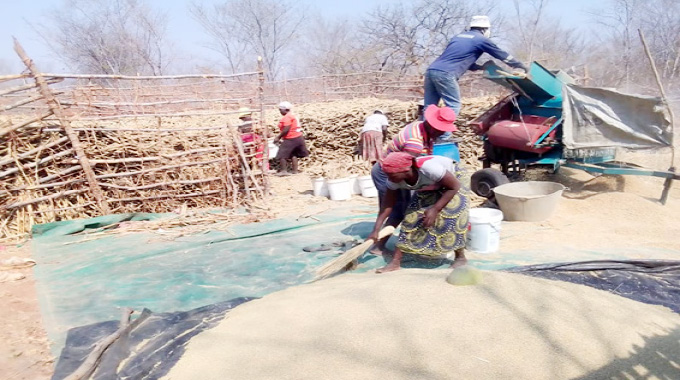
Traditional farming methods predominate, and these often limit productivity and profitability, hence the need for a transformation towards smallholder agricultural mechanisation, enabling farmers to overcome labour bottlenecks and harness new income opportunities. It is in this regards that two rural families are driving innovation in Bubi district by mechanising the processing of grain cereals such as sorghum, millet and maize. Their enterprise, Trust & Reuben Threshing registered as a Private Business Co-operation (PBC), is not only cutting labour costs for smallholder farmers but also pioneering circular food system practices that reduce waste and boost food security.
The Story
For years, farmers in Bubi struggled with the backbreaking work of threshing traditional grains by hand. With just one community-owned thresher in the area, harvest delays, high labour costs and crop losses were common. In 2023, two enterprising men Trust Nkomo & Reuben Khabo stepped in. Pooling resources with support from their wives, they purchased a thresher and launched Trust & Reuben Threshing, a family-run agribusiness. Their mobile model allows them to serve farmers across four wards, thanks to a recently acquired van.
“Farmers used to bring their crops to the machine. Now we bring the machine to them,” says Mr Nkomo.
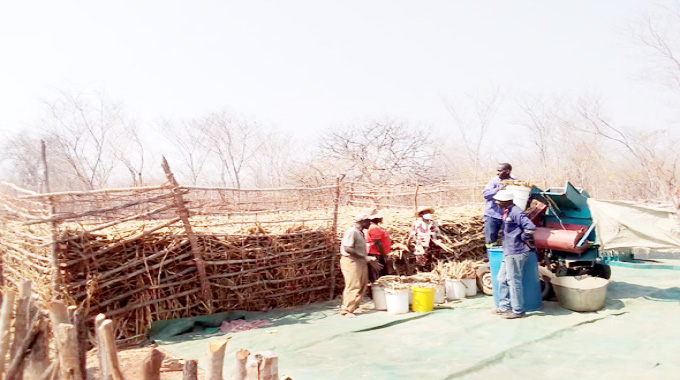
The business processes on average, 10-20 tonnes of maize, 4-6 tonnes of sorghum and three tonnes of pearl millet per day, demonstrating the capacity to handle a significant volume of grains. The business generating over USD 150 daily in peak season, enough to cover costs and expand operations. Farmers benefit from reduced post-harvest losses, improved grain quality and access to affordable mechanised services.
Circular Practices
Rather than discarding by-products, the team repurposes husks and chaff as livestock and poultry feed, returning nutrients into the local food system. Looking ahead, they plan to experiment with composting and livestock feed production. They have gained knowledge on how to repurpose bi-products from capacity building workshops and business development mentoring done by the ACIAR (Australian Centre for International Agricultural Research) funded Circular Food Systems in Africa project implemented by Icrisat in Zimbabwe.
Inclusion and Impact
What makes Trust & Reuben Threshing PBC unique is its inclusive ownership structure: 50% of the business is female-owned, with both co-founders’ wives being co-owners and key decision-makers. Women-led households benefit directly, as threshing services reduce their labour burden and free up time for other activities.
Training and mentorship from the Circular Food Systems (CFS) project helped the business register formally, strengthen record-keeping and professionalise operations.
“Mechanisation of traditional grains is not just about scale appropriate machinery it is about empowering communities, reducing post-harvest losses and building sustainable food systems. Mechanised threshing and storage solutions minimise post-harvest losses caused by inadequate processing and storage conditions, extending the shelf life of agricultural produce and ensuring higher profits for farmers. The threshing business provides services to farmers in Bubi and the neighbouring Umguza districts
“Mechanisation creates employment opportunities in equipment sales, maintenance and repair services, thereby fostering entrepreneurship and income diversification. Additionally, increased productivity and profitability enable farmers to invest in their businesses, improve their living standards, and contribute to the overall socio-economic development of their communities.”, says the Icrisat Country Representative, Dr Martin Moyo.
Key Lessons
The business has made strategic investments to drive growth and efficiency. Notably, investing in durable threshing and dehulling equipment has ensured reliability, enabling the business to consistently deliver high-quality services to customers.
Additionally, purchasing a van has significantly improved mobility, allowing them to reach more. Furthermore, the focus on word-of-mouth marketing and via WhatsApp groups has created visibility and trust among our target market, fostering a loyal customer base and driving referrals.