admin
admin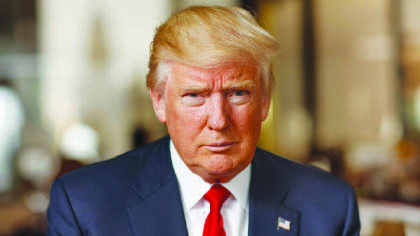
LONDON, SINGAPORE. — The US dollar was headed for an almost 7 percent annual gain while Japan’s yen was set for a fourth consecutive year of losses on Friday, as traders anticipated robust US growth would make the Federal Reserve cautious on rate-cutting well into 2025.
The dollar index , which measures the currency against major rivals, rose 0,08 percent to 108,06 to approach a 2,2 percent monthly rise and was on course to close 2025 6,6 percent higher.
The dollar was also nearing a 5,5 percent gain this month against the yen and an 11,8 percent advance for 2024 against the weakened Japanese currency, while the euro stayed close to two-year lows.
Fed Chair Jerome Powell said earlier this month that US central bank officials “are going to be cautious about further cuts” after an as-expected quarter-point rate reduction.
The US economy also faces the impact of President-elect Donald Trump, who has proposed deregulation, tax cuts, tariff hikes and tighter immigration policies that economists view as both pro-growth and inflationary.
Traders, meanwhile, anticipate the Bank of Japan will keep its monetary policy settings loose and the European Central Bank will deliver further rate cuts.
The yen on Friday hovered around levels last seen in July, at 157.75 per dollar, while the euro traded at US$1 042, just above a low of about US$1,04 struck on December 18.
Traders are pricing in 37 bps of US rate cuts in 2025, with no reduction fully priced into money markets until June, by which time the ECB is expected to have lowered its deposit rate by a full percentage point to 2 percent as the euro zone economy slows.
The BoJ held back from a rate hike this month. Governor Kazuo Ueda said he preferred to wait for clarity on Trump’s policies, underscoring rising angst among central banks worldwide of US tariffs hitting global trade.
For now, the dominance of US equities in world indices and weaker currencies in Asia and Europe helping to boost exporters have prevented tighter US monetary policy from weighing on global stocks.
MSCI’s broad global share index traded 0,1 higher on Friday to remain 1,5 percent higher for the week, with Wall Street’s S&P 500 on course for a 1,8 percent weekly gain.
Futures trading indicated the S&P would start the New York session about 0,4 percent lower.
MSCI’s broadest index of Asia-Pacific shares outside Japan was heading for a 1,5 percent weekly rise and Tokyo’s Nikkei closed the week 2 percent higher.
European stocks lagged, with the Stoxx 600 flat on Friday and 0,3 percent higher this week.
Analysts said stock markets could change direction as investors returned from holiday and reassessed the risks of elevated US inflation under Trump for richly-valued Wall Street equities.
“There is some potential upside left for this bull market, but it is limited,” said Pictet Asset Management chief strategist Luca Paolini.
“(Trump’s) inauguration day is a potential inflection point and all the (prospective) good news will be in the price by then,” Paolini added.
In debt markets, higher US rate expectations pulled the 10-year Treasury yield , which rises as the price of the fixed income security falls, to its highest since early May on Friday, at 4,611 percent.
The two-year Treasury yield, which tracks interest rate forecasts, traded around 4,34 percent. US debt trends also sent euro zone yields higher, with Germany’s benchmark 10-year bund yield rising 7 basis points (bps) to 2,392 percent on Friday.
Elsewhere in markets, gold prices dipped 0,3 percent to US$2 626 per ounce, set for about a 27 percent rise for the year and the strongest yearly performance since 2011 as geopolitical and inflation concerns boosted the haven asset.
Oil prices were also set for a weekly rise as investors awaited news of economic stimulus efforts in China, the world’s biggest crude importer. Brent crude futures rose 0,7 percent on the day to US$73,78 a barrel, 1,1 percent higher for the week. — Reuters.



 Online Reporter