admin
admin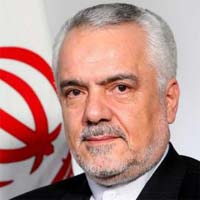
Iran had warned it would shut the strait if the West imposed more sanctions over its nuclear programme.
State Department spokeswoman Victoria Nuland said on Thursday that Iran had exhibited “irrational behaviour” by threatening to close the strait.
“One can only guess that the international sanctions are beginning to feel the pinch, and that the ratcheting up of pressure, particularly on their oil sector, is pinching in a way that is causing them to lash out,” she said.
The tough language came as two US warships entered a zone where the Iranian navy’s ships and aircraft were in the middle of 10 days of war games designed as a show of its military capabilities.
A US navy spokeswoman said that the aircraft carrier USS John C Stennis and the guided-missile cruiser USS Mobile Bay had transited without incident on Tuesday, in a pre-planned, routine operation.
“Our interaction with the regular Iranian navy continues to be within the standards of maritime practice, well-known, routine and professional,” Fifth Fleet spokeswoman Lieutenant Rebecca Rebarich said on Thursday.
The transit area was in waters east of the Strait of Hormuz, a choke point at the entrance to the Gulf through which more than a third of the world’s tanker-borne oil passes.
Iranian Vice-President Mohammad Reza Rahimi warned earlier this week that “not a drop of oil will pass through the Strait of Hormuz” if the West followed through with planned additional sanctions against Iran over its nuclear programme.
Admiral Habibollah Sayari, a navy commander, backed that up by saying it would be “really easy” to close the strait.
A US defence department spokesman said on Wednesday that “interference with the transit . . . of vessels through the Strait of Hormuz will not be tolerated”.
But Brigadier General Hossein Salami, the deputy commander of Iran’s Revolutionary Guards, told the Fars news agency on Thursday that “our response to threats is threats”.
“We have no doubt about our being able to carry out defensive strategies to protect our vital interests. We will act more decisively than ever,” he was quoted as saying.
“The Americans are not qualified to give us permission” to carry out military strategy, he said.
Sayari said the US aircraft carrier was monitored by Iranian forces as it passed from the Strait of Hormuz to the Gulf of Oman, state television reported, while broadcasting footage of an aircraft carrier being shadowed by an Iranian plane.
Commodore Mahmoud Mousavi, an Iranian navy spokesman, told the official IRNA news agency the US carrier went “inside the manoeuvre zone” where Iranian ships were conducting their exercises.
He added that the Iranian navy was “prepared, in accordance with international law, to confront offenders who do not respect our security perimeters during the manoeuvres”.
US officials had said on Wednesday that the Stennis and its carrier strike group were moving through the Strait of Hormuz.
Pentagon press secretary George Little said the deployment was to provide air power for the war in Afghanistan.
The US, whose Fifth Fleet is based in Bahrain, maintains a significant naval presence in the Gulf, in large part to ensure oil traffic there is unhindered.
Iran, which is already subject to several rounds of sanctions over its nuclear programme, has repeatedly said it could target the Strait of Hormuz if attacked or its economy is strangled.
Such a move could cause havoc on world oil markets, disrupting the already fragile global economy, although analysts say the Islamic Republic is unlikely to take such drastic steps as it relies on the route for its own oil exports.
Iran’s naval manoeuvres included the laying of mines and the use of aerial drones, according to Iranian media. Missiles and torpedoes were to be test-fired in the coming days.
Earlier this month, Iranian officials said a Revolutionary Guards cyber-warfare unit had hacked the controls of a US bat-winged RQ-170 Sentinel reconnaissance drone and brought it down safely.
Analysts and oil market traders are watching the developing situation in and around the Strait of Hormuz carefully, fearing that a spark could ignite open confrontation between the long-time foes.
The US had proposed a military hotline between Tehran and Washington to defuse any “miscalculations” between their navies, but Iran rejected that offer in September. — Al Jazeera.



 Online Reporter