Online Reporter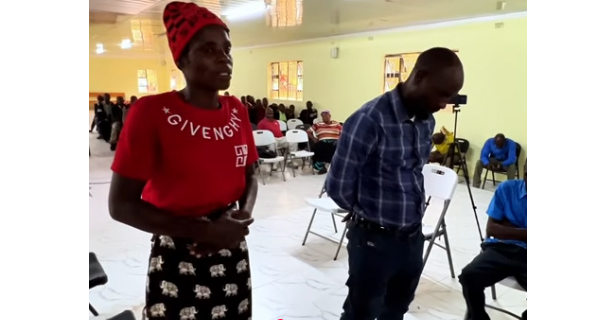
Tendai Gukutikwa
Weekender Reporter
A DEBT of just US$15 between a man and his father in law has torn apart a marriage, dragging a long simmering domestic feud into Chief Mutasa’s community court.
The dispute pits Lazarus Marange against his former father in law, Clever Mupfava, who accuses him of failing to repay US$15 allegedly borrowed while Mupfava was hospitalised.
What might seem a trivial sum has instead become the flashpoint for years of mistrust, contested marital arrangements, and bruised egos, according to Marange’s estranged wife, Catherine Mupfava.
Catherine told the court that the marriage collapsed under the weight of the debt dispute.
“Each time my father called or visited, he would ask about his US$15. My husband would get angry and insist he never borrowed that money. The issue never ended. It caused arguments in our home, and that is the main reason we are here today,” she said.
Marange, however, denied owing Mupfava anything, insisting he had used his own money to assist his father in law after an eye injury in 2010.
“I did not borrow that money. When my father in law had an accident, I was the one called. I helped him every step until he recovered. I spent my own money. Now I am being told I owe him. I do not owe him and I will not pay,” he said.
He further argued that the dispute was rooted in roora arrangements dating back to 2003, when he married Catherine under the traditional kutema ugariri system — living at his in laws’ homestead and working to gradually fulfil roora obligations.
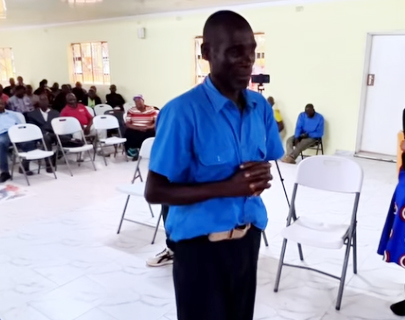
“Our agreement was that I would stay at their home and pay roora through my labour and earnings. At the end of some years, I would be awarded my wife. He was my church pastor at Zion Christian Church, so there was trust,” explained Marange.
Tensions escalated in 2009 when Marange took a second wife.
“That is when problems started with my first wife. Even the second wife later left. When our son was injured, my wife and her father accused me of being a ritualist, saying I wanted to sacrifice my own child. That hurt me deeply,” he said.
Marange alleged that when he reported the accusations to Mupfava, the elderly man dismissed him as a son in law.
“He told me I was no longer his son in law, and that I had already claimed back the roora I paid. He said when he bought a book for my child, that was roora money returned to me. He claimed I had only paid him US$15,” said Marange.
In 2015, Marange returned Catherine to her parents’ home, hoping elders would counsel her.
Catherine told the court she has been living at her father’s homestead since being chased away in December last year.
Mupfava painted a different picture, accusing Marange of long-standing disrespect.
“This young man has never respected me. He never paid lobola for my daughter. The only US$15 he paid was to inform us that he had impregnated her. That is not lobola. That is just a token to acknowledgement,” he said.
He dismissed claims of kutema ugariri.
“He is lying. If he had married properly under that custom, there should be witnesses and clear agreements. He never fulfilled any obligations. He did not bring any cattle. He did not complete the required payments. My daughter was taken without proper marriage rites,” he said.
Mupfava insisted that the US$15 was borrowed while he was ill.
“I was in hospital and not feeling well. He asked for money and promised to return it. Up to now, he has not paid it back. It is not about the amount. It is about honesty,” he said.
Marange, however, maintained that he fulfilled obligations through labour and provision.
“I bought clothes for my mother-in-law and father-in-law. I provided livestock. Just because it was not done in one day does not mean it was not done,” he argued.
As tempers flared over the disputed US$15, Chief Mutasa intervened in an unusual move.
To resolve the immediate conflict, he ordered that US$15 be paid to Mupfava from court funds, with Marange instructed to reimburse the court.
“This court cannot be paralysed by US$15. The money will be paid so that we deal with the bigger issue of this family,” said Chief Mutasa.
“On the matter that brought you to court of a divorce token, it is not the court’s business to break marriages. Marriage is a sacred union between families. If you want to separate, sit down as families and agree outside this court. Our role is to reconcile, not to divide,” Chief Mutasa said.
He urged both families to reflect on whether pride and unresolved grievances had overshadowed dialogue.
“Sometimes small amounts of money carry big meanings, but let us not allow pride to destroy homes,” he said.