

 Chronicle Editor
Sikhulekelani Moyo, [email protected]
THE fisheries and aquaculture sector is set for a major transformation following the injection of US$500 000 aimed at boosting the production of fingerlings, which will improve the quality and quantity of fish produced, enhance food and nutrition security while generating income for communities.
In line with the Fisheries and Aquaculture Development Strategy, the funding will cater for the construction and refurbishment of fish ponds, sourcing of brood stock, setting up of biosecurity systems, staff capacity building together with reviewing of the fisheries legal frameworks and production of hatchery management policy guidelines.
The programme is expected to increase fingerlings production in the country from about 100 000 to 3,9 million annually at Government fisheries units.
Added to that, the project further targets to improve people’s livelihoods through employment creation, improved incomes and nutrition.
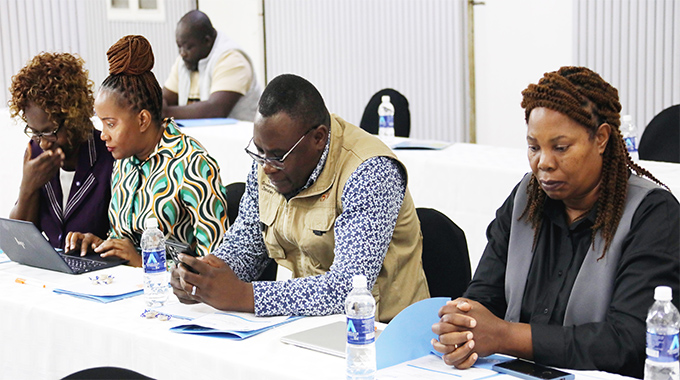
The Ministry of Lands, Agriculture, Fisheries, Water and Rural Development in partnership with the Food and Agriculture Organisation (FAO) under the Technical Cooperation Programme officially launched the US$500 000 technical support in Bulawayo yesterday.
There was a ground-breaking ceremony at Matopos Research Station breeding site to signal the start of work to establish 10 fish ponds. Six of the ponds will be for breeding while four will be resting ponds.

The main purpose of the project is to boost the production of fingerlings to improve the quality and quantity of fish production across the country.
The Government said working with the FAO Technical experts, it will rehabilitate, maintain and establish breeding sites and brood stocks, which will improve farmers’ access to quality fingerlings at affordable prices.
At the moment, the ministry has few breeding sites, with some of them yet to produce fingerlings.
Among the sites is Matopos Research Institute, which is set to benefit from the project.
Addressing guests and officials at the launch of the project, Lands, Agriculture, Fisheries, Water and Rural Development Deputy Minister, Cde Davis Marapira, said the fish industry in Zimbabwe has great potential to increase production from around 20 000 tonnes per year to 60 000 tonnes.
He said the country has over 10 000 dams and has a conducive climate for fish production but its challenge has been failure to produce quality fingerlings.
“The US$500 000 project we are launching today will go a long way in developing the fisheries and aquaculture sector across the country,” said Deputy Minister Marapira.
The project involves the construction of fish ponds, refurbishment of fish ponds, sourcing of brood stock, setting up of bio-security systems and protocols, staff capacity building, reviewing of fisheries legal frameworks and production of hatchery management policy guidelines.
“The programme will increase fingerlings production at Government units from 100 000 to 3,9 million annually,” said Deputy Minister Marapira.
He said fingerlings being produced now cannot guarantee quality as there is lack of scientifically structured breeding programmes. Deputy Minister Marapira said the project will also enhance national fisheries programme through the out-grower scheme.
He said 30 percent of the fingerlings to be produced will be for women and youth in aquaculture, communities that have nutrition gardens and irrigation schemes while the 70 percent will be for small and middle-income aquaculture enterprises that will buy the fingerlings at affordable prices.
For the sustainability of the project in Matabeleland region, boreholes will be drilled and more dams will be constructed.
The Government is drilling 35 000 boreholes across the country which are meant to support communities’ agricultural activities.
In his remarks, FAO sub regional coordinator for Southern Africa focusing on Zimbabwe, Lesotho and eSwatini, Dr Patrice Talla, said the project was developed after a request made to FAO by the Ministry of Lands, Agriculture, Fisheries, Water and Rural Development.
He said it was discussed between the FAO director general Dr Qu Dongyu and Lands Minister, Dr Anxious Masuka during Dr Dongyu’s visit to Zimbabwe in 2023.
“The fisheries and aquaculture sector is experiencing challenges concerning the availability of quality fingerlings supply. Hatcheries are critical in the fish farming development and hatchery development requires high level management competencies,” said Dr Talla.
He said there is therefore, a need for capacitation of farmers and extension staff involved in fingerlings production.
Dr Talla said some of the hatcheries are very far away from farmers who are supposed to benefit from production of fingerlings.
“There is therefore a need to strategically position the hatcheries to improve access and reduce the cost of the fingerlings,” he said.
Dr Talla said FAO was implementing another fisheries initiative jointly with the Government code-named the FISH4ACP project aimed at contributing towards a productive and sustainable tilapia aquaculture industry in Zimbabwe.
“FISH4ACP’s priority areas include scaling up production by applying low-cost new technologies and assisting the Government in the development of a Fisheries Act,” he said.
Fish farming is the fastest-growing food-producing sector and can create thousands of jobs especially for the youths and women. – @SikhulekelaniM1



 Online Reporter