


 admin
admin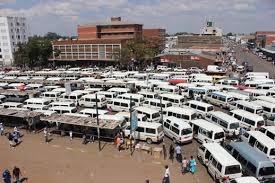
Chief Reporter
Urban commuters spend US$600 000 on omnibus fares daily, money that could service transport infrastructure if harnessed in Governmental systems, a Cabinet minister has said.
At least 4 550 kombi owners are registered in Harare, with another large contingent operating illegally by dodging permit and other fees.
Trips on most intra-city routes cost USc50 per commuter, and operators generally target daily takings of US$100-plus on each of their omnibuses.
A small fraction of this money reaches Treasury via statutory charges, and a huge chunk circulates informally without contributing to transport infrastructure development.
Local Government, Public Works and National Housing Minister Saviour Kasukuwere says phasing out commuter omnibuses and rebuilding the mass transport system will fix this anomaly.
In an interview with The Sunday Mail. he said: “The country does not benefit much from kombis as (operators) evade tax, their crews cause chaos and numerous road accidents, and fragment the revenue base that can help develop a decent transport sector.
“Daily, commuters spend US$600 000 travelling by kombis. If this money were directed to a proper bus network, that service would thrive, with revenue generated for the State. The whole country cannot be full of transport operators. Let’s find ways of regulating the sector.”Operators, the minister said, should adapt to the coming system.
“It is my ministry’s conviction to encourage local authorities to develop a robust transport system. We must not remain obsessed with the commuter omnibus mentality; I want to urge kombi operators to transform their businesses into mass bus operating systems.
“The days of running our transport system haphazardly are numbered and only modern city buses will be allowed to ply our urban routes.
Along with the Transport and Infrastructure Development Ministry, we want to bring a mix of sanity into the urban transport sector.”
On other council affairs, he said, “We also want to strengthen the balance sheets of all local authorities by ensuring their biggest commodity — which is land — is monetised, priced and developed.”Government’s National Transport Policy will phase out kombis to de-congest urban areas and create a modern, affordable transport system.
The measures will be implemented over the next two years, reducing fares and eliminating buses with carrying capacities below 26.High-volume buses operated by few private players will service all routes, with one such operator, Metro Buses, already running a pilot project.
A ring road will be constructed around central Harare to detour heavy vehicles and long-distance travellers from the Central Business District.
Kombis were introduced in the early 1990s to complement a deteriorating Zimbabwe United Passenger Company.
Now, in addition to commuter omnibuses, there are also hundreds of unregistered taxis commonly referred to as “mshika-shika”.



 Bongani Ndlovu
 Online Reporter