Vusumuzi Dube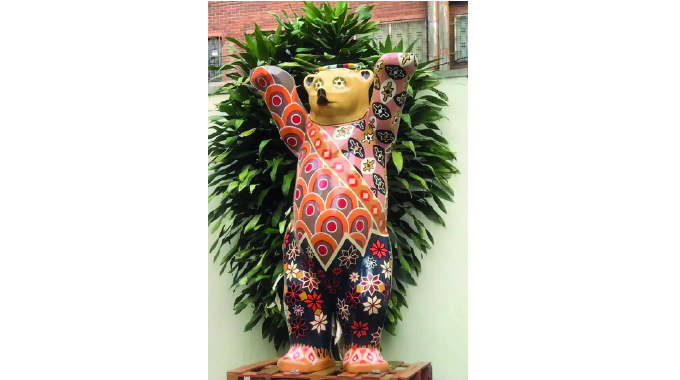
Rutendo Nyeve, Sunday Life Reporter
AS one walks into the National Art Gallery of Zimbabwe in Bulawayo, they are greeted by a colossal two-metre fibreglass German bear painted in Ndebele traditional art form synonymous with those found in the huts of Matobo.
It stands resolutely, defiantly and elegantly on the stairs facing the main entrance into the monumental art gallery. As communication experts would say, messages are polysemic, they mean different things to different people, and surely ‘Utshomi’ as the German Buddy Bear is affectionately known, sends no messages less than a marvelous expression of Zimbabwe-Germany relations together with the merging cultures of the two countries.

‘Utshomi’ was unveiled recently at a colourful event attended by a sizable crowd mostly drawn from the arts enthusiasts as well as dignitaries from the Germany Embassy. In an interview with Sunday Life on the sidelines of the unveiling, Germany Ambassador to Zimbabwe Udo Volz said his country was passionate about preservation of cultural heritage and being in Zimbabwe, a culturally rich country, the embassy ensured the preservation and revitalisation of culture.
“For many years Germany has included the preservation of cultural heritage in its collaboration with other countries. We realised that here in Zimbabwe, the Ndebele culture especially hut painting has been revived some years ago. So, we felt that the hut painting which is such a beautiful expression of art in Matobo can be taken to another dimension. So, we then put it on the Buddy bear which allows it to go beyond Matabeleland,” said Ambassador Volz.

The Buddy bear was developed in Germany and was meant to foster positive good relations between Germany and other countries. According to Ambassador Volz there are now over a hundred of these that are scattered all over the world.
“The Buddy Bear emanated from the City of Berlin where it is regarded as a heroic animal. This Buddy bear has since developed to express the diversity that we have in Berlin as well as the tolerance and friendship. So, we decided to take out of Berlin and out of the country as an expression and offer of diversity of tolerance and friendship,” said Ambassador Volz.
Historian and cultural expert Pathisa Nyathi said the unveiling of utshomi was exciting and really pleasing as Utshomi and her group move around the world, they were now ambassadors for the Ndebele culture, art and heritage.
“We are witnessing a revitalisation of a heritage but more specifically what we may term a visual art tradition which over a very long period of time was on the decline, but once there was that intervention way back in 2014, we have seen some very important strides that have been taken.
It is a kind of heritage that has been resurrected, and what we witnessed today is further resuscitation or revitalisation. All along what we had seen were increased numbers of women that were participating in the project known as my beautiful home (comba indlu ngobuciko),” said Nyathi.

Nyathi said the visual art form was now in ascendancy through various initiatives including paintings of pots.
“We see an additional cap which is now Utshomi making an appearance. Whereas it was a culture which was on a decline but now we are happy to note that it is on the ascendancy and it is going to be carried by the bear which is kind of an ambassador to the world. But at the same time, we are seeing some of these signs, motives and icons which were executed on the huts being executed on the pots and these are pots that are going to be sold and again there will become ambassadors and it is our hope that it will not be the end. We are going to see more of these emblems of these icons of these symbols being executed on other media. It could be hats, it could be scarfs, shirts, etc,” said Nyathi @nyeve14



 Online Reporter