

 Online Reporter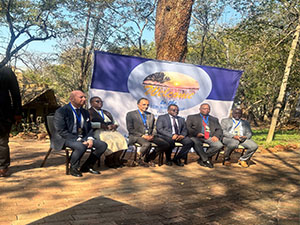
Rutendo Nyeve [email protected]
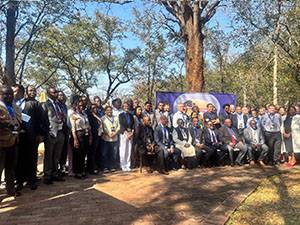
THE University of Zimbabwe (UZ) is hosting the 15th International Workshop on Statistical Hydrology (STAHY 2026) in Victoria Falls, cementing the country’s position as a global leader in hydrological sciences.
The workshop which is being held jointly with the International Commission on Groundwater (ICGW), has drawn over 15 countries to the resort town, bringing together the world’s foremost water scientists, researchers, and policymakers at a time when climate change is reshaping the continent’s hydrological realities .
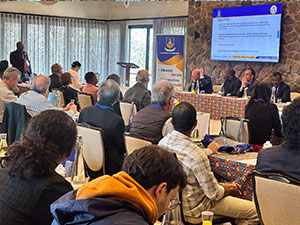
This marks only the third time the conference has been held in Africa, following successful editions in Tunisia (2012) and Ethiopia (2015), highlighting the continent’s rising influence in water science .
This is not the first time the UZ has hosted such a prestigious event.
The university successfully hosted the Third IAHS Panta Rhei International Workshop in Harare in October 2018, demonstrating its established position as a preferred destination for global hydrological discourse.
The joint meeting unites the International Commission on Statistical Hydrology and the International Commission on Groundwater in a single forum, a collaboration that reflects the growing recognition that groundwater is central to Africa’s water security future.
University of Zimbabwe Vice Chancellor, Professor Paul Mapfumo, emphasised the critical importance of water as both a strategic resource and a fundamental human right.
“Water is no longer merely an environmental resource; it is a source of life and the backbone of economic prosperity,” Prof Mapfumo said.
The conference comes at a critical juncture for Southern Africa, which continues to experience increasingly frequent droughts associated with El Niño events, devastating floods linked to tropical cyclones, and rising temperatures that intensify evapotranspiration losses.
Countries such as Mozambique and Madagascar have repeatedly experienced catastrophic cyclone impacts, while inland nations including Zimbabwe, Malawi and Zambia continue to confront prolonged droughts.
Prof Mapfumo highlighted the significance of groundwater in building community resilience against climate shocks.
“Hydrology shows that safeguarding underground aquifers is vital, as these hidden reservoirs provide the buffer that communities need against droughts and climate shocks,” he said.
The Vice Chancellor underscored the role of universities in advancing solutions to water-related challenges, saying the University of Zimbabwe embraces this responsibility through the country’s Heritage-based Education 5.0 Philosophy, which places innovation, industrialisation and tangible problem-solving alongside teaching and research.
“Our objective is not merely to generate knowledge but to go further and generate solutions,” he said.
The University of Zimbabwe has established itself as a regional beacon in training water professionals, with its state-of-the-art Isotope Hydrology laboratory, developed in collaboration with the International Atomic Energy Agency (IAEA), serving as a reference laboratory in sub-Saharan Africa.
The university’s Water, Sanitation, Hygiene and Pollution (WASHP) and Climate Change Management research groups continue to support evidence-based decision-making in government, industry and communities.
The conference is exploring how Earth Observation technologies, Artificial Intelligence, digital twins and real-time monitoring systems are transforming water management.
These technologies now allow scientists to monitor rainfall, evapotranspiration, soil moisture and groundwater dynamics from space with unprecedented accuracy.
The conference aligns strongly with Zimbabwe’s National Development Strategy 2 (NDS2), the SADC Development Agenda, and Africa Vision 2063, while contributing directly to several Sustainable Development Goals, particularly Clean Water and Sanitation (SDG 6), Zero Hunger (SDG 2), and Sustainable Cities and Communities (SDG 11) .




 Bongani Ndlovu