Online Reporter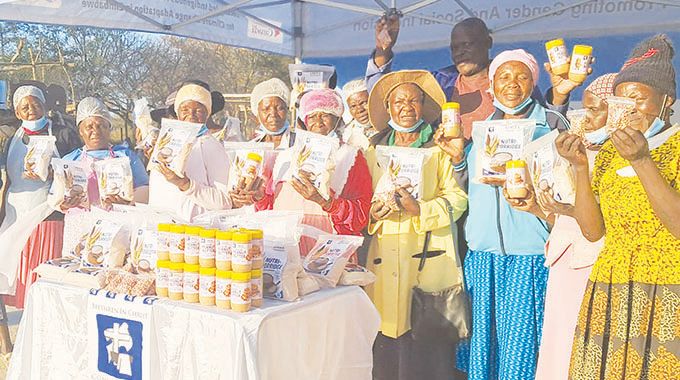
Sukulwenkosi Dube-Matutu, [email protected]
GWANDA women are embracing the Government’s rural industrialisation agenda by transforming traditional grains and other agricultural produce into market-ready products, boosting household incomes, strengthening food security and building resilience against climate change.
Through a climate adaptation programme, rural communities have been equipped with value addition and agro-processing skills that are turning subsistence farming into viable enterprises. The women are now producing nutritious porridge concentrate, sorghum mealie-meal, peanut butter, roasted groundnuts and other commercial products that are finding ready markets in schools and surrounding communities.
The farmers have been trained in small grains value chains, value addition and market linkages under the Locally Led Indigenous Nature-based Solutions for Climate Change Adaptation in Zimbabwe (LINCZ) project, being implemented by the Brethren in Christ Compassionate and Development Services (BIC-CDS) with funding from the Mennonite Central Committee and the Government of Canada.
The project complements the Second Republic’s rural industrialisation drive and broader climate resilience initiatives by promoting sustainable livelihoods through nature-based solutions.
Besides value addition, the programme has supported dam rehabilitation, tree nursery establishment, borehole rehabilitation, beekeeping, honey harvesting and irrigation-related initiatives.
In Sibona Village, members of the Phakamani Group have established a thriving traditional grains processing enterprise where they produce a nutritious porridge concentrate from sorghum and groundnuts, which they supply to schools and local communities.
Group leader Ms Madeline Nyathi said the initiative had transformed the lives of members, many of whom had previously viewed traditional grains solely as food for household consumption.
“As a group, we process traditional grains into a nutritional porridge concentrate and sell to schools and communities. This has helped us to get income to fend for our families. Some of our members are widows, but they have now been economically empowered thanks to this project. Women can also help their husbands financially and not only wait to receive money,” she said.
“We didn’t know that from traditional grains we could come up with a variety of nutritious products. We can produce, set aside some for our own consumption and monetise the rest. Our families are now eating a more balanced diet because of the knowledge that we have acquired.”
Another group member, Ms Buhlebenkosi Moyo, said value addition had unlocked new economic opportunities, particularly through peanut butter production.
She said before receiving support under the project, processing groundnuts using traditional methods was slow, labour-intensive and limited production.
“We used to process peanut butter using traditional means such as grinding and pounding. This was limiting our production and some members ended up leaving the project because it was too labour-intensive,” she said.
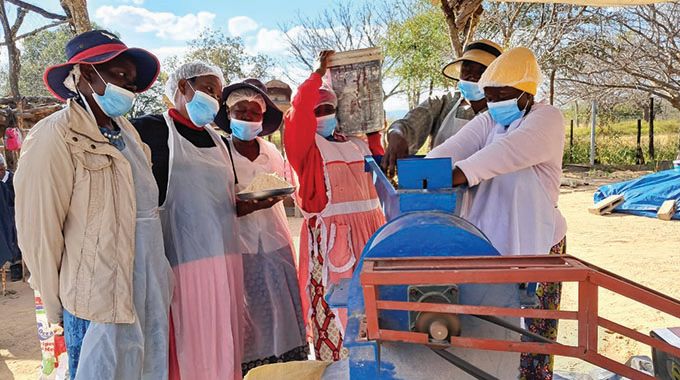
“Through support from BIC under the LINCZ project, we have received equipment that has made our processing much easier. The support has helped us realise our potential. As women we are now able to sustain ourselves. Our ambition is to supply peanut butter, porridge concentrate and mealie meal to major supermarkets.”
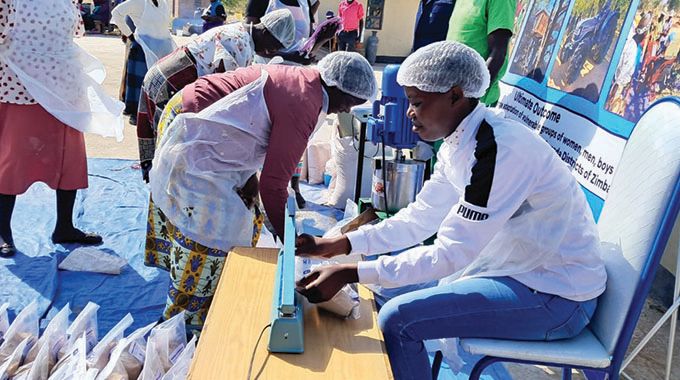
Ms Moyo said access to modern equipment and training had also enabled the group to package its products professionally, improving quality, competitiveness and market appeal.
Ward 4 Agricultural and Rural Development Advisory Services (Ardas) extension officer Ms Immaculate Moyo said the initiative demonstrated the transformative power of value addition in rural communities.
“We are happy to see interventions changing lives. These women are no longer farming traditional grains only for household consumption, but they are now treating agriculture as a business. This is rural industrialisation at play,” she said.
BIC-CDS programme manager Mr Ndabenhle Ncube said the LINCZ project seeks to strengthen communities’ capacity to adapt to climate change while promoting biodiversity conservation and sustainable livelihoods.
He said value addition was one of the project’s key pillars in helping communities derive greater value from agricultural production.
“As BIC-CDS, we have trained community groups from Gwanda in value addition of traditional grains, turning subsistence farming into a viable business. We have trained 316 farmers from seven wards, comprising 109 men and 207 women, on small grains value chains,” he said.
Mr Ncube said farmers had been trained in processing, sorting, grading and value addition of sorghum and groundnuts, as well as machine operation, maintenance and market development.
He added that work was underway to rehabilitate two processing hubs in Ward 16, which will house milling machines, shellers and other value addition equipment to further enhance rural agro-processing.
The initiative dovetails with the Second Republic’s rural industrialisation programme, which seeks to accelerate value addition, agro-processing and enterprise development under Vision 2030 and the National Development Strategy 2 (NDS2).
Across the country, the Government is promoting rural economic transformation through village business units, irrigation development, dam rehabilitation, agro-processing centres, tourism projects and other community-based enterprises aimed at creating jobs, increasing incomes and strengthening resilience to climate change.