Online Reporter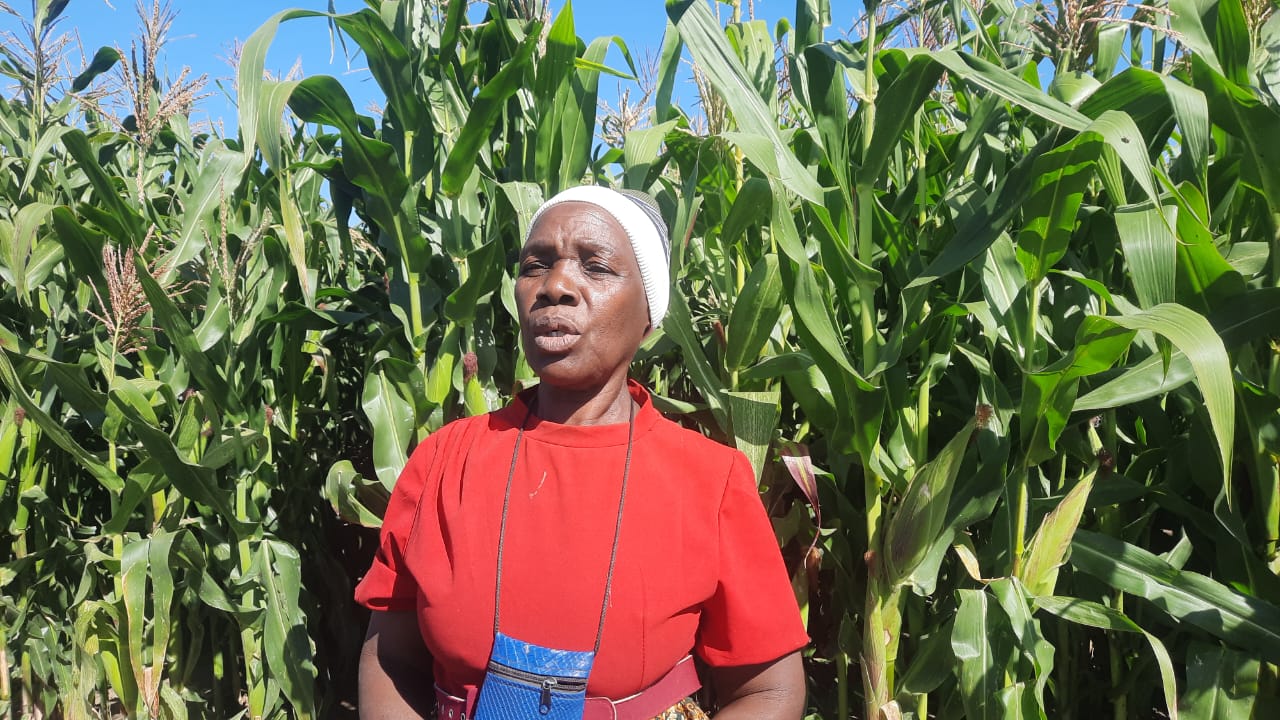
Tendai Gukutikwa
Post Reporter
RURAL communities in the drought-prone Buhera District are being transformed into thriving agricultural hubs, thanks to the emergence of Village Business Units as a powerful solution to chronic food insecurity.
A notable success story has unfolded in Ward 15, where 139 farming households have abandoned unsustainable riverbank cultivation along Mukono River – a shift facilitated by the Climate Adaptation for Rural Livelihoods II (CARL II) Project.
Implemented by Government in partnership with the Southern Alliance for Indigenous Resources (SAFIRE) and Oxfam, and funded by SIDA, the project has successfully curtailed riverbank cultivation, which was contributing to the siltation of the river and downstream Mutunha Dam, which supplies crucial irrigation water to local farmers.
By adopting more sustainable farming practices, these households are now better equipped to withstand the challenges of drought and food insecurity, paving the way for a more resilient and food-secure future.
In an interview in Buhera on Wednesday, Buhera District economist, Mr Takunda Beta praised an initiative that has relocated farmers from riverbank cultivation, citing significant gains in environmental sustainability and food security.
He noted that the initiative aligns with Zimbabwe’s Vision 2030 goals, particularly in regards to rural industrialisation and the principle of leaving no one and no place behind.
Mr Beta said SAFIRE’s intervention has been a development lifeline for communities in the district’s harshest agro-ecological zones.
“Our district’s Gross Domestic Product is improving as villagers contribute to food production, even under drought conditions. Over nine hectares of wheat have been planted, contributing to national food security and reducing hunger,” he said.
Mr Beta added that the initiative has gone beyond food production, empowering households economically.
“People have improved their livelihoods, building better homes, sending children to school, and buying livestock. Crime and social misuse have decreased, and people have regained dignity. Our farmers now know how to adapt to dry conditions,” he said.
SAFIRE’s Director, Mrs Estella Toperesu, said the environmental and socio-economic impact of the project was evident.
“Before the intervention, there was widespread streambank cultivation which was causing siltation of Mukono River and Mutunha Dam. Through the CARL II project in Buhera we raised awareness and moved 139 households off the streambanks,” she said.
She said SAFIRE provided solarised water systems, fencing for gardens, training, and extension services.
“These gardens are now secured from livestock, allowing women to tend to crops without stress. They are growing crops year-round due to reliable water from boreholes and water traps. This means women do not need to travel long distances for domestic water anymore. We are integrating food production, nutrition, and income generation with environmental restoration. It is a full-circle development model,” she explained.
Agritex officer for Ward 18, Mr Hayne Murwisi said the gardens have become learning centres for surrounding communities.
“These gardens are demonstrating what is possible with the right technical support. Farmers are practicing conservation farming, using organic compost, and rotating crops. It is no longer just about growing vegetables, it is about sustainable livelihoods,” he said.
He said Government is working closely with development partners to ensure that the gains are protected through consistent monitoring and farmer education.
“We are seeing improved household food consumption scores, and some of the households are even supplying nearby schools and markets. This is real rural development in motion,” said Mr Murwisi.
Mrs Febbie Manhimbura said the project had transformed her life.
“I used to struggle to feed my children and pay school fees. Now I grow vegetables and sell them every week at the Murambinda market. I have paid all my children’s school fees this term without borrowing a single cent,” she said, adding that the garden had brought unity in the village and encouraged women to work hard.
Another beneficiary, Mrs Tanaka Chitumbura, said: “We no longer depend on food handouts. I now grow enough for my family and sell the rest. I even managed to buy a goat from my earnings. For the first time, I feel financially independent.”