Online Reporter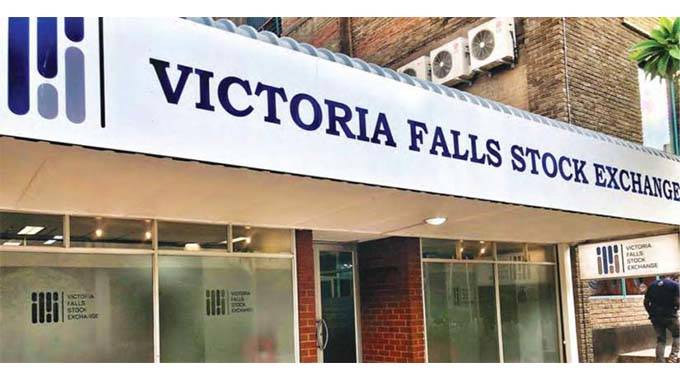
Nelson Gahadza, Zimpapers Business Hub
TURNOVER on the Victoria Falls Stock Exchange (VFEX) has once again surpassed that of the Zimbabwe Stock Exchange (ZSE) for the first quarter of the year.
According to the Securities and Exchange Commission of Zimbabwe (SecZim) Q1 2025 newsletter, the VFEX registered an impressive 117 percent growth, reaching US$58,51 million.
This figure notably eclipsed the ZSE’s turnover of ZiG951 million, which is approximately US$35,80 million, despite the ZSE having a greater number of listed companies, 37, against 13 on the VFEX.
The SecZim newsletter noted that on the VFEX, market activity during the quarter was exceptionally high, on the back of increased demand for a safe haven and special negotiated trade.
The ZSE, on the other hand, witnessed subdued trading activity, which also saw total market capitalisation declining by 8,56 percent from US$2,57 billion in Q4 2024 to close Q1 2025 at US$2,35 billion.
On the VFEX, the All-Share Index rose by 5,99 percent from 104,09 points to close at 110,32 points, driven by increased trading activity.
The ZSE All-Share Index, on the other hand, registered a quarterly drop of 5,67 percent to close at 205,25 points as of March 31, 2025, from 217,58 percent as of December 2024.
Analysts believe the remarkable growth on the VFEX is attributed to increased demand for haven assets and special negotiated trade on the VFEX platform.
In addition, they contend that the VFEX’s growth has significant implications for the local stock market, suggesting that investors are increasingly turning to this platform, potentially due to its United States dollar-denominated nature and the attractiveness of its listed assets.
In an interview, financial analyst Mr Malone Gwadu said the increase in turnover on the VFEX was a reflection of the overall structure of the economy.
“We are a largely dollarised economy and the increase in turnover at a USD-denominated VFEX speaks to overall liquidity in USD and promising prospects in USD; hence, there is steady activity on the VFEX,” he said.
Mr Gwadu said prospects for the capital markets are largely inhibited by tight liquidity.
“But in the medium to long term, we foresee purified activity that reflects economic activity. Previous activity was largely speculative due to previous currency headwinds and inflation, which was not an accurate barometer of market and economic activity,” he said.
Another analyst, Mr Terrence Mafu, said VFEX’s growth is a positive development for the Zimbabwean economy, as it indicates increased investor confidence in the country’s financial markets.
“The VFEX’s performance is a testament to the exchange’s efforts to create a conducive environment for investors. However, the ZSE needs to take note and adapt to the changing market dynamics,” he said.
The ZSE needs to innovate and adapt to remain relevant at a time the VFEX continues to gain ground, he added.
The VFEX, a subsidiary of the ZSE, was established to kickstart the Offshore Financial Services Centre, earmarked for the special economic zone in Victoria Falls.
The USD-denominated exchange has attracted a number of listings, with the bulk of them migrating from the ZSE, largely due to a number of incentives that the exchange offers and its ability for companies to raise capital.
Imara Asset Management, in one of its strategy notes, said the migration of a number of blue-chip companies to the VFEX resulted in the diminishing of the available pool of quality liquid assets on the ZSE.
It further said the weight of some of the illiquid and small-cap counters in the ZiG (Zimbabwe Gold) sub-accounts for its clients had inadvertently increased.
“It is an area we will continue to keep a close eye on in order to not decrease liquidity and increase concentration risks for our clients,” reads part of the report.
FBC Securities, in its Q1 2025 report, said, while Zimbabwe was minimally involved in global trade wars, the local stock market may feel the indirect effects through several channels.
It said foreign capital inflows may weaken as global investors adopt a more risk-averse stance; and the appetite for frontier markets like Zimbabwe could decline, especially in USD-denominated counters on the VFEX, as they channel USD funds towards safer assets.
On the flip side, FBC Securities said local investors may seek stock market exposure as a hedge against currency risk and external volatility, which could support demand for ZSE-listed equities in the local currency.