Online Reporter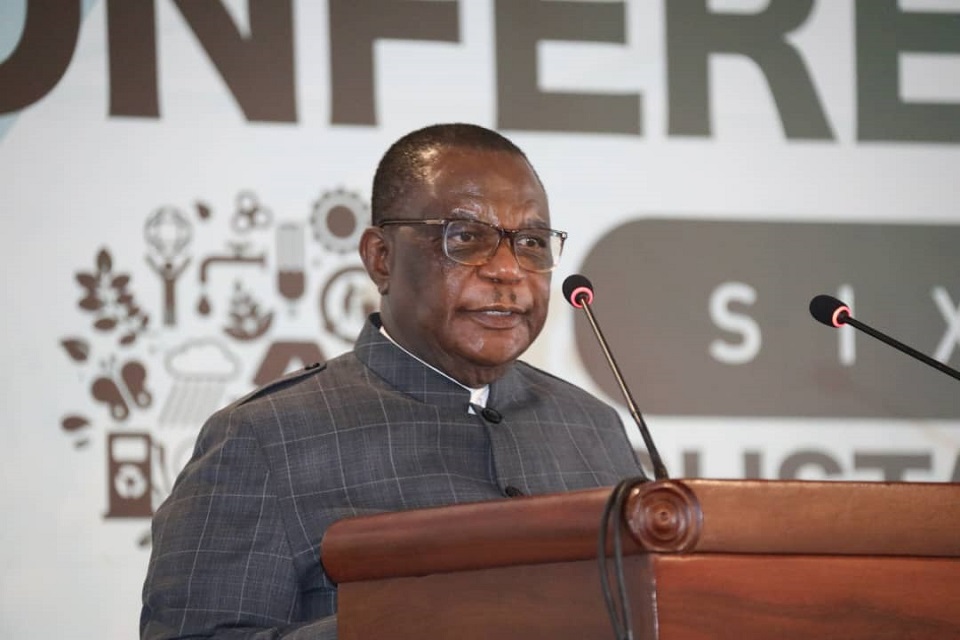
Nqobile Bhebhe in Victoria Falls
VICE President Constantino Chiwenga, yesterday officially launched the National Energy Efficiency Policy, a comprehensive framework aimed at optimising the utilisation of Zimbabwe’s energy resources, minimising waste and fostering sustainability across all sectors of the economy.
The launch occurred at the ongoing 6th International Renewable Energy Conference, which was attended by a wide array of stakeholders in Victoria Falls.
“I am proud to announce the launch of Zimbabwe’s Energy Efficiency Policy during this conference. This policy aims to optimise the use of existing energy resources, reduce waste and promote sustainable practices across the economy,” said VP Chiwenga.
Approved by Cabinet in October 2024, the policy aims to support Zimbabwe’s transition to an upper-middle-income economy by 2030, in line with the national development agenda, Vision 2030.
The National Energy Efficiency Policy is anchored on several key pillars that include sustainability, accessibility, affordability, gender equity and employment creation. Its primary objective is to promote an integrated, data-driven approach to energy efficiency, which contributes to broader socio-economic development.
It also emphasises inclusive strategies that cater for the energy needs of women, youth and vulnerable groups, ensuring their active participation in energy efficiency initiatives.
The policy calls for the adoption of energy efficiency measures across all economic sectors, serving as a foundational document for sub-sectors such as industry, commerce, households and transport.
“This policy is aligned to other relevant national policies, regulatory and statutory instruments, regional and global strategies and action plans to ensure that development needs, country operations and priorities are tailored towards energy efficiency.
“The policy implementation should be given primary consideration. It should be integrated and main-streamed into all economic, Government and project development planning processes. Proper co-ordination mechanisms should be implemented so that the policy achieves its purpose in time,” reads part of the executive summary.
The policy also aims to achieve a range of targets including reducing energy consumption across all sectors, establishing robust energy efficiency data systems and facilitating financing for energy efficiency projects.
It also seeks to establish an integrated strategy to significantly reduce energy consumption in residential, commercial, industrial, transport and agricultural sectors, ensuring effective socio-economic development.
By encouraging the establishment and growth of Energy Service Companies (ESCOs) to drive investment in energy efficiency initiatives, it supports the development of local energy-efficient technologies and enhancing capacity through standards, codes of practice and specifications for equipment and systems.
The policy further integrates environmental and social goals to contribute to greenhouse gas emission reductions while integrating gender, economic, environmental and safety considerations into energy efficiency initiatives and promoting international co-operation.
In the industrial sector, the policy proposes the establishment of an Industrial Energy Efficiency Programme (IEEP), to be implemented in collaboration with partners and stakeholders.
“The IEEP programme shall also leverage resources and synergies under the regional SADC Industrial Energy Efficiency Programme (SIEEP), which is intended to support the implementation of the SADC Industrialisation Strategy and the 2016–2030 Roadmap.
“This will contribute to the competitiveness of the industrial sectors by building their capacity to adopt, invest in and utilise energy-efficiency,” it reads.
In the mining sector, which consumes over 20 percent of the country’s utility-generated electricity, the policy aims to enhance energy efficiency to boost competitiveness and reduce strain on the energy grid.
For artisanal and small-scale miners, the policy promotes the establishment of energy consumption baselines as a foundation for continuous improvement.
In the agricultural sector, the Government pledges to promote energy-smart agro-chain systems by leveraging renewable energy and waste-to-energy technologies.
“The Government undertakes to explore, integrate, and apply various energy efficiency technologies in specified value chains as enshrined in the Agriculture Food Systems and Transformation Strategy (AFSTS),” reads part of the document.