Online Reporter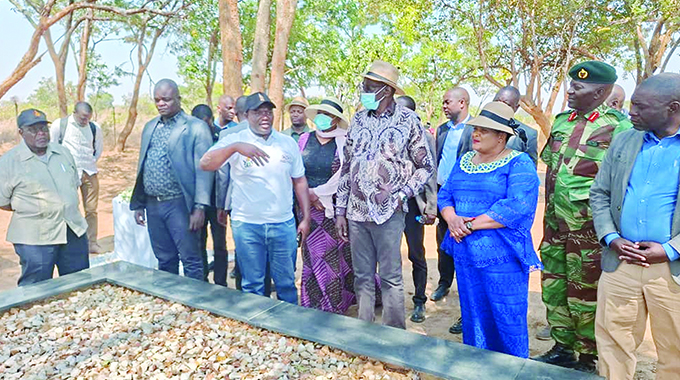
Africa Moyo in Kabwe, Zambia
VICE President Kembo Mohadi yesterday concluded his assessment of liberation war shrines by visiting St Mary’s Cemetery and Mulungushi Liberation War Site in Kabwe.
His first stop was at St Mary’s Cemetery, situated in Kabwe town, which is 139km north of Lusaka.
At the cemetery lie 14 of the 15 Zambian policemen who had been dispatched to Mkushi Girls Camp to rescue survivors, as well as determine the magnitude of the attack on the camp launched on October 19, 1978, by Rhodesian forces, but were killed in the line of duty. About 60 policemen were dispatched to the site on two buses by the Zambian Government, but were ambushed and attacked by Rhodesian ground forces, killing 15 of them.
Of the 15 police officers, 14 are buried at St Mary’s Cemetery, while one was buried in his rural home.
The Zimbabwean Government organised tombstones for the police officers to ensure a dignified burial for them.
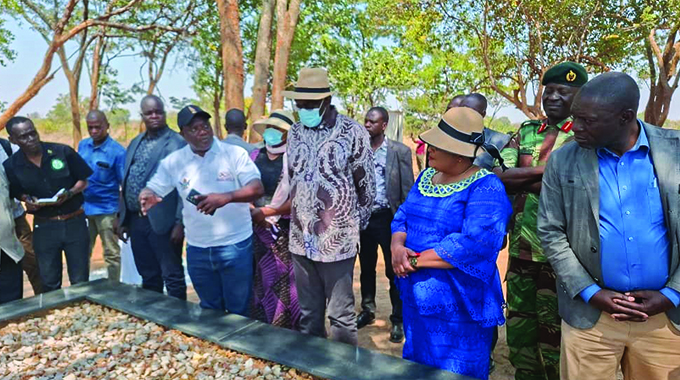
VP Mohadi said Zimbabwe is willing to ensure the other police officer gets his tombstone. Out of the 45 police officers who survived the attack, only two, Mr Alex Ostern Shimambo (72) and Mr Ignatius Katemba (69), are still alive.
In his remarks at the cemetery, Mr Shimambo told the VP that on October 19, 1978, they received a report that the Mkushi Girls Camp, also referred to as Mboroma Camp by locals, had been bombed by Ian Smith’s forces.
“The police command organised police officers to go to Mboroma Refugee Camp to give aid or assist the girls who were injured, take them to the clinic, and bury the dead,” he said.
“We spent a night and on the 20th of October 1978, we were joined by the Zambian army under the command of Captain Banda.
“We spent another night and on 21st October, we left Mboroma Police Station and went to the refugee camp where the girls were massacred. When we reached near the camp, we found ourselves ambushed and there was heavy gunfire. They started firing at us and all the police officers and the soldiers panicked and we ran in different directions.”
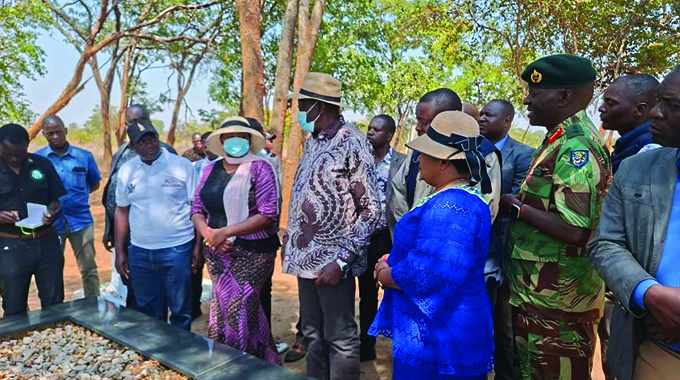
Mr Shimambo said from there, he ran into the bush with his colleague, Mudenda and found a group of girls who were badly injured.
“We did not take those who were seriously injured. We only ran with eight girls who were injured but in a better state.
“We ended up boarding a bus and brought them to Kabwe. After the attack, it was discovered that 15 police officers and some soldiers were killed on the spot,” he said.
His colleague, Mr Katemba, gave a similar account.
VP Mohadi described the two as “brave men”.
“They are indeed the heroes of our liberation struggle as well. If they had not been intercepted by the Rhodesian forces, then I am sure we would have buried our people, our girls still intact.
“But because of that interception, no one then dared to go there until we had to pick those bones after a very long time and we had to put them in mass graves.
“I am very much touched by their bravery. It was not their fight; it was our fight, but because of the Pan-Africanism that we adhere to, they had to take it upon themselves to go and try to rescue the girls. Unfortunately, they could not make it. They met their fate on the way to that particular place,” he said.
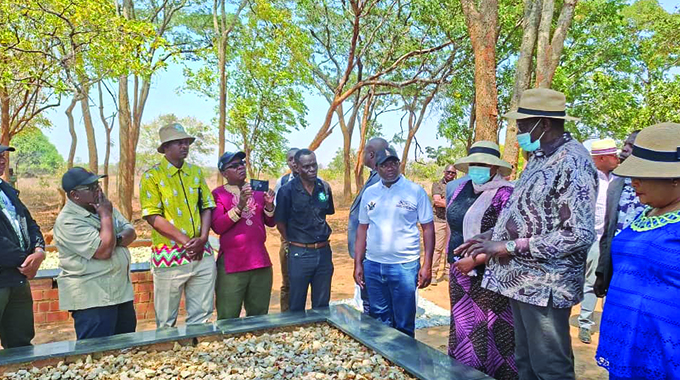
VP Mohadi said Zimbabweans do not have enough words to thank those who were killed and/ or survived the attack.
He then laid a wreath and left for the Mulungushi Liberation War Site, located about 48km northeast of Kabwe. Mulungishi was attacked twice, on December 22, 1978, and on April 14, 1979.
Upon arrival, National Museums and Monuments of Zimbabwe director Mr Lovemore Mandima gave a brief account about the site, before VP Mohadi made some interventions, relating to the defensive systems put in place at Mulungushi to neutralise the enemy, which resulted in the low number of deaths.
The VP then laid a wreath before assessing the two mass graves that are believed to have the remains of between 27 and 33 freedom fighters killed. While the mass graves are built up and have black granite coping on the walls, the top has marble stones only and the graves are now caving in due to weather vagaries.
That did not please VP Mohadi, who insists freedom fighters should be accorded decent burials, despite where they are, since they brought the independence that everyone is celebrating. He challenged Deputy Minister of Home Affairs and Cultural Heritage Chido Sanyatwe to ensure the issue was corrected urgently.
“I won’t be coming here regularly, but Home Affairs should ensure that this is corrected. Are we together?” he said.
VP Mohadi also challenged Information, Publicity and Broadcasting Services Deputy Minister Dr Omphile Marupi to ensure that more coverage was accorded to all liberation war heroes and heroines.
VP Mohadi was accompanied by Deputy Chief Secretary to the President and Cabinet Reverend Paul Damasane, Zimbabwe’s Ambassador to Zambia Charity Charamba, Institute of African Knowledge chief executive officer, Ambassador Kwame Muzawazi, and other senior Government officials.
He left Zambia yesterday evening.