Theseus Mauruki Shambare in VICTORIA FALLS
MONDAY evenings in many parts of the world are reserved for winding down after the first day of the working week.
But in Victoria Falls, work and leisure are seemingly inseparable twins. Even a day of serious scientific engagement can end in celebration.
The first beat of the drum seemed to announce that the day’s business was over. Having left the congress venue behind, delegates made their way to the Boma, where scientific discussions gave
way to an immersive celebration of Zimbabwean culture.
The mbira opened the session with melodious Shona songs. Other traditional performances
followed, with energetic dances bringing the indoor thatched venue to life.
Among the guests was Kutsaga Research Board chairperson Mr Aaron Denenga, who traded the
conference-room atmosphere for an evening of rhythm, dance and cultural discovery.
Wearing a traditional chitenge (ntsaro), Denenga blended into the celebration as delegates shared
Zimbabwean music, food and dance.
“What made the evening special was the opportunity to step away from the formal conference
environment and experience Zimbabwean culture in a very personal way. We spend much of our
time discussing science, research and the future of the tobacco industry. But here we were, sharing
food, music and laughter with people from different parts of the world. That was equally
important,” he said.
Guests were each handed small drums and encouraged to join in. Soon, delegates who had spent
the day exchanging scientific arguments were keeping rhythm together.
Kutsaga Deputy Vice Board Chairperson Professor Florence Mtambanengwe was among those
swept up in the drumming.
“I certainly did not expect to leave the evening with sore hands! We were encouraged to participate,
and once the drumming started, it was difficult to resist. It was a wonderful experience because
everybody was involved,” she said.
The cultural encounter was one expression of the wider exchange taking place at the 70th Congress
of the Cooperation Centre for Scientific Research Relative to Tobacco (CORESTA), hosted in
Victoria Falls from October 26 to 29 under the theme, “Science for Sustainability and Harm
Reduction in the Transforming Tobacco Landscape.”
The congress brought together researchers, scientists and tobacco industry specialists to examine challenges across the sector, from crop production and plant health to product technology,
toxicology and harm reduction.
The second day offered another opportunity to connect beyond the scientific sessions. At Elephant
Hills Resort, delegates gathered for an anniversary evening of networking and celebration, marking
CORESTA’s 70 years.
The programme included the presentation of prizes to winners of the 70th CORESTA Congress Anniversary Quiz. Thomas Lindegaard of Scandinavian Tobacco Group, Denmark, won first prize;
Marcel Koch of Delfort, Austria, was second; and Andy Crow of Eastman, United States, took third
place.
An anniversary cake-cutting ceremony, cocktails, music and dancing followed, giving delegates time
to exchange experiences and strengthen professional relationships. The social programme
complemented the congress’s central purpose: building connections across a global scientific community.
CORESTA president Helena Digard said the challenges facing the tobacco industry were too complex for any country or institution to tackle alone.
“They cannot be addressed by one country, one research institution or one group of scientists
working in isolation. We need to share evidence, compare experiences and learn from one another,”
she said.
Whether discussions centred on agronomy, plant health, product science or exposure research, the
objective was to strengthen the scientific knowledge available to the industry. Digard emphasised
that the future of science depended on communities working together.
For Zimbabwe, hosting the congress was an opportunity to share local research while learning from
international developments. Kutsaga joined CORESTA in 1961 and celebrated its 75th anniversary in 2025.
Kutsaga chief executive officer Dr Frank Magama said the institution’s research foundation had to
keep evolving as climate variability and pressure on resources changed the conditions under which
farmers operate.
“Climate variability is forcing us to rethink how we produce tobacco. We need varieties that can
withstand challenging conditions, better approaches to crop protection and technologies that use
resources more efficiently. Research must anticipate these challenges rather than simply react to
them,” he said.
That work includes four climate-smart tobacco hybrids — T78, T79, T80 and T81 — which have undergone multi-location testing and are at the limited-release stage, with further evaluation
continuing.
Kutsaga is also investigating biofertilisers. Research findings indicate that they can reduce chemical
fertiliser application by 25 percent while maintaining saleable yields and quality.
Continues on www.sundaynews.co.zw
For Magama, however, the value of research is ultimately measured beyond the laboratory.
“We cannot measure the success of research only through publications or technologies developed in
laboratories. We must ask whether a farmer can access that innovation, afford it, use it and realise a
tangible benefit,” he said.
That test is evident in research into tobacco curing, where fuel use, leaf quality and environmental
pressure intersect. Smallholder growers remain heavily dependent on wood-fired curing systems,
making improvements in efficiency important both to production costs and woodland conservation.
Kutsaga Agricultural Data Science and Engineering Research Officer Owen Mudadisi said the
institution’s work on improved barns was not simply about burning less fuel.
“We realised that reducing the amount of fuel used during curing was not enough. We also had to address the uneven distribution of heat and moisture inside the barn because these factors affect
the quality of the cured leaf. That is why we started looking at how heat could be distributed more uniformly,” he said.
He said engineering measurements had direct consequences for farmers who had invested a season in growing tobacco and needed to cure it without compromising quality.
Separately, research on a family barn has recorded a 78 percent reduction in firewood consumption compared with older conventional barns.
While improving existing farming systems remains important, the congress also looked towards technologies that could change how agricultural decisions are made.
Agricultural Research and Extension Trust chief executive officer Dr Albert Changaya, from Malawi, said artificial intelligence and drones could improve crop monitoring and farm management.
“Aerial imagery can help us identify field conditions, while sensors and other monitoring tools can provide information that supports better decisions,” he said.
But access remains critical. Changaya warned that innovation should not be concentrated among large commercial producers, but adapted to the realities of smallholder farmers.
That concern was echoed by Kutsaga executive director for Research and Extension Dr Susan Dimbi, who said technology had to be accompanied by training, infrastructure and extension support. Developing an innovation, she stressed, was only part of the task; farmers also had to be able to adopt it.
International participation gave these discussions a regional and global perspective. Hg Ravish, vice-president of Leaf Operations and Sustainability in India’s ITC Agri Business Division, said countries had different capabilities that could complement one another.
“India has invested in different parts of the tobacco value chain, while Zimbabwe and other countries have developed their own areas of expertise. There is a lot that we can learn from one another,” he said.
He described the exchange as “cross-pollination of ideas”, with shared knowledge creating opportunities for improvement across the industry.
The setting in which these discussions unfolded added another dimension to the visit. Victoria Falls is not simply a conference destination; it is a place where tourism infrastructure operates alongside a living natural environment.
Deer could be seen around some hotel grounds, while elephants occasionally ventured onto lawns to graze. A fallen section of perimeter fencing at one hotel offered a reminder of the practical realities of operating alongside wildlife.
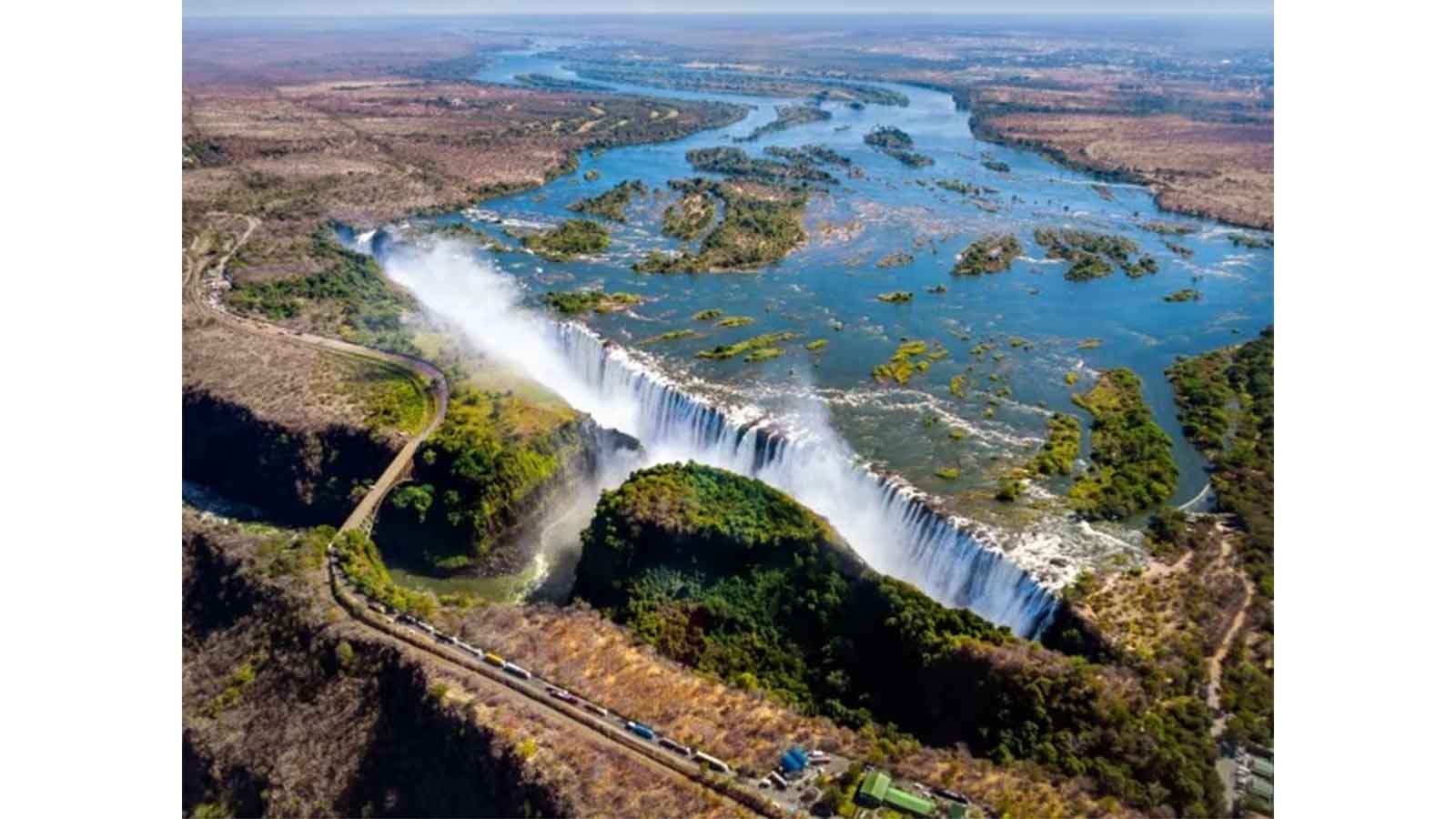
For visitors seeking adventure, the Victoria Falls Bridge offers bungee jumping and ziplining above the Zambezi River gorge, while helicopter flights provide aerial views of the Falls and surrounding landscape.
Ravish and his colleagues also encountered the town’s hospitality beyond the resort grounds.
“We were walking around town with colleagues when a commuter omnibus stopped and offered us a lift. It was a simple gesture, but it showed us the warmth and hospitality of the local people,” he said.
For Prof Mtambanengwe, the cultural programme was another way for visitors to understand Zimbabwe beyond its scientific presentations.
“In the conference room, we engage through presentations and scientific arguments. At the Boma, we connected through music, dance and laughter. It showed that there are many ways of bringing people together,” she said.
Dr Magama said the industry’s future would increasingly depend on combining conventional agricultural research with digital technologies, predictive tools, genetics and environmental monitoring — and ensuring that these developments translated into a more productive and sustainable industry.
As delegates leave Victoria Falls, they carry more than research findings and technical debates: the sound of the mbira, the beat of drums, an anniversary cake shared among international colleagues, and memories of a destination where wildlife, hospitality and adventure sit alongside scientific exchange.
In Victoria Falls, tourism and research did not compete for attention. They shared the same setting, each giving international visitors another reason to engage with Zimbabwe — and another way to understand the country.
Ends//…