Chronicle Editor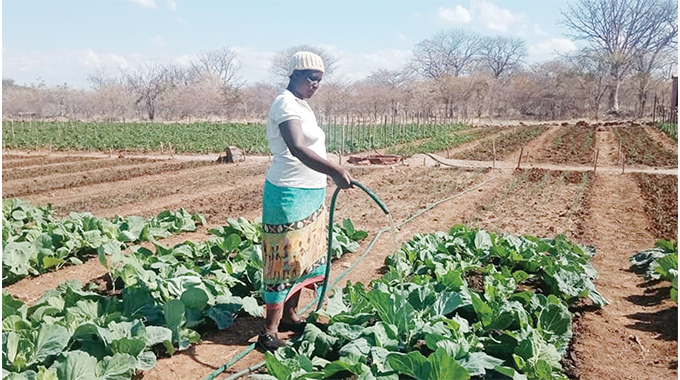
Fairness Moyana in Hwange, Sunday News Correspondent
HUNDREDS of villagers have benefited from six solar smart irrigation gardens installed by World Vision in Hwange District as part of efforts to enhance food security in the face of climate change.
The gardens are expected to see more than 1 200 children benefiting from improved nutrition through enhanced agricultural production.
The child focused humanitarian organisation recently embarked on an ambitious project which will see at least each village having a solar-powered irrigation garden. So far irrigation schemes have been established in Lumbora, Bhale, Chilanga, Ndowe, Makala and Sidinda under the Hwange Emergency Livelihoods Recovery and Covid-19 response project.
Speaking during a tour of some of the gardens on Friday last week, Area Development Programme manager, Mr Lovemore Nyoni said the project was an intervention to the effects of Covid-19 as well as climate change.
“The advent of Covid-19 brought challenges especially here in Hwange where some breadwinners were working in the tourism sector. The resultant lockdown gravely affected livelihoods as some also were depending on small businesses in the informal sector which is also related to the tourism industry,” said Mr Nyoni.
“At the same time Hwange is a very arid area receiving less rainfall for agriculture resulting in food insecurity. Food assistance has been running in these areas for a long-time causing dependency. Now the establishment of these solar irrigation schemes is an empowerment to the people to ensure they produce their own food. This brings dignity and sustainability. About 1 200 children are benefiting directly from this development,” said Mr Nyoni.
The schemes which cover one hectare have an average of between 40-60 members with room to expand and boasts of a 2 000 litre water reservoir. Villagers told Sunday News that they were now food secure and able to generate income.
“Since the establishment of the garden we are now able to eat healthy food as well as derive income from selling our products in Hwange or Victoria Falls. We are in an area that is dry through and through where water is scarce. Now we are able to take better care of our families,” said Mrs Sibalibaziso Sibanda.
In Lumbora and Bhale where human-wildlife conflict results in loss of harvests villagers expressed gratitude arguing that they had a fallback in the irrigation schemes.
“Here in Lumbora we have a problem of elephants which besiege us every agricultural season destroying our crops.
We have over the years depended on food aid which is not enough to sustain us. The garden has afforded us an opportunity to have a fall back,” said Ellen Nyoni.
The six irrigation schemes have transformed dry patches into greenbelts with women making up the bulk of the membership. Vegetables such as onions, tomatoes, chomolia and sugar beans are grown by the beneficiaries. The establishment of irrigation schemes are in line with National Development Strategy 1 in which Government envisions a food secure citizenry by 2030. Government has been capacitating communities to venture into irrigation as the effects of climate change become more pronounced.



 Online Reporter