

 admin
admin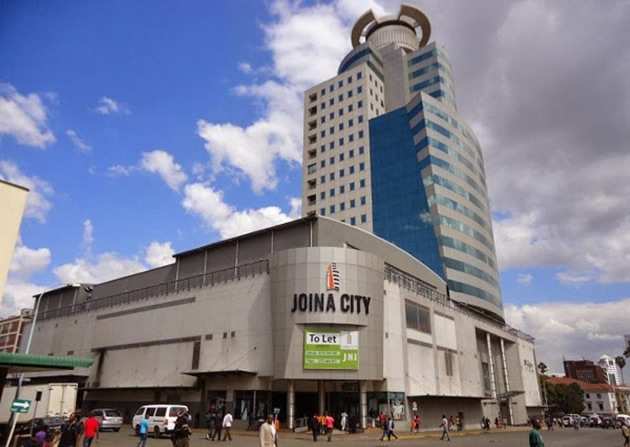
Sydney Kawadza Senior Features Writer
Harare city council has a grand programme that seeks to turn Zimbabwe’s capital into a world class city by the year 2025. The project will see most of its infrastructure going through major facelifts and refurbishments to ensure that it competes with major cities across the globe.
The programme, which was launched in 2012, has seen the completion of some projects like the famous Joina City Mall and office block.
The whole project seeks to transform Harare from a third world city into a world class city with a well-oiled, co-ordinated and functional infrastructure with abundant opportunities for its people.
City fathers have used every available forum to express their optimism that the adoption of the result-based management system will help Harare attain this status.
The strategy is anchored on stakeholder participation and high performance from its teams.
Some of the projects, according to Harare City spokesperson Mr Leslie Gwindi, would include the Jason Moyo project that would see the whole avenue being converted into a shopping mall.
The Jason Moyo Shopping Mall would be in the same as the First Street Mall.
“Some of the projects that are expected to change the face of Harare include the already built Joina City, the Mall of Zimbabwe, Mixed use Hilton Hotel and Residential Project.
“There are also plans to build upmarket bus termini at Copacabana, Fourth Street, Market Square and Charge Office. These structures will have office blocks, eateries and car parks. Some developers have already received council approval for such projects,” he said.
Mr Gwindi said the city was also amending various local development plans to allow for the integration of mixed uses such as residential, recreational and business.
“In the CBD there are ongoing plans to allow the mixed use of high rise buildings. This will see some of the various floors being used for different purposes such as shops, offices and residential purposes. The net effect of such a development is that it reduces on traffic congestion,” he said.
However, the turmoil that has been experienced at Town House since the strategy was launched has drawn mixed feelings with residents and observers calling for major policy shift and radical change of attitude for the endeavours to be achieved.
Residents have complained of a collapsed service provision where the local authority is failing to provide such essential services such as garbage collection, dilapidated water and sewer reticulation systems.
The authority boast that their 5 000 kilometres road network services close to three million people but it has, however, been reduced to dangerous roads riddled with potholes.
Most buildings in Harare’s Central Business District were built way back in the colonial days and have become death traps with occupants confessing that disasters are averted due to God’s hand.
Year in, year out, authorities at Town House have threatened to demolish such buildings that do not conform to its safety, health and fire regulations.
The major hindrance has been the political bickerings that are well documented that writing about them would be a diversion.
However, residents’ representatives and experts that despite challenges that have bedevilled Town House for so many years its objectives can be attained as long as the environment is made conducive for development.
The Harare Residents Trust expressed optimism that Harare can achieve the vision by 2025.
Committees’ officer Ms Pretty Chabuda said challenges faced at Town House cannot remain forever hence the need for the right calibre of officials who have a positive attitude.
She said there is also need for a change in the mindset of elected representatives.
“Given the current scenario that the City is in power struggles between elected and the executives, if handled with a mind for development rather than power struggles, the situation will normalise and our expectation is that all involved should concentrate on achieving the local development plans,” she said.
“Corruption has become deep seated at council where senior council officials are reportedly pocketing the bulk of the revenue in huge allowances and salaries from their cash cow account- Harare Water.”
She called for the production and publicising of audited financial reports to the rate payers as a measure to build confidence among stakeholders.
University of Zimbabwe Department of Rural and Urban Planning chairman Mr Joel Chaeruka said cities the world over are engines of development and Harare has to put in place policies of inclusivity where everyone participates in policy formulation including the homeless and people in the informal sector.
“There is need to plan with them, improve their lot and get them to contribute meaningfully to the development of the town towards a formal economy. It will be difficult to archive world city status while excluding some member of the urban society. It is a debatable issue but some South American cities are good examples.”
He said in developed cities councillors who would have been elected into office assume a developmental role and become development agents.
“They set targets and sweat towards achieving them. We would like to see Harare city councillors and officials get down to serious business towards achieving the set development targets. In Zimbabwe, in general, councillors do not assume a developmental role.”
Mr Chaeruka said: “The proposals to re-develop the bus termini in the CBD are certainly in the right direction. World class cities have inviting bus and train terminals. In Harare at the moment one goes to the bus terminus only because there is no other option.”
He however said Harare needs introduce conventional buses to ply routes with mass movement of passengers.
“Areas that are sparsely populated would then be serviced by Kombis. Kombis should not be the major form of transport. It needs the right policies and discipline to do that,” he said.
He also called for massive redesigning and development of the road infrastructure.
“There is need for at least two level roads in some parts of the CBD. In the Kopje area the question to ask is if it is possible to have underground tunnels for purposes of draining traffic west and south west of the CBD, part of the public transport is taken underground.
“Such large scale superstructure development will have to be accompanied by significant re-laying of water and sewer pipes in the CBD. Hopefully the plans include that.
This becomes a project on its own.
“World city status comes with benchmark governance. It is a process. The city fathers and mothers have to put in place a corporate management plan that will see them using around 30 percent of the budget for salaries.
“A developmental agenda for the city will not be sustainable in the current situation where about 70 percent of the budget goes towards salaries.”
Urban planner Mr Percy Toriro said the city is facing immense challenges ranging from inadequate housing, deteriorating ecological situation, improper waste management techniques, critical water shortages, insufficient employment creation due to limited focus on local economic development, and a poor road network manifesting itself in congestion particularly in the city centre.
“The decision of city authorities to aspire for world class city status is a good one and must be supported. Harare is our capital city and reflects not only our history, but also our aspirations.
“Attaining world class city status means sufficient and quality housing for all classes of people, good road networks including ancillary facilities for both public and private transport, sufficient portable water, a sustainable development framework, an improving environmental condition, clean suburbs, and a vibrant safe economic environment.”
He added: “Aachieving the status is a collaborative effort by all. We urge the city authorities to engage everyone that matters from government to the informal sector.”
Mr Toriro called for a paradigm shift in the manner in handling of business such as speedy processing of permits for development and the creation of a conducive management process.
However, Urban Development Corporation planning officer Mr Shingai Kawadza said achieving its goals would not be a stroll in the park for Harare City.
“The whole issue is complex and requires a great deal of dedication and commitment on the part of the city fathers and management. Mixed use developments demands a lot in terms of infrastructure especially sophisticated water and sewer reticulation system.
“As of now, it is common knowledge that Harare has failed to provide these essential services to the current populace and the nebulous question which many will ask is, can they deliver while they have failed to do so efficiently for the past decade?
This concept was once adopted in the Kopje area with residential units on top of buildings whilst offices are placed underground. However, this has not been successful of late due to council’s failure to provide the necessary services there.”
He said the strategy could be meaningful and impact positively on the Zimbabwe’s economy. It is however still not clear where the necessary capital/investment will come from, let alone the committed personnel to deliver.
“It is sensible to note that before the city embarks on such an ambitious goal, it starts by correcting the current problems facing the city,” he said.
A lot needs to be done and it involves mobilisation of various stakeholders in the construction industry to create partnerships for development.
Subcontracting some strategic infrastructure to serious private developers can solve the equation.
Harare also needs to mobilise critical Government departments for surveyors, planners, architects, civil engineers, financiers and banks.
There is also need for the completion of abandoned projects like Kunzvi Dam to ensure availability of clean and safe water for Harare, which will go a long way in the development of the city.
- feedback to: [email protected]



 Online Reporter