Online Reporter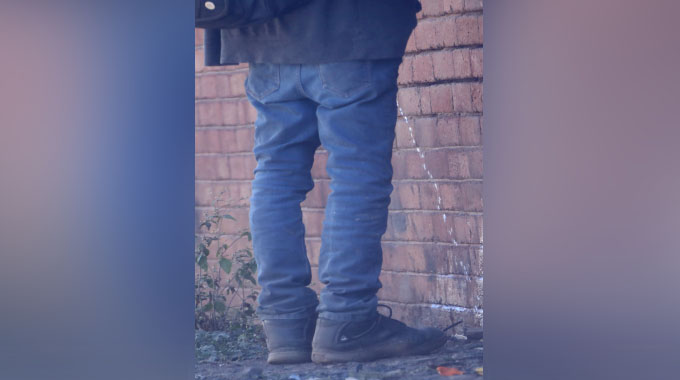
Bruce Ndlovu, Sunday Life Reporter
AT night, the flamboyant tree on Josiah Tongogara Street and 11th Avenue in Bulawayo appears lonely.
From dusk until the early hours of the morning, its only company is a procession of the inebriated — leaning on it for balance, companionship or both, after heavy nights of drinking.
Come dawn, as motorists whiz by and residents from surrounding apartments begin their day, the tree sits in silence — unnoticed and unbothered.
By mid-morning, however, the situation begins to change.
Perennially drunk young men, who wash cars in search of a dollar for their next round of illicit brew, start to buzz near the tree.
As the day wears on and the strong spirits take a toll on their young bodies, they are replaced by more “respectable” drinkers — white-collar workers, gold miners and money changers. Instead of cheap, illicit brews, these imbibers opt for “cleaner” alternatives.
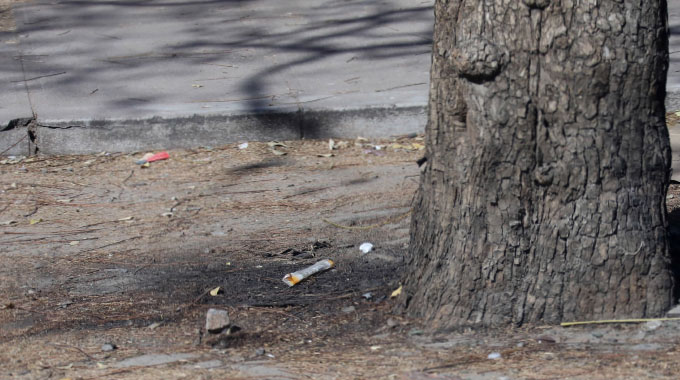
Whisky, aged for years in faraway casks and lagers bearing exotic names start to appear. As the afternoon stretches into late evening, empty bottles and cans are dumped by the bucket load under the tree, while occasionally, imbibers relieve themselves.
For the drinkers, the tree is a shelter, a lavatory and a place for fellowship all at the same time.
While the protagonists might not see anything wrong with it, some believe that the culture of drinking from a car boot and the subsequent behaviour is not only an ever-growing menace to the city’s trees but also a threat to
Bulawayo’s reputation as one of the cleanest cities in the country.
“If a person urinates on a tree, the trunk of that tree will start to rot because urine is very poisonous to trees,” said National Tree Ambassador Never Bonde last year.
“We are losing thousands of trees because of people who are urinating on them.”
Rising “dollar deal” culture
Bulawayo’s drinking culture has undergone a seismic shift.
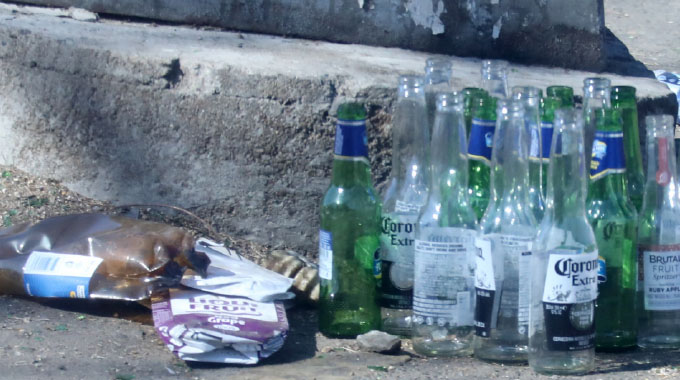
Gone are the days when patrons crowded bars and pubs. These days, discounted street alcohol, sold from car boots or dimly lit corners, is the drinker’s preferred choice.
The fabled “dollar deals”— beer and whisky sold at discount prices by illegal alcohol sellers — have ushered imbibers away from the city’s bars and pubs, leaving many owners counting their losses.
Bulawayo is a hotbed for smuggled alcohol, fuelled by the city’s proximity to the Beitbridge border and the number of its citizens in neighbouring South Africa.
Despite numerous crackdowns by law enforcement authorities on both sides of the border, long-established smuggling routes and connections continue to thrive and dictate the habits of imbibers in Bulawayo.
Resultantly, it has now become fashionable to see imbibers drinking from their cars or under trees despite the ever-present threat of arrest. A culture that took root during the Covid-19 pandemic has proved hard to shake off, as imbibers refuse to go back to old habits.
“During the Covid-19 pandemic, people started questioning whether it was worth going to our bars for alcohol or even a plate of food because they can get these things for cheaper prices outside. This is perhaps why we were a bit reluctant to put our monies into activities that were felt are a bit risky,” said Dalubuhle Sibanda, one-time manager of a city pub.
Music or live entertainment by city establishments has not proved enough to bring back customers, as imbibers opt for low-cost alternatives.
Ablution facility crisis
With drinkers increasingly congregating in public spaces, a lack of ablution facilities has become a glaring concern.
According to the Bulawayo City Council, the city centre — bounded by Masotsha Ndlovu Avenue, Robert Mugabe Way, 1st Avenue, Samuel Parirenyatwa Street, Railway Avenue, and Basch Street — has only eight public toilets: four free and four paid.
Two of the free toilets are city-run (8th Avenue/Robert Mugabe Way and 5th Ave/Fife Street), while two others are leased from private owners.
The remaining four are pay toilets run by community members.
Acknowledging the lack of ablution facilities in the city, Health Services Department assistant director Mr Charles Malaba in 2023 encouraged business owners to open up their toilets to the public.
“A person in town who needs to use a toilet is usually a customer or client of a particular business; it is only fair and expected that businesses make the toilets in their premises available to their clients,” he said.
For imbibers, who buy alcohol from informal sellers, this is usually not an option, which has led to rampant public urination.
Over the years, the city’s public toilets have not covered themselves in glory, acquiring a reputation as squalid places where one can come face-to-face with horrors they would rather avoid.
As the city’s population has exploded in the 21st century, ablution facilities have not been able to cope with the growth.
Vendors, vagabonds, street children, shoppers and imbibers have been forced to turn to unconventional alternatives to relieve themselves. Sometimes, the results have been tragic.
In September 2020, an unidentified woman from Fort Rixon who had come into the city to buy goods for resale was electrocuted at a Bulawayo Zesa substation between Robert Mugabe and George Silundika, along 5th Avenue, where she had entered to relieve herself.
While trees might not kill, they are increasingly the unintended victims of the city’s sanitation crisis.
Sowing seeds for the future
While the new habits that have taken root are thought to be a threat to the long-term health of the city, city fathers have not been sitting on their laurels.
While jacarandas, flamboyant, and acacia trees are prevalent in the Bulawayo CBD, there has been a drive to introduce trees native to the City of Kings.
In a move to combat deforestation and restore ecological balance, the City of Bulawayo in April this year launched an ambitious plan to plant 10 million indigenous trees over the next 10 years.
“We must empower communities to grow their own nurseries and re-green Bulawayo’s neglected spaces,” said Bulawayo Mayor, David Coltart.
“They are not uniform. There are literally about 100 species. We have drawn these from obviously the region. It is not just a matter of planting trees.”
Speaking at the same occasion, African Indigenous Tree Planters (AITP) in Zimbabwe representative, Busi Malunga, outlined the value that trees bring not only to the local landscape but to the health and culture of citizens.
“Today, we are not just planting trees, we are sowing seeds of resilience, pride and possibility. At a time when the world speaks of biodiversity loss in dire tones, we choose to respond with action through unity, conservation and restoration,” she said.
“These trees are not just carbon sinks or shade providers, but they are living libraries of medicine, food and ancestral knowledge. When we lose indigenous trees, we erase chapters of our history and compromise our future,” said Malunga.
Conservationists and lawmakers are not the only ones to take up the fight; ordinary citizens are also voicing their displeasure at an alien culture that now seems prevalent in Bulawayo.
“How can a father urinate in front of young school girls?” quizzed Mcendisi Ncube, a resident in the CBD.
“We need to have a re-look at ourselves because even if you built twenty more toilets, there is a lack of morality that seems to have taken root among our people and we are the only ones that can stamp it out.”