admin
admin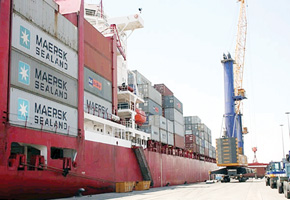
The dry port is expected to facilitate the importation of goods from America and Europe.
In an interview yesterday, Mr Bimha said Government was expected to allocate funding towards the project but could not be drawn into revealing the amount required to set up the facility.
“The major challenge we are facing as Government is the funding issue. As a ministry we are very much interested in seeing the dry port in place. In terms of funding requirements, I would not be aware, contact the Ministry of Transport, Communication and Infrastructure Development because that project is being spearheaded by that ministry,” he said.
Officials in the Ministry of Transport, Communication and Infrastructure Development did not respond to written questions sent by Chronicle.
Last year Government was in discussions with other stakeholders to establish the Walvis Dry Port.
In 2011, the Walvis Bay Corridor Group held an information session in Harare to enlighten potential and existing transport operators in Zimbabwe about the benefits of using the bay’s corridor routes.
To set up the port, Government is working in conjuction with one of the country’s transport concern, Road Motor Services (RMS) as well as the Namibia Port Authority and the Walvis Bay Corridor Group.
Zimbabwe recently acquired land to develop a dry port in Namibia with the Government agreeing that RMS would handle the project.
Due to limited resources, RMS has had to enter into a tripartite arrangement with other stakeholders.
By utilising the Trans-Kalahari and the Walvis Bay-Ndola-Lubumbashi Development Corridor to Zimbabwe, the country’s imports from Namibia would save time and costs.
To promote the use of the Walvis Bay Corridors, work is in progress by Government to introduce a one-stop border concept at Plumtree border post between Zimbabwe and Botswana.
The one-stop border concept has proved to be efficient as seen at Chirundu Border Post where congestion and delays of traffic among other positive development have been eliminated.
Zimbabwe and northern Sadc-member states using the Beitbridge Border Post where the one-stop concept has not been introduced to move their goods are reportedly losing business worth between $29 million and $35 million per year.



 Online Reporter