Online Reporter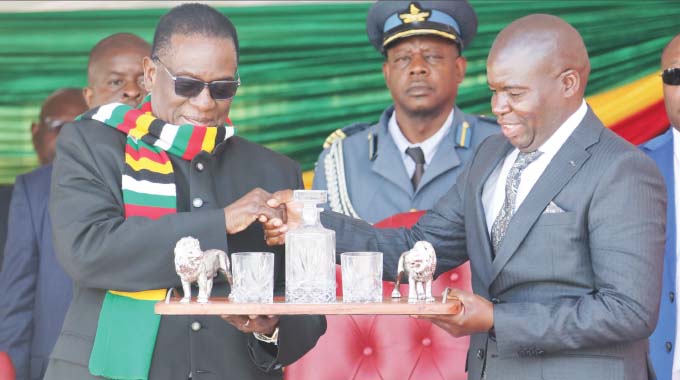
Wallace Ruzvidzo
PRESIDENT Mnangagwa has urged Zimbabweans to adopt a culture of responsible waste management and environmental stewardship as the Second Republic introduces modern waste collection systems.
In his remarks while commissioning Geo Pomona Waste Management’s new state-of-the-art sorting plant and refuse collection trucks in Harare yesterday, the President said waste management was everyone’s responsibility; hence, all hands should be on deck.
“Let us embrace a culture of responsible waste disposal, recycling, and environmental stewardship in order to realise our goal of a clean, safe, and healthy environment.
“However, the responsibility of waste management does not lie with Geo Pomona alone, but is the duty of every Zimbabwean.
“As we roll out a modern waste collection system, I urge all residents to desist from illegal dumping,” he said.
Over the years, the waste collection crisis, particularly in Harare, has had dire consequences ranging from environmental degradation to public health risks, among other negative impacts.
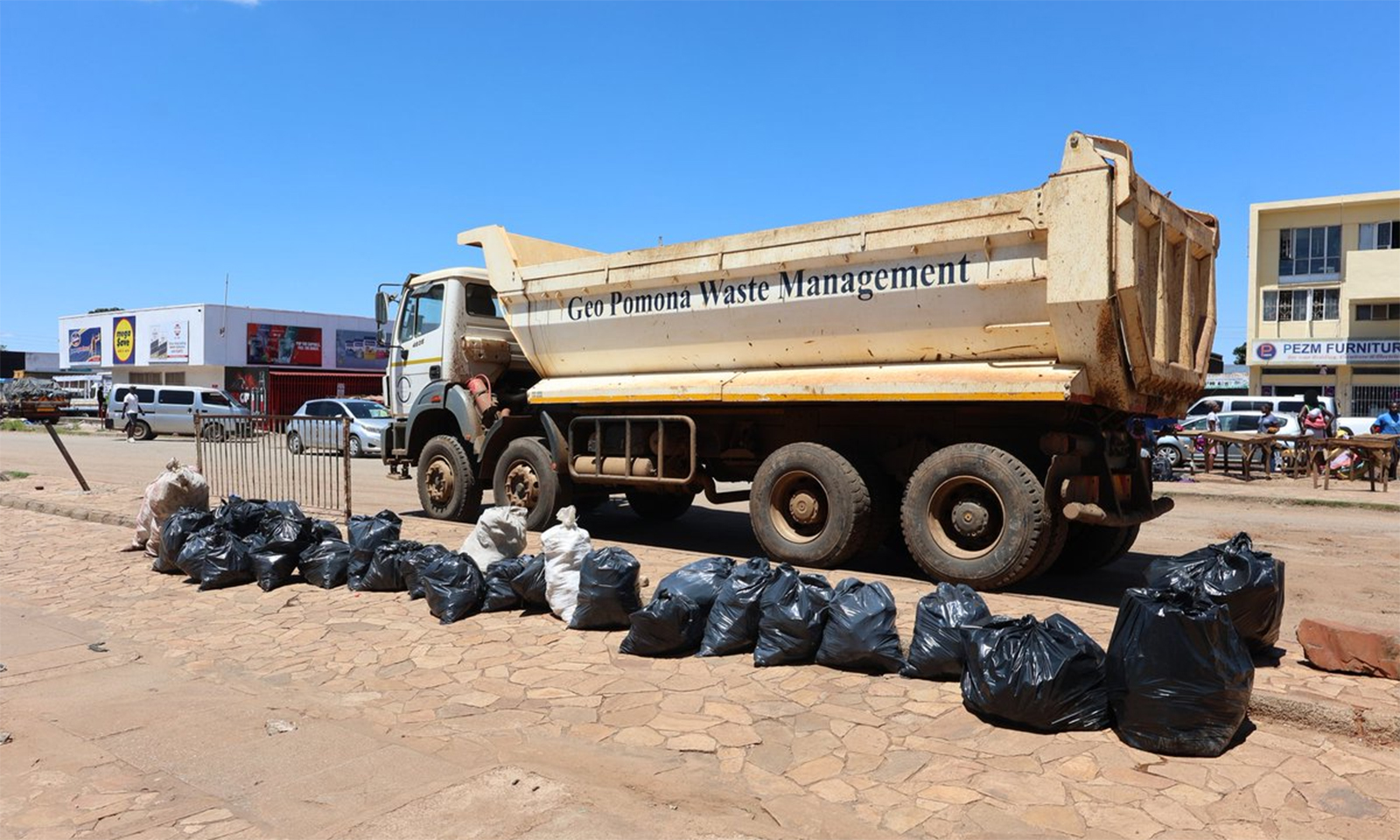
Because of the crisis, the country has witnessed outbreaks of diseases, a situation President Mnangagwa said was
“wholly unacceptable”, adding that such situations must become a thing of the past.
“Therefore, in line with Vision 2030, my Government continues to prioritise the creation of clean, safe, and modern urban environments, which are engines of economic growth.
“Cleanliness and the efficient management of service delivery are not just indicators of good governance, but also essential benchmarks for a nation’s competitiveness,” he said.
In addition to the sorting plant and 45 refuse trucks, Geo Pomona acquired 100 skip bins with their number set to reach 2 500 by the end of July.
The President said such acquisitions were pleasing and in line with the Government’s thrust on efficient service delivery.
“Through the purchase of this equipment, we must see the waste management system being capacitated to efficiently and consistently collect waste across all parts of Harare.
“I urge sector players in other towns and cities to take a leaf from such initiatives towards improving waste management in our country,” he said.
The waste sorting plant is a critical enabler of the waste-to-energy project, which will soon contribute between 16MW to 22MW of electricity to the national grid.
The plant is set to separate and repurpose the requisite waste into energy, a solution that exemplifies innovation and modernisation, which the Government continues to advance. President Mnangagwa said projects of this nature were thus contributing to the building of a green economy, in line with climate action as espoused in the various protocols to which Zimbabwe is a signatory.
“This facility is a beacon of our national potential.
“It represents how infrastructure, when aligned to a national vision, can transform lives, protect the environment, and drive economic growth.
“It is of importance to note that waste is not just waste, it is a resource. With this modern sorting facility, recyclable materials can be recovered, re-purposed, and re-integrated into the economy.
“I, therefore, acknowledge the management and staff of Geo Pomona Waste Management for their clarity of role, not only towards a greener planet but also advancing the realisation of our national development goals.

“Your accomplishments, thus far, are applauded and inspirational to others in our region and continent,” he said. The Geo Pomona Waste Management project, said the President, highlights the confidence that investors have in the conducive economic environment being fostered by the Second Republic.
“Public-private partnerships, including this one, are a cornerstone of our national development strategy.
“Projects such as Geo Pomona reflect the potential of private capital, expertise, and innovation in delivering public goods and services.
“This occasion is evidence that Zimbabwe is indeed open for business. Furthermore, it reflects our national development philosophy, ‘Nyika inovakwa, inotongwa, inonamatigwa, nevene vayo, Ilizwe lakhiwa, libuswe, likhulekelwe ngabanikazi balo’,” said President Mnangagwa.
He then reiterated the need for Zimbabweans to take pride in their identity.
“This sums up our sovereignty as well as the collective duty and obligation we have to develop our country and the African continent. We are masters of our own destiny.
“Development and national prosperity based on our own resources and capabilities is more sustainable and durable. We must take pride in who we are and what we can do, ourselves,” said President Mnangagwa.
The commissioning coincided with World Environment Day, which was held under the theme “Ending Plastic Pollution”.
As Zimbabwe prepares to host COP 15 on the Convention on Wetlands (Ramsar) in July 2025, the President also emphasised the need to address plastic pollution as it is essential to safeguarding wetlands, which are key biodiversity hot spots that support water security, tourism, and livelihoods.
“World Environment Day brings together millions of people across the globe to recommit their shared mission of protecting our environment for the present and future generations.
“For Zimbabwe, this theme is particularly critical due to the country’s growing plastic waste crisis, which clogs waterways, threatens wildlife and our wetlands, as well as contributes to environmental degradation,” said President Mnangagwa.
In giving the vote of thanks, Minister of Defence Cde Oppah Muchinguri-Kashiri said the Second Republic was focused on the attainment of upper-middle-class economic status by 2030.
Acting Minister of Local Government and Public Works Winston Chitando said it was heartening to note that Geo Pomona was fully supportive of national goals.
Harare Minister for Provincial Affairs and Devolution Charles Tavengwa commended Geo Pomona for taking a leading role in waste management.
Geo Pomona’s chief executive officer and executive chairman, Dr Dilesh Nguwaya, said the waste management firm was committed to efficient waste management in the province.
“Today, we recommit ourselves to effective waste management.
“The 45 refuse trucks and skip bins are part of the broader long-term plans,” he said.
Harare Mayor Clr Jacob Mafume said it was heartening to note that the Second Republic and City of Harare’s relations continued on an upward trajectory.
“We have been able to find each other…,” he said.
“Let us work together to create a Harare that we can be proud of,” he said.
The commissioning was attended by Ministers, Deputy Ministers, Permanent Secretaries, Zanu-PF Politburo members, and other senior Government officials.