


 Vusumuzi Dube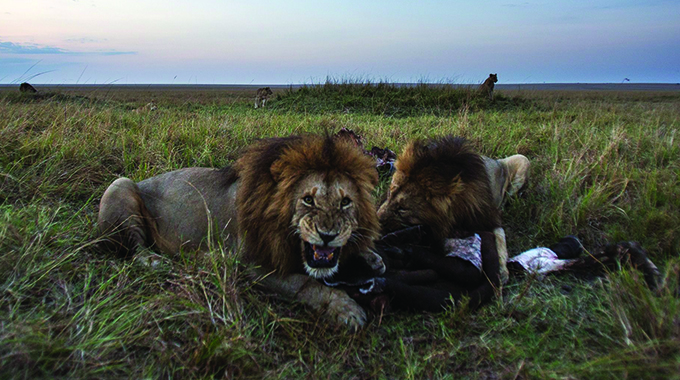
Rutendo Nyeve, Sunday News Reporter
COMMUNITIES residing in the buffer zones of Hwange National Park are increasingly alarmed by rising human-wildlife conflicts, exacerbated by an El Niño-induced drought that has intensified competition for food and water sources.
Fiction-like tales of villagers confronting lions and other predators to safeguard their livestock are abound in these communities close to the country’s largest wildlife sanctuary.
Sunday News visited the area last week and spoke to residents about their daily encounters with wildlife, which have become even more stressful due to the ongoing drought.
Mr Stephen Ngwenya, a 56-year-old resident of Sonyathi Village in Cross Mabale, Hwange District, recounted a harrowing experience from a recent Sunday evening.
He had gone to bed after ensuring that traditional measures were in place to keep wild animals away from his homestead and kraal.
“That sunday evening, we set up two strategic fires to deter lions and elephants that typically approach our homes,” Mr Ngwenya said.
“Unfortunately, the fire died down earlier than expected while we slept. We were woken up by commotion from the kraal.”
On waking up and shining a flashlight, he discovered that his cattle had escaped, fleeing in all directions because lions had invaded the cattle pen. Together with his family and neighbours, Mr Ngwenya made noise to scare off the predators and went into the bush in search of his livestock.
“That night, we found that five lions had attacked the kraal and three of my cattle were killed,” he said.
“On average, every two weeks, at least one lion or a pride of three to five lions comes into our community to hunt for livestock.”
Due to food shortages, Mr Ngwenya has been letting his cattle into the Forestry Commission land adjacent to Hwange National Park. Unfortunately, this often leads to lion encounters, as the predators follow the cattle home.
To help track his herd in the vast forest, Mr Ngwenya has started placing bells around their necks — though this has ironically attracted lions.
He is among the beneficiaries of a predator-proof boma distribution programme, an innovative conservation initiative that employs thick plastic sheeting to minimise human-lion conflicts.
The project, implemented by ZimParks and the International Fund for Animal Welfare (Ifaw) aims to reduce livestock predation, enhance food security and foster peaceful co-existence between humans and wild carnivores.
“Since receiving these bomas, my remaining five cattle have been safe despite numerous lion attempts to hunt them down,” Mr Ngwenya noted.
“I often wake up to find lion tracks and scratches on the boma canvas from their attempts to breach it.”
He expressed gratitude to ZimParks and its partners for the initiative, emphasising the benefits of improved food security and reduced deforestation as villagers no longer need to cut down trees for traditional kraal construction.
Ms Idah Zvireva, a resident of Mazwa village in Ward 24, Lupane, echoed Mr Ngwenya’s sentiments, noting an increase in lion encounters in their area. Fortunately, the predator-proof bomas have helped protect their livestock.
“We implore that this programme be expanded to all households so that we can sleep peacefully,” Ms Zvireva said.
“Before these bomas, we would wake up at any hour upon hearing lions, lighting fires and banging drums to scare them off.”
In addition to the boma initiative, ZimParks, in collaboration with Ifaw and other partners, has trained community guardians to respond promptly to human-wildlife conflict cases.
The concept behind the bomas is that predators cannot see the livestock inside, which lessens the likelihood of them triggering a stampede. —@nyeve14.



 Bongani Ndlovu
 Online Reporter