


 Chronicle Editor
Judith Phiri, Business Reporter
As the old adage goes, “No matter where your day leads or how it ends, it all starts with a farmer.” This principle underscores the importance of encouraging the cultivation of traditional grains tailored to specific agro-ecological regions, emphasising that the journey begins with farmers themselves.
During a keynote address at a one-day Zimpapers Traditional Grains Conference, organised by The Sunday News in Bulawayo on Friday, Permanent Secretary for the Ministry of Lands, Agriculture, Fisheries, Water and Rural Development, Professor Obert Jiri, highlighted the necessity of engaging farmers at the grassroots level to promote crop cultivation that aligns with their agro-ecological conditions.
This conference coincided with the Cabinet’s approval of the Summer Plan for the 2024/25 season, which prioritises agro-ecological mapping and climate-proofing at both household (Pfumvudza/Intwasa) and national levels (irrigation). The Presidential Input Programme aims to enhance the availability of traditional grain seeds.
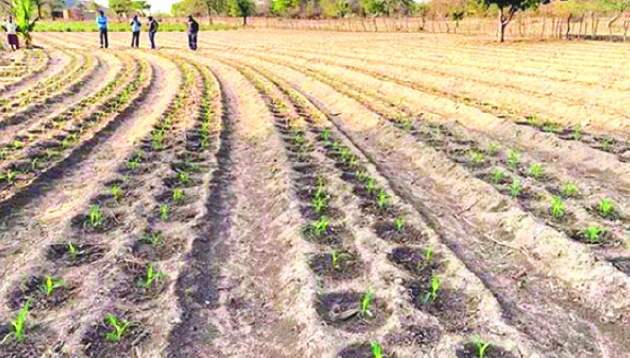
The southern regions of Zimbabwe — particularly Matabeleland North and South, Midlands, and Masvingo — are ideally suited for cultivating traditional grains like sorghum and pearl millet, in line with their climatic and ecological profiles.
“How can we persuade farmers to grow traditional grains?” Prof Jiri posed this question, acknowledging it as a long-standing challenge. “We must shift our mindsets and focus on the value of traditional grains.”
He pointed out that climate change and farmers’ perceptions must be addressed together for effective solutions. “Traditional grains are crucial in our battle against climate change; this message needs to be widely promoted,” he asserted.
Prof Jiri noted that many farmers remain unaware of the updated agro-ecological zone map, which now includes new regions 5A and 5B. In 2020, Zimbabwe revised its agro-ecological map, replacing the outdated version from the 1960s. This new map aims to enhance farmers’ ability to manage climate risks and improve agricultural productivity and food security.

Farmers in ecological Regions 1 and 2 primarily cultivate maize, sunflower, sorghum, pearl millet, groundnuts, African peas, and sugar beans. In Region 3, maize, sorghum, and sunflower are the main crops. Conversely, Regions 4 and 5 focus on sorghum, millet, and sunflower, while also offering options like maize, African peas, and groundnuts.
Research indicates that farmers who adopt agro-ecological matching achieve better yields than those who disregard regional requirements. This approach is essential for food security and reducing reliance on maize.
“This updated map highlights the need for innovative approaches to crop production. We must share this information widely through various media channels,” he emphasised.
He also pointed out the advantages of traditional grains over maize, especially in a changing climate, and stressed the importance of outreach in Regions 4 and 5 to educate farmers. “With around 1 035 wards in these regions, we are committed to ensuring every farmer understands the significance of growing crops suited to their agro-ecological zone,” Prof Jiri explained.
“We must establish demonstration plots in every ward so farmers can observe what works best in their areas, rather than relying on theoretical knowledge.”
The Permanent Secretary urged local seed companies to provide suitable seed varieties, particularly traditional grains, for Regions 4 and 5. He also called on fertiliser manufacturers to develop products specifically designed for these crops. In a post-conference interview, he reported that input distribution for the 2024/25 summer cropping season is progressing well. “We are prepared for the summer season, which is expected to start between late October and early November, with anticipated normal to above-normal rainfall — critical for our farmers,” he said.
The national launch for input distribution is scheduled for October, marking the official start of the process. Inputs will be allocated to farmers who have prepared three plots, with provisions for food aid included.
“The three plots must be maintained as permanent,” he added. “Farmers should continue with their previous plots unless starting anew. Those involved in Pfumvudza/Intwasa should implement comprehensive practices on their old plots.”
Prof Jiri encouraged farmers to collect mulch to conserve moisture and reassured them that inputs — including seed, fertiliser, and chemicals — would be ready for distribution before the rainy season begins.
The conference, themed “Unlocking the Potential of Traditional Grains for Food and Feed Security,” drew delegates from academia, seed companies, Government departments, and various stakeholders. It was held in collaboration with the Ministry of Lands, Agriculture, Fisheries, Water and Rural Development and the International Crops Research Institute for the Semi-Arid Tropics (Icrisat) Zimbabwe.



 Bongani Ndlovu
 Online Reporter