Chronicle Editor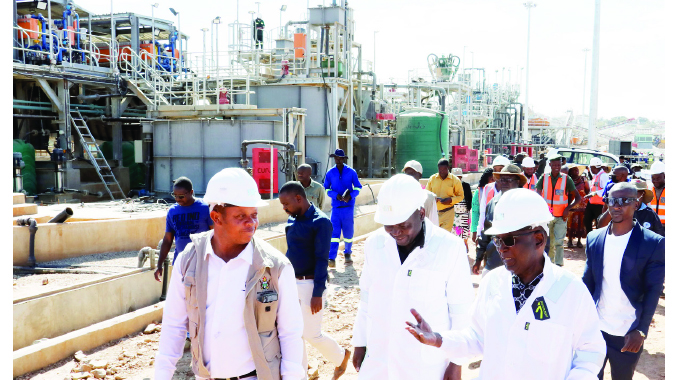
Rutendo Nyeve, Features Reporter
HISTORY has it that mining companies worldwide have been prime movers in the creation of mining towns. Globally, these towns are going through a similar process of what urban scholars term ‘normalisation’– freeing themselves from their mother companies.
The very same history also unravels that as mining intensified after the industrial revolution of the 18th century, mining companies all over the world began to build and manage towns for their employees. In providing housing, infrastructure and services, these towns performed a social function.
They created new communities and became distinctive features of the landscape but the relationship between the companies and the communities has changed over time, and in different ways in different countries. While they are a few exceptions, company towns have either become derelict or been transformed into ‘open’ towns with democratic governance and no restrictions as to who can buy and occupy land and housing.
In many cases where a company town has been established, the government has installed municipal services and the state has invested in infrastructure and governance. Back home, mining has always played a significant role in the urbanisation of the country so much such that arguably Zimbabwe’s most urbanised province has the highest concentration of mining settlements which is no accident. Actually, mining gave impetus to urbanisation, economic growth and prosperity.
Towns like Hwange, Zvishavane, Kadoma, Kwekwe, Mhangura, Shurugwi and Buhera , among others, are some of the perfect examples. One of the oldest mining towns, Hwange is the country’s mining hub boasting of coal mines that produce an estimated 90 000 tonnes of coal per month. Hwange, formerly Wankie town, in Matabeleland North, was founded about 1900 after the discovery of coal in the vicinity and was named after a local chief, Whange, who was the dynastic head of the Abananza people.
It has since then grown into a town of repute with a local board being formed over the years to administer the town which is partly under the Hwange Rural District Council and Hwange Colliery Company, National Railways of Zimbabwe and Zimbabwe Prisons and Correctional Services concessions.
The growth of the town saw the establishment of various recreational and social amenities like a soccer stadium, golf course and social clubs. The town houses some big retail names like OK, TM Pick and Pay, TV Sales and Hire as well as the recently established fast food outlets owned by Simbisa brands.
Zvishavane is another classic example. It was a village in 1920 and became a town in 1930 due to growth spurred by mining. The asbestos mining town by then saw exponential growth that established soccer stadiums like Maglas, hotels and a town with all facilities like any other. The discovery of platinum and ultimately mining by Mimosa Mining Company saw further growth and development with the construction of yet another decent stadium, Mandava.
Not only have mining companies led the development of various towns, but the opening up of mining activities to fellow citizens has seen exponential development in various towns such as Gwanda. Gwanda in Matabeleland South Province has over the last 10 years witnessed significant infrastructure development with high rise buildings mushrooming within the town.
While minerals such as coal were at the prime of their use as a fossil fuel, driving the industrial revolution during the time, the emergence of new cleaner energies like batteries has led to the high demand of other minerals thereof. One such mineral is lithium.
Battery minerals are becoming increasingly important for the worldwide energy transition and projections for their global value show a considerable market growth up to 2027. The demand for battery minerals has thus surged considerably in recent years due to this massive transition to green energy use, production of electric vehicles, energy storage units and mobile phones. Lithium will therefore be the in-demand mineral for a considerable period of time.
Lithium mining and processing activities are expected to contribute US$ 500 million to the mining sector with estimates and projections by major producers showing that this may be achievable. Addressing mining stakeholders at the just ended Annual Mining Conference held in Victoria Falls, Minister of Mines and Mining Development Winston Chitando said:
“Demand for commodities making up lithium-ion batteries has risen sharply as countries across the world have started moving towards the use of green energy and decarbonisation particularly through the production of electric vehicles. This demand has, in turn, resulted in new players, both small and large, coming on board to mine, process and export the now so-valuable lithium minerals in Zimbabwe.
“Zimbabwe’s lithium subsector is on its growth path and the country seeks to take its position in the world lithium and battery minerals global value chains. Due to favourable policies, the sector has received huge investments. Some of the projects include Sabi Star, Prospect Lithium, Zulu Lithium as well as expansion operations at Bikita Minerals,” said Minister Chitando.
The investment in lithium mining has already witnessed massive transformation within these mining communities. During the Annual Mining Conference, investors gave an insight into some of the projects that they have undertaken, which are a step towards urbanisation, development and empowerment through employment creation.
Sabi Star Lithium-Tantalite Polymetallic Deposit Project Deputy General Manager Mr Jay LeRoux said 84 families had been relocated to various places where the company bought stands and built decent accommodation for them.
“Forty families have been relocated from Tagarira and Mukwasi villages in Buhera North to the locations of their own choice. Twenty families opted to be relocated to Murambinda township where the mine purchased 22 x 450m2 stands while 17 families opted to be relocated locally, and one family opted to go back to their ancestral land in Mberengwa. In all these townships, we have built and continue to build houses for them.
“Eighteen boreholes were drilled in the community equipped with solar pumps, among which 10 were drilled at the schools and eight in the surrounding villages in consultation with the local leadership. At least nine schools in the community received paint and accessories from the mine and the painting was done by volunteers from the local community. A clinic was constructed at Mukubu Business Centre to benefit the local community. We have also upgraded the 30km access road from Gaza Business Centre to the mine, and other road in the community,” said Mr LeRoux.
Bikita Minerals which has also expanded its operations in lithium mining has done a lot in empowering the community. The mine manager Mr Daniel Mwanza said the mine currently employs 860 people, up from 360 employed in 2022.
“An additional 800 are expected to be employed on completion of the two new plants. Our contractors employ about 1 200 (80 percent are locals). The company provides accommodation to 600 mine employees and is planning to acquire land from Bikita RDC. We have a state-of-the-art primary school and clinic catering for the employee’s children and surrounding communities. In addition, we sponsor Bikita Minerals FC in the Eastern Region Division One while we have set up a Community Share Ownership fund administered by Chiefs. We constructed and rehabilitated all roads in the district. We have also constructed and refurbished four schools in the district and distributed food and learning materials to eight schools,” said Mr Mwanza.
Sunday News visited Zulu Lithium in Fort Rixon on Thursday to have an appreciation of the infrastructure growth as well as community empowerment programs. Local investor and businessman Mr James Ross Goddard spoke of some of the development that has come with the establishment of the mine.
“About 250 people got permanent employment and more are expected to be employed once it is fully operational. I would like to applaud Zulu Lithium for bringing development to a place which had people who were suffering. Last year in May, one would take two hours from here to the highway, now it takes 30 minutes due to an improved road network.
“They have assured us that they will further tar the road from this community to the highway. Again you will note that there is a dam that is under construction which is 1.8 million cubic litres but the water required by the plant is 500 000 cubic litres which gives us a balance of 1.3 million cubic litres of water which will be used by the community for irrigation purposes,” said Mr Goddard.
Sunday News also witnessed the construction of housing units for 34 relocated villagers, which are expected to change the face of the community and uplift their standard of living. The relocated villagers will not only benefit from decent accommodation but from efficient basic resources like water and solar energy as well. With the continued rise in lithium investments, communities are set to be urbanised, developed and empowered through employment.
Who knows, Fort Rixon and all other mining communities may eventually become like Zvishavane, Kadoma and Hwange. – @nyeve14



 Online Reporter