Chronicle Editor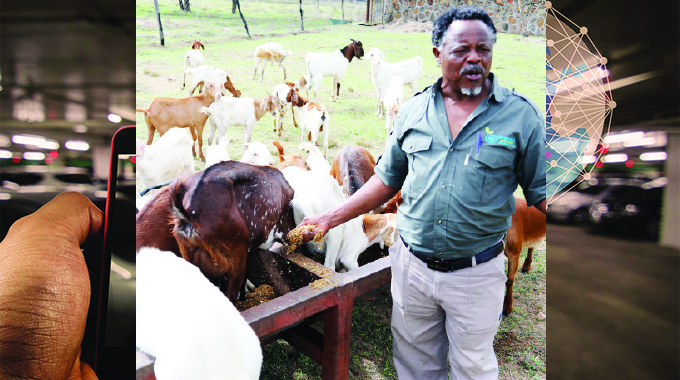
Nqobile Tshili, [email protected]
A group of Zimbabweans, some living abroad, have joined hands to start a Boer goat breeding project in Bulilima District, Matabeleland South. Their aim is to create jobs, improve food security and contribute to the development of Zimbabwe.
The group, called Dynamic Investment, was born out of casual conversations on social media platforms where they shared their vision of empowering themselves and their communities. They opened a bank account named Boer goats and started pooling funds for the project.
In May last year, they bought their first batch of Boer goats, and added another one this week. They also decided to diversify their business interests beyond goat breeding.
Yesterday, they met for the first time, taking advantage of the festive season when some of the diaspora-based members returned home. They discussed their plans and challenges and invited the Matabeleland South Provincial Affairs and Devolution Minister Dr Evelyn Ndlovu to the meeting.
The chairperson of Dynamic Investment, Sikhumbuzo Mlalazi, who lives in the United Kingdom, said they were inspired by President Mnangagwa’s philosophy that ilizwe lakhiwa ngabaninilo (the nation is built by its citizens).
“We have heard the calls from the leaders of this country that ilizwe lakhiwa nganinilo. We are the ones who can make our country attractive. Residing in other countries does not mean we should turn the back on our country. We have decided to join hands as citizens of this country and embark on this project that will contribute to job creation and food security,” said Mlalazi.
He said they were a group of 11 people from Bulilima, eight of whom were based in the diaspora, mainly in South Africa. They bought 1 200 Boer goats and invested over half a million rands (R500 000).
Mlalazi said their main challenge was acquiring land for their project but they were engaging the Government on the issue. He also said Dr Ndlovu’s presence at their meeting was an eye-opener as she highlighted other investment opportunities in the province.
Mlalazi urged other diasporans to invest in their country saying it was the safest and most rewarding place to do business.
“There is negativity and fear of the unknown. People think that when you invest in Zimbabwe you will have challenges especially due to the currency issues but I believe this is the safest country to invest in. The minister has assured us that in this country you can do anything you want as long as it is legal,” he said.
Mlalazi challenged the media to spread the message on why it is critical for Zimbabweans in the diaspora to come back and invest in the country.
“It is our duty to turn around the fortunes of this country as local citizens and those based in the diaspora,” he said.
One of the local members, Colby Ncube, who is a farmer, said their motivation was to end poverty in their communities.
“What really sets us up is the need to end poverty in this country and from my general knowledge of physics there is a law of inevitable eventualities. That means if you do something that something will result in something else. Here we realised that if we put resources together we can break the backbone of poverty. It will make us progress as people. How? We would create employment and we will buy assets. At the moment we are doing goats but we want to venture into other economic activities,” said Ncube.
He said their goal was to uplift and empower local communities through their projects.
Mr Ncube said they want to create jobs and other opportunities that can transform not only their lives but those of other members of the local communities.
“As Dynamic Investment we want to break the backbone of poverty because when one is controlled by poverty, he or she is enslaved. One won’t have any freedom hence this initiative meant to address the problem,” said Ncube.
Another member, Helfer Nkomo, who joined the group through a referral from a family member, said he was passionate about goat farming which he said he was confident is a profitable and rewarding venture. He said there was a high demand for goat meat and breeding stock, both locally and internationally.
“There is a market for breeding stock and goat meat. Many people are now venturing into goat farming hence the high demand for breeding stock. Goat farmers are struggling to supply the local market and there are also international markets particularly in the Arab world and even in Angola,” he said.
Minister Ndlovu praised the group for their initiative and assured them of the Government’s support. She said Matabeleland South had many investment opportunities especially in the agriculture sector and encouraged other Zimbabweans in the diaspora to emulate the group. — @nqotshili



 Online Reporter