admin
admin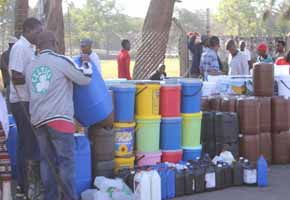
reduced significantly the city’s water consumption, an official said.
Speaking during the city council’s 2013 business community budget consultation meeting at a local hotel yesterday, the city’s Director of Engineering Services, Engineer Simela Dube, said the consumption rate was still high despite the introduction of the water shedding programme.
Under the programme council has come up with a water shedding schedule whereby it rotationally cuts water supplies for up to 72 hours to suburbs in a bid to reduce consumption.
“The city is supposed to use 95 000 cubic metres a day. When we started the 48-hour water shedding consumption dropped from 145 000 cubic metres to about 112 000 cubic metres and when we effected the 72-hour water shedding schedule, we are now hovering around 106 000 cubic metres,” said Eng Dube.
He said the figures showed that the city was still consuming a lot of water, a development he said was a cause for concern.
“We have been conscientising members of the public on the importance of conserving water for the last decade but the consumption remains high.
“All those who are wasting water are destroying themselves because in a few years to come we will have no more water to waste,”said Eng Dube.
Turning to the proposed $2,50 duplication of the Insiza Dam pipeline monthly levy for the business sector, Eng Dube said it would not be fair to charge them a $1 fee like domestic consumers, as industries used more water.
“It will not be fair to charge a consumer with a bulk meter of 250 millilitres and one using a 20-millilitre the same fee. For businesses it has to be more,” said Eng Dube.
The duplication of the Insiza Dam pipeline will cost $28 million.
Speaking at the same occasion, the council’s finance director, Mr Kimpton Ndimande, said it would be wise for the levy to be extended to the business sector. However, the business sector was exempted from water shedding.
“If they can also contribute at least $2 or $2,50 it can assist us towards funding our capital development project that will enable us to have more water,” said Mr Ndimande.
He said the fee would be for the project expected to be completed in 12 months if funding is available.
In their contributions, the business community welcomed the council’s move to levy them, saying it would alleviate water problems facing the city.
“The levy is welcome but we will suggest that the council should do its homework and lay the necessary groundwork. It will not be fair for us to contribute and the council delays in implementing the project,” said the Zimbabwe National Chamber of Commerce (ZNCC) Matabeleland region chairperson Mrs Ntombenhle Moyo.
The Bulawayo water situation was worsened by the recent decommissioning of a second supply dam, Umzingwane, increased incidents of pipe bursts and residents failing to reduce consumption.
The situation is so dire that if the rainy season delays, the city will end the year with one supply dam, Insiza, as Lower Ncema is likely to be decommissioned by the end of November and Inyankuni in December.
The frequency of leaks and pipe bursts have increased by about 50 percent since shedding began on 27 July.
Before shedding, council used to carry over about 24 bursts to the next day but the figure had steadily increased to 64, meaning residents go for extended periods without water when supplies are cut off to effect repairs.



 Online Reporter