Online Reporter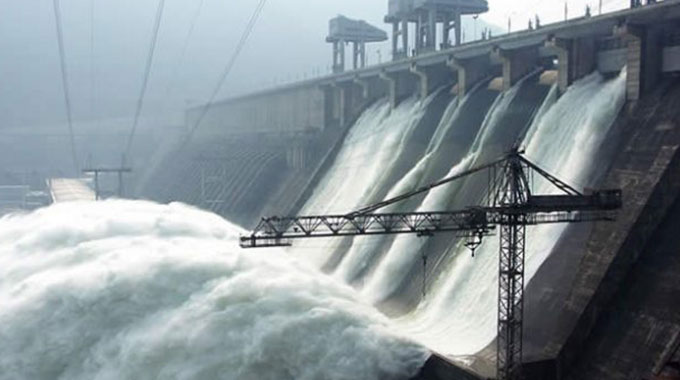
Rutendo Nyeve, Victoria Falls Reporter
KARIBA Hydro-Power Station has ramped up electricity output to an average of 500MW from about 250MW recently in response to the rising water levels, a significant boost to the country’s energy supplies in line with the spike in demand.
The improved inflows have a positive impact on Zimbabwe’s power generation and supplies at a time when the country’s largest thermal power plant, Hwange, has its flagship Units 7 and 8 undergoing critical Class C maintenance.
As of yesterday, the Zimbabwe Power Company (ZPC) report indicated that the country was generating a total of 1 390MW with Kariba pumping in 550MW and Hwange 761MW, a significant drop when compared to above 1 000MW that the giant thermal station produces when operating at full throttle. The report shows that Independent Power Producers (IPPs) are producing a combined 79MW.
Zimbabwe’s daily energy demand is hovering around 2 000MW with the gap being covered by imports from regional suppliers. More corporates and individuals have, however, ventured into solar, which is promising to ease the burden on the national grid.
Kariba is, therefore, playing a vital role in bridging the supply gap thereby minimising load-shedding.
All year round Zimbabwe has been generating limited power from Kariba, which has an installed capacity of about 1050MW, because of the constrained water allocation linked to low water levels.
This week the Zambezi River Authority’s Council of Ministers (COM) approved a substantial water allocation of 30 Bill Cubic Metres (BCM) for power generation at Lake Kariba for the coming year in a move aimed at ensuring regional energy security and the structural integrity of Africa’s largest man-made reservoir.
Meeting for its 43rd Ordinary Session in Victoria Falls, the high-level bilateral council, comprising ministers from Zambia and Zimbabwe, deliberated on critical hydrological updates and strategic energy projects.
The decision of the meeting was the formal approval of 30 Billion Cubic Metres (BCM) of water for electricity generation in 2026, equitably split with 15 BCM allocated to each of the two utilities, Zesco Limited of Zambia and the Zimbabwe Power Company.
This allocation represents an increase compared to this year. The decision, grounded in expert hydrological analysis, seeks to balance urgent power generation needs with the long-term safeguarding of the Kariba Dam reservoir.
Energy and Power Development Minister July Moyo, who is also the incoming chairman of the ZRA Council of Ministers outlined the rationale in a communiqué issued after the meeting.
“The Zambezi River Authority initially allocated 27 billion cubic metres (BCM) of water for power generation at Kariba Dam for the year 2025, and later increased this to 28 BCM (14 BCM per utility) in October 2025,” he said.
“In the year 2026, 30 Billion Cubic Metres (15 BCM per utility) of water was allocated to sustain power generation while safeguarding reservoir integrity.
“This decision was informed by hydrological simulations and rainfall forecasts from the Southern African Regional Climate Outlook Forecast (Sarcof) and respective national meteorological departments,” Minister Moyo said.
The Council formally noted the updates on water utilisation for 2025 and approved the 30 BCM allocation for 2026.
The proactive measure is expected to provide a more stable foundation for power generation planning for both nations, which have historically relied heavily on the Kariba Hydro-Electric Power Station. In a related matter, the COM received positive updates on the landmark Kariba Dam Rehabilitation Project (KDRP).
Ministers commended the completion of major works on the Plunge Pool and the first phase of the Spillway Refurbishment.
The critical second phase of the spillway work is reported to be 30 percent complete.
Further enhancing dam safety and community protection, the procurement process for a comprehensive Early
Warning System for downstream communities is underway, with a target completion date of December 2026.
The Council also noted satisfactory progress on institutional capacity-building programmes designed to ensure the Authority’s long-term technical sustainability.