Online Reporter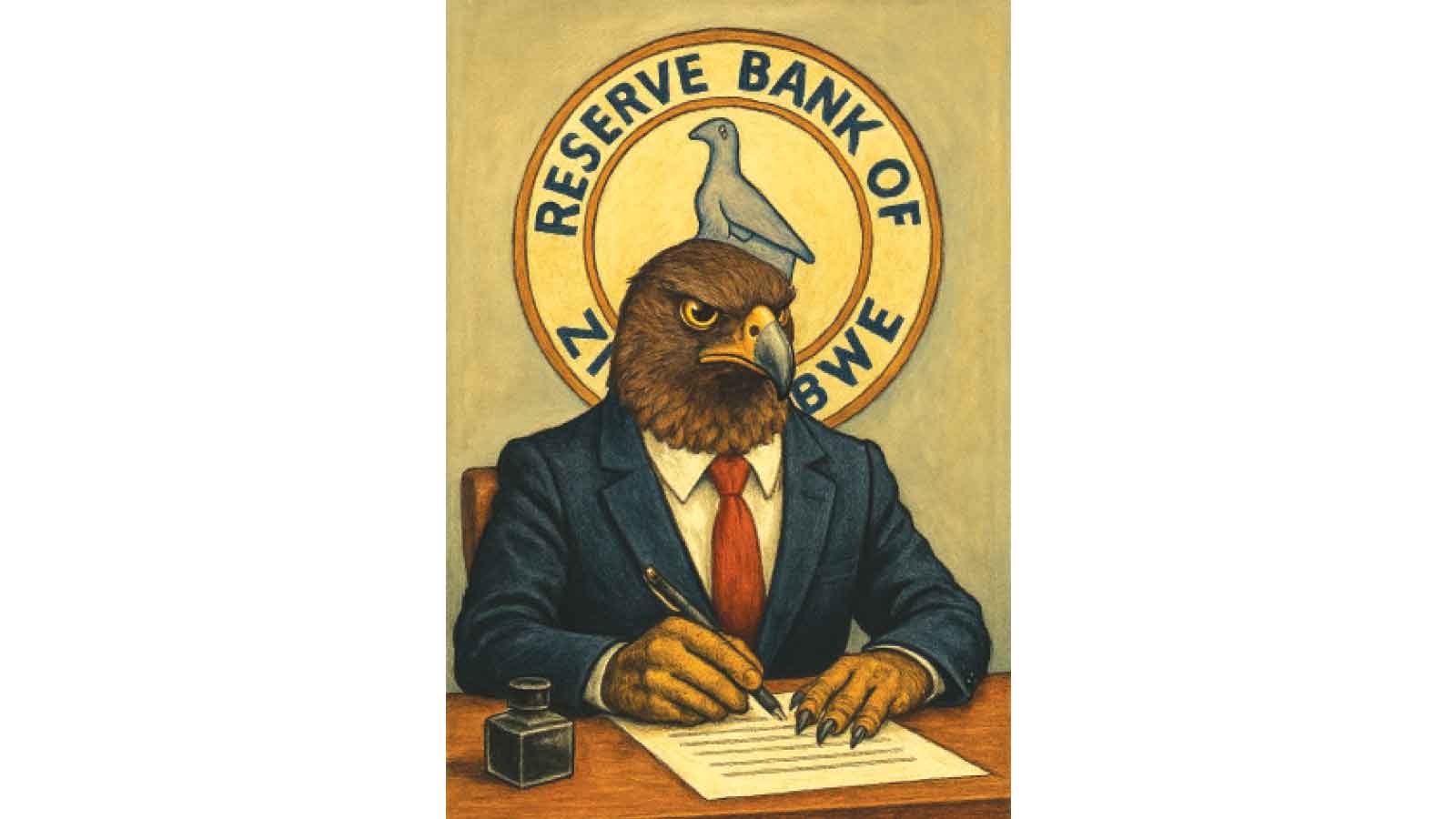
Communion with Bishop Lazarus
IF you grew up in the village, as Bishop Lazi did, you were likely to feel the full weight of God’s tyrannical decree in Genesis 3 verse 19 — that man could only deliver food on the table by the sweat of his brow — every single day of your life.
Incensed by man’s insubordination and disobedience, God delivered a seemingly eternal judgment to man in Genesis 3: 17-19: “Cursed is the ground because of you; through painful toil you will eat food from it all the days of your life. It will produce thorns and thistles for you, and you will eat the plants of the field. By the sweat of your brow, you will eat your food until you return to the ground, since from it you were taken; for dust you are and to dust you will return.”
Village life is typically a manifestation of this decree, as, in more ways than one, both man and beast live through this seemingly eternal divine purgative curse. Most often than not, this curse was keenly felt during the cropping season when we all — young and old, infirm and healthy — had to wake up at “zero dark thirty” — long before the sun peered through the eastern horizon — to work the land. It was a time-honoured ritual meant to ensure that we covered as much ground as possible before the rising sun sapped both the energy and camaraderie of ploughing crews.
Every day the routine was so predictable that it often felt like déjà vu.
The high-pitched melodic whistle that broke the eerie silence and innocence of the night or early morning, usually followed by the sharp, leathery crack of the sjambok, were the daily invocation that announced to the slumbering village that ploughing was well and truly underway. Amid the jingling of the chains affixed to the yoke, the squeaky drone of the plough’s wheel and the patter of hooves of oxen performing a lazy early morning dance, the occasional sonic boom of authority of the cracking sjambok sounded — not aimed at the beasts of burden, but as a percussive signal for them to go harder, faster.
The oxen would duly lean into the yoke, the metal blade of the plough biting into the earth and, for a glorious while, all was perfect.
The conversations, ranging from the beautiful village girl across the river, the evil and menacing schoolteacher, the village witch, were cordial, collegial, animated and spiced with a heavy dose of camaraderie. All this made the furrow smoother and the hard slog of ploughing bearable.
But, as it often does, the camaraderie inexorably degenerated into trivial arguments and tensions as fatigue from the monotony of the up-and-down routine that comes with ploughing set in. The initial excitement curdled into a thick stew of exhaustion and recrimination.
And, as the sun climbed, so did the temperature and volume of the arguments.
The ploughing crew inevitably split between one that believed in a slow, deep, spiritually uplifting furrow and the other that stubbornly contended speed was the friend of the tiller.
The tiring beasts also became restless.
This time, every crack of the sjambok startled them into zigzags, turning the furrow into an irritating sine wave, further driving a wedge between the crews.
A disagreement of such monumental triviality often brought the entire operation to a grinding halt. Perhaps it was about whether to turn left at the big anthill or go around it the other way. The plough was dropped. The men would stand in a loose, angry circle in the middle of the half-ploughed field. Voices rose, arms were waved and the sjambok was used to point accusingly rather than to motivate. All village folk knew that this was often a sign to call it a day.
At the end of the day, it was, or is, this ritual, which was followed by the back-breaking exertion of hoeing the fields, that brought or brings those sweet cobs that are bought at chaotic city corners during the early morning rush and mealie meal bought in supermarkets by lazy urbanites. Kikikiki. You see, in the village, nothing — absolutely nothing! — comes for free. You really have to literally eke out a living and earn your keep. This is what the Lord decreed, and this is what life should be.
Enter John II: Enemy of optics, friend of action
Ever since November 14, 1997, which history has already been infamously recorded as “Black Friday”, when the Zimbabwe dollar spectacularly crashed by over 70 percent in one day, life was never the same for the local currency, which eventually tanked in circa 1999.
Not only did it cause a lot of distress, but it spawned a curious creature of circumstance — the wheeler dealers — that did not have to break a sweat to earn a living. The foremost specie of this creature was the informal foreign currency dealer, who speculated on the Zimdollar.
And for the best part of more than three decades, arbitrage, or kungwavha-ngwavha, became the only game in town.
In this unholy wretched topsy-turvy new world order, formal employment, which paid pittances, became the subject of ridicule, while wheeling and dealing became highly rewarding.
By the same token, hard, honest work became a curse as life rewarded cunning risk-takers. It all changed with ED’s Second Republic, which plotted the second coming of the Zimdollar, an indispensable instrument for sustainable and durable economic growth.
Despite the initial inevitable teething challenges, these efforts culminated in the introduction of the Zimbabwe Gold (ZiG) currency in April 2024, barely a month after the appointment of a new Reserve Bank of Zimbabwe Governor, John Mushayavanhu, or John II (John the Second), after the first John (John Mangudya).
During his first days in office, John II — who, like his principal President ED, is less about optics and more about action — issued a chilling warning, which cynics did not take heed of.
“We are bringing in a new concept in the form of a new currency, which is backed by reserves. RTGS, bond notes were not backed by reserves; this is why they were behaving the way they were behaving,” he said then.
“So, we decided we have to bring in a new currency, which has a new basis for exchange rate determination, and I did explain in the Monetary Policy Statement that the exchange rate for the ZiG is going to be determined by the basket of commodities that is anchoring it. Over and above that, it is also going to be determined by the market. We had a situation, as I said earlier, RTGS bond notes were not backed by anything so we cannot link ZiG to the old currency; it’s a different currency altogether . . . So, ZiG is going to be valuable whether you like it or not.”
He was both self-assured and emphatic.
Twenty-two months down the line, his promise has since come to pass. ZiG is scarce (harizi kubatika). Kikikikiki. I guess this is what they were trying to teach us in school when they said scarcity is one of the characteristics of money.
Under his hawkish — Bishop Lazi would prefer to call it “tyrannical” — watch, inflation has come to a screeching halt, having dropped to impressive single-digit level (4,1 percent in January) for the first time in more than three decades.
This is made even more impressive by the fact that Zimbabwe is still under sanctions.
The other numbers speak for themselves.
Foreign currency earnings — at US$16,2 billion in 2025, up from US$13,3 billion a year earlier — are currently at an all-time high, driven by exceptional performance in mining, agriculture and, of late, manufacturing.
Foreign currency reserves anchoring ZiG reached US$1,2 billion, equivalent to 1,5 months of import cover in December 2025, from less than 0,2 months of import cover at the introduction of ZiG in April 2024.
At the moment, the parallel market is all but moribund. And the economy is now beginning to look, sound and feel normal again, and life, as in the village, now looks, sounds and feels as God decreed it. Without honest, hard work, you cannot earn ZiG, and wheeling and dealing is no longer the go-to trade. The number of those chaps holding wads of cash as an invitation to deal in foreign currency on street corners has markedly thinned. Zimbabweans are also now reluctant to offload their local currency, as it no longer loses value, which means it is slowly becoming a reliable store of value.
And the record uninterrupted period of price stability, stretching for more than 16 months, has helped people to plan, save and invest.
Construction, both in the public and private sectors, is hotting up. It is, therefore, unsurprising that the economy, after growing by more than 6 percent last year, is forecast to accelerate to more than 8 percent this year.
Remember, dear reader, that Zimbabwe is still under sanctions. Slowly but surely, Zimbabwe is on its way to reclaim its past glory, and with it, a new era of prosperity. This is the melodious soundtrack of this year. Forget about politics, economics is the real politics; this is why opposition and activist politics is all but dead in the water.
It is about the economy, stupid!
Bishop out!