Online Reporter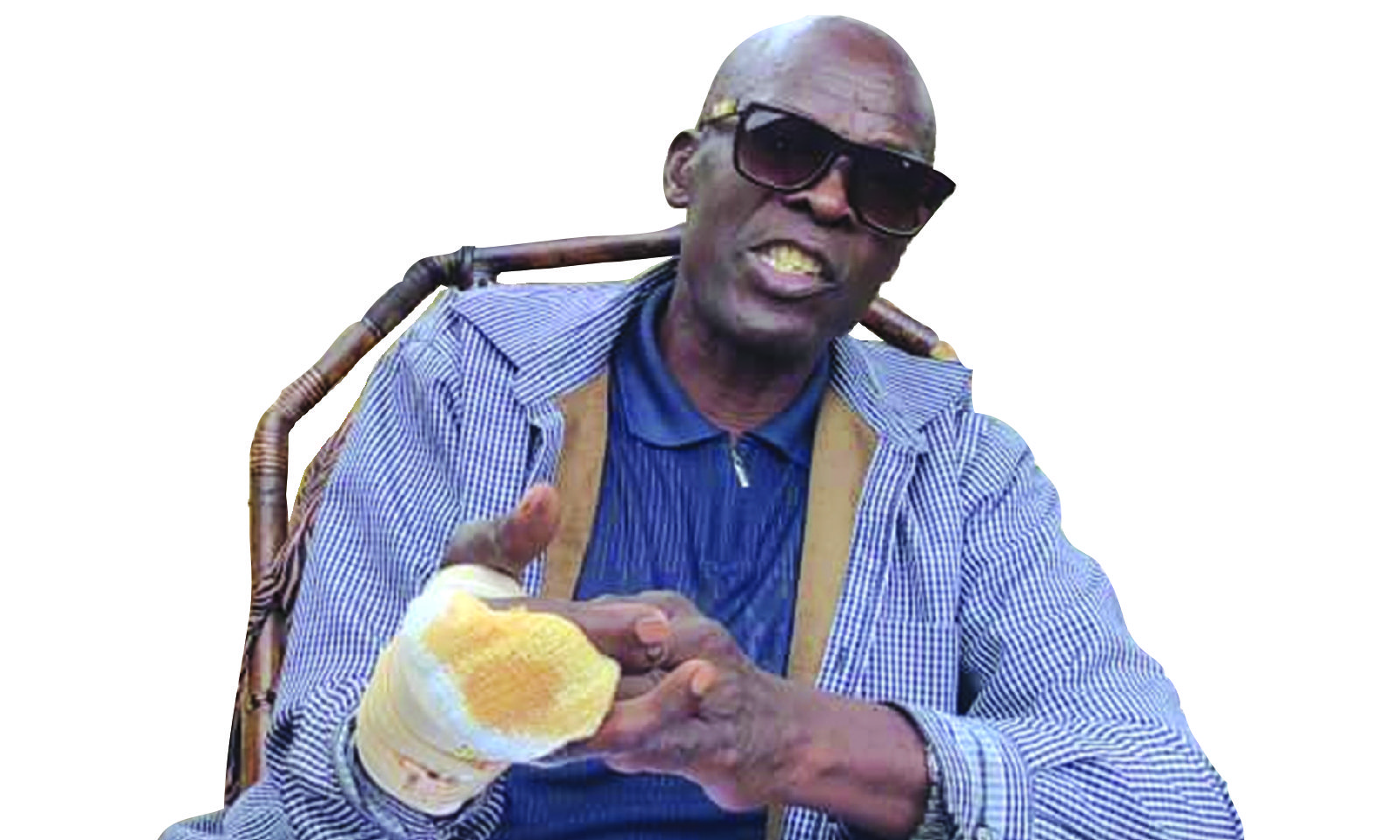
LAST WEEK, CDE BATSIRAI GONDO spoke about the gruelling journey back home after taking part in the iconic Mavonde Battle in 1979, which was crucial to ushering in Zimbabwe’s independence. In his final instalment, he chronicles the last days before independence and how, just after the country was liberated, he was involved in the apprehension of Morrison Nyathi, the infamous traitor, whose betrayal led to the massacre of hundreds of comrades at Nyadzonya.
***************** Q: What happened when you arrived in Hwedza after returning from Mavonde?
A: We stayed in Hwedza, in the Rombwe Mountain, for some weeks. This sacred mountain allowed us to reminisce about the battle and map the way forward. After staying there for that month, we were informed that the war had ended and we had to gather at assembly points.
Q: Which assembly point did you go to?
A: I went to the Dzapasi Assembly Point in Buhera. It was at Dzapasi where the Union Jack was lowered and the new Zimbabwean flag was hoisted to mark the beginning of a new era.
The main message we received there was that since the war was over, it was also a time for reconciliation and rehabilitation.
Rehabilitation was for those who were injured. There were institutions such as Tsanga Lodge where comrades who were wounded during combat received treatment.
There was also a resettlement option for comrades who wanted to go back to their rural areas, and the povo who were displaced.
Furthermore, there was the issue of reconstruction of infrastructure, such as bridges and power stations destroyed during the war. The Smith regime was supposed to fund this, but it didn’t.
At Dzapasi, I was selected for advanced training in anti-aircraft weaponry at a prestigious institution in Romania.
I was chosen because of my experience of having operated anti-aircraft ammunition at Mavonde and also due to the training I had received earlier in Tanzania.
Other comrades chose their areas of strength. Some chose to be employed in various fields and others chose to advance their education.
Whilst waiting to go to Romania, I was deployed to a transit base in Goromonzi.
At that base, I was one of the comrades involved in the task of handling the issue of Morrison Nyathi — that former comrade who sold out in 1976 and caused the deaths of many of our recruits when he led the enemy forces to raid that base.
Q: Tell us how Morrison Nyathi was captured.
A: Morrison Nyathi was first apprehended by comrades who identified him whilst he was walking in Mbare.
They were surprised to see that a man who had caused so much anguish by orchestrating the massacre at Nyadzonya was not only alive but also brazenly walking the streets as if nothing had happened.
The comrades then decided that the nearest point to take this man and deal with him was Goromonzi. This is when they came to Goromonzi. I was at Goromonzi with other comrades when Nyathi arrived.
Upon his arrival, I was utterly astonished.
Some of my fellow comrades did not even know him because they had never seen his face, but I knew his face well.
Q: How was Nyathi brought to the camp in Goromonzi?
A: When the comrades identified him in Mbare, they put him into a Mucheche Bus. Back then, as comrades, we regularly used the Mucheche buses because of the owner’s links with the struggle.
So, when the bus ferried him from Mbare to Goromonzi, it was full of comrades who were all baying for his blood. Upon his arrival at the base, he was met with a contingent of incensed comrades, myself included, all eager to confront the betrayer.
Q: What did you do to him?
A: We probed him. We asked him questions like ‘Nyathi, why did you cause the death of comrades at Nyadzonya? How much did the enemy give you to commit such a heinous act?’ To put it diplomatically, Nyathi akaitwa party (Nyathi was dealt with).
He was beaten badly and received the full punishment for his crimes. The comrades were angry. I need not go into the details; suffice to say that we dealt with Nyathi and he received a deserving punishment for the anguish he caused at Nyadzonya.
Q: When did you eventually leave the Goromonzi camp for Romania?
A: It was sometime in 1981. I then spent several months receiving training in Romania. After my return, I worked at 5 Brigade with the Koreans. I went on to serve in the military for many years before I joined the Zimbabwe Prisons and Correctional Service (ZPCS), where I reconnected with one of my commanders at Mavonde, the late Major-General Paradzai Zimondi. After leaving ZPCS, I ventured int0 farming.
Q: Any last words?
A: I must address the pressing issue of war veterans’ welfare. Despite their invaluable contributions, many of my comrades were tragically neglected in the years following our hard-won independence.
I was fortunate enough to benefit from the Land Reform Programme, but many other ex-combatants did not.
As war veterans, many are handicapped, some are blind; all because of the war.
Thousands of our colleagues died . . . I have permanent injuries from the liberation struggle that I still carry today. Many comrades are not well. They include Cde Tiger Big Fish, the medic I spoke about. We need assistance, materially and healthwise.