Online Reporter
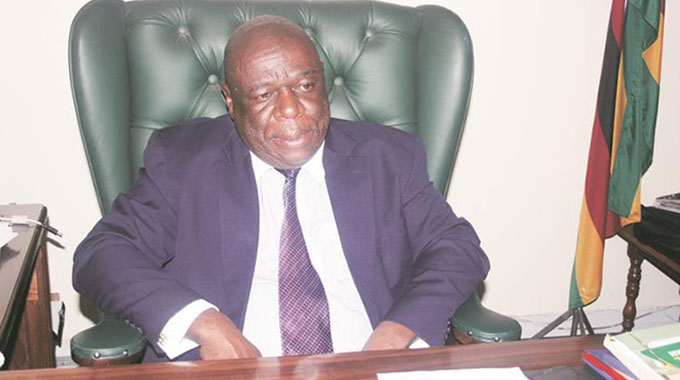
AS global health leaders convene in Geneva for the 78th session of the World Health Assembly (WHA), Zimbabwe is being represented by a delegation led by the Minister of Health and Child Care, DR DOUGLAS MOMBESHORA. In an exclusive interview with The Sunday Mail’s RUMBIDZAYI ZINYUKE in Geneva, the minister outlined how Zimbabwe is aligning with global health priorities, ranging from combating non-communicable diseases and improving healthcare infrastructure to addressing drug shortages and enhancing pandemic preparedness.
*************
Q: Honourable Minister, you are representing Zimbabwe here at the World Health Assembly in Geneva. What are some of the key themes under discussion this year, and how is Zimbabwe aligning itself with the global health agenda being shaped at this forum?
A: There are quite several topics that are under discussion here at the World Health Assembly. As a team, we have divided ourselves into groups so that we can attend to all the topics. First, we have universal health coverage, where we are discussing issues of strengthening our healthcare delivery systems and making sure that there is equitable access to essential health services.
Secondly, there is also an issue of climate change and health, and this will deal with addressing the impact of environmental factors on public health.
We have also seen an interest in mental health challenges and there are strategies to improve mental health care and support. The other important topic that has come up is the issue of non-communicable diseases (NCDs) and we are looking at the prevention and control measures in conditions like diabetes and cardiovascular diseases.
Then a very topical issue that was also discussed last year is on antimicrobial resistance because this is becoming a health concern and we are tackling drug-resistant infections.
We also looked at the elimination of TB (tuberculosis) and countries are making efforts to make sure that the target of eliminating TB by 2030 is met.
One of the most important issues that also came up is the World Health Organisation Pandemic Agreement, a proposal to strengthen global preparedness for future pandemics. And this, we think, strides have been made in terms of coming up with this agreement. We are now talking about the implementation of this agreement, which may take a bit of time, but we are happy that the agreement was finally negotiated.
Zimbabwe is actively engaging in this discussion, aligning its priorities with the global agenda.The country is focusing on healthcare financing, infrastructure development and equitable access to medicines.
Additionally, Zimbabwe is advocating for digital health innovations, such as telemedicine, to improve healthcare accessibility, particularly in remote areas.
Q: One of WHA’s focal points is building resilient health systems post-pandemic. What lessons has Zimbabwe drawn from the Covid-19 experience, and how are these lessons informing reforms in our public health system?
A: The pandemic exposed gaps in hospital capacity, medical supply chains and emergency preparedness. Zimbabwe is now prioritising upgrading healthcare facilities, ensuring adequate stockpiles of essential medicines and improving oxygen supply systems.
The crisis highlighted the need for devolved health governance, allowing local authorities to respond more effectively to outbreaks.
Lockdowns also disrupted routine healthcare services, prompting Zimbabwe to explore telemedicine and digital health solutions to maintain patient care remotely. This shift is now being integrated into broader health reforms. With regard to workforce training and retention, the pandemic exacerbated Zimbabwe’s brain drain of healthcare professionals. Efforts are underway to improve working conditions, salaries and training programmes to retain skilled personnel.
During Covid-19, community outreach programmes played a vital role in maintaining essential services. Zimbabwe is expanding health posts and community health initiatives to ensure continued access to care, especially in rural areas. The Government is developing epidemic response plans, enhancing resource allocation and fostering public-private partnerships (PPPs) to strengthen resilience against future health crises.
Q: Can you give us an update on progress made in the rehabilitation and expansion of healthcare infrastructure, particularly in rural and underserved areas?
A: The Government has launched a programme to expand rural health centres, with new clinics commissioned in Manicaland and Midlands. Ground-breaking has also taken place for additional hospitals in Masvingo, Harare and Bulawayo.
In total, 94 pharmacy stores have been constructed nationwide to improve the distribution of medicines and essential health commodities.
We are also moving towards solar-powered health facilities. Many rural clinics have been solarised to ensure reliable electricity, with support from the UNDP (United Nations Development Programme). Currently, the Government is replacing gel batteries with lithium batteries.The Government has also rolled out borehole drilling projects, which are enhancing water access for rural clinics, aligning with Zimbabwe’s broader WASH (Water, Sanitation and Hygiene) programme.
Q: Human resources for health remain a major challenge. It was one of the topics discussed this week (last week). What strategies is the ministry implementing to improve staff motivation, training and retention, especially considering the ongoing brain drain?
A: Zimbabwe has launched the Health Workforce Strategy (2023-2030) to address critical gaps in human resources for health and ensure a sustainable healthcare system.
This strategy is complemented by the Health Workforce Compact (2024-2026), which aims to accelerate investments in workforce development. Key initiatives include efforts by the Government to also improve salaries and benefits for healthcare workers to enhance retention.
We have also expanded medical training programmes and partnerships with universities to boost the number of skilled professionals, while improving the strategic placement of healthcare workers in underserved areas to improve service delivery.
Zimbabwe has committed US$1,63 billion between 2024 and 2026 to implement these reforms, with an additional US$475 million needed to meet broader objectives.
Q: Shortages of essential drugs and medical equipment are a concern for many Zimbabweans. What steps are being taken to ensure consistent supply chains and equitable access to medicines across the country?
A: This is a very topical issue here in Zimbabwe, and also in the whole SADC (Southern African Development Community) region. This is why, as SADC, we had a meeting here in Geneva to look at the supply of essential medicines in our different countries.
And this is why we are coming up with a SADC pool procurement service, where we want to have the advantage of procuring for all SADC countries.
This will be done in Tanzania and then individual countries can access medicines at very low prices compared to when we buy individually. As Zimbabwe, we first want to emphasise the mobilisation of resources so that we can procure our required medicines in time.
We are also looking at direct procurement, where we can take advantage of the prices because when we go through agencies, we may get markups and then there are more delays in supplying these medicines.
These are immediate measures that we are trying to put in place to say let’s procure directly from suppliers and let’s have resources released every month. If we have enough pooled resources, then we can procure every six months because the procurement process may take time. We are also looking at capacitating our local pharmaceutical manufacturers. We are working together with the Ministry of Finance as well as the Ministry of Industry and Commerce to see if our local manufacturers can, one, increase their output; and two, increase the lines that they produce.
Then we are also looking at logistics, from NatPharm now to the clinics, where we want to improve the system and limit pilferage.
We have discovered that there are some irregularities in the transportation of medication from NatPharm to the clinics, and also from the clinics and hospitals to the patients. We also want to strengthen that system and make sure that it is secure.
Once that is done, then we will go on to the long-term issues now, where we want to increase our stocks to a level where we can say, if we have shortages of resources, we can go for at least six months without any worry, whilst we are mobilising resources.
But these are long-term issues because our stocks are very low now to the extent that anything that comes in is going directly to the end user, and we have no reserves.
That is a bit of a challenge, and the stocks that are flowing in are not adequate, and we have no coverage for any eventuality.
Q: Healthcare financing has long been a sticking point, particularly now in the face of dwindling donor funding. How does the Government plan to address funding gaps and improve budget efficiency?
A: Zimbabwe is facing significant challenges in healthcare financing, particularly with the decline in donor funding.
To address these gaps and improve budget efficiency, the Government is implementing several strategies.
These include increased domestic health financing, where the Government is prioritising higher budget allocations for health, though concerns remain about whether these funds will meet the Abuja Declaration-recommended 15 percent of national budgets.
Efforts are also underway to finalise the National Health Insurance Scheme, which aims to provide universal health coverage (UHC) and reduce reliance on out-of-pocket payments.
Zimbabwe is expanding PPPs to attract private sector investment in healthcare infrastructure and service delivery, and we are also working to streamline procurement processes and reduce administrative costs, ensuring that funds are directed towards essential services.
The Government is also exploring sin taxes on sugary and fast foods, as well as health levies, to generate additional funding for the sector.
Q: What role do international development partners and the private sector play in supporting Zimbabwe’s health agenda, and how is the ministry ensuring that these partnerships yield sustainable outcomes?
A: International development partners and the private sector play a critical role in supporting Zimbabwe’s health agenda through funding, infrastructure development and capacity building. We have international development partners like the Global Fund; the US government (PEPFER and CDC); the Health Resilience Fund (HRF), which was launched with support from UNICEF (United Nations Children’s Fund), WHO (World Health Organization) and Gavi. This assistance focuses on maternal and child health, global health security and health systems strengthening.
Zimbabwe has also secured a landmark healthcare partnership with Belarus, which includes reconstructing the Parirenyatwa Group of Hospitals and enhancing medical training.We have organisations like UNDP (United Nations Development Programme) and the EU (European Union) providing expertise in health policy formulation, disease prevention and emergency response.
Zimbabwe is expanding PPPs to attract investment in hospital infrastructure, pharmaceutical production and medical supply chains.We have seen the private sector collaborating with the Government in the development of alternative revenue streams, such as health insurance schemes and other medical financing initiatives.
Q: The rise in non-communicable diseases is a growing concern globally. What steps is Zimbabwe taking to improve NCD prevention, early detection, and treatment at the primary healthcare level?
A: Zimbabwe is taking proactive measures to combat the growing burden of non-communicable diseases through prevention, early detection and treatment at the primary healthcare level. The key initiatives include the implementation of the PEN-Plus Strategy. We are rolling out the WHO-AFRO PEN-Plus strategy, which focuses on early intervention for severe NCDs such as diabetes, sickle cell disease and cardiovascular conditions.
The Government is also expanding mobile health units and community outreach programmes to improve the early detection of NCDs, particularly in rural areas.
As we speak, NCD management is being integrated into routine primary healthcare services, ensuring that patients receive continuous care alongside other essential health services.
We are also training healthcare professionals in early diagnosis and management of NCDs, with a focus on district hospitals, while nationwide health education initiatives are helping to promote lifestyle changes, including dietary improvements, physical activity and tobacco control.
Q: Looking ahead, what are the ministry’s top priorities for the future?
A: Zimbabwe’s Ministry of Health has outlined several strategic priorities to strengthen the country’s healthcare system in the coming years. We are looking at expanding access to affordable and quality healthcare for all citizens, upgrading hospitals, clinics and medical supply chains, particularly in rural areas.
We are also focused on addressing staff shortages and brain drain through better training, retention strategies and competitive incentives. The expansion of telemedicine and electronic health records to improve efficiency and accessibility is also a priority for the Government, while we implement alternative funding models for health.
We also prioritise enhancing emergency response systems to mitigate future health crises.



 Online Reporter