Online Reporter
This week, CDE CHARLES MAKHUYA, whose Chimurenga name was Njabulo Moyo, chronicles how Cuban soldiers came to their rescue following an air strike on Boma Camp in Angola by Rhodesian Selous Scouts, who were aided by apartheid South Africa. He tells our Society Editor PRINCE MUSHAWEVATO how the timely intervention saved hundreds more from perishing.
*********************
Q: In our previous discussion, you had retreated to higher ground after a single-run air strike on your camp by Rhodesian Security Forces and what you presumed to be a follow-up attack by a South African ground force. What happened next?
A: The majority, if not all of us, were not armed. We had to take cover and watch the situation from a distance.
We were all terrified. A good number of recruits there had not witnessed death and blood on such a huge scale.
So, as we saw heavy dust clouds, which indicated that some military vehicles were coming towards our camp, we panicked. We became fully convinced that the Boers had come up with a well-crafted plan to make sure nobody survived the Boma air attack.
Q: You can carry on.
A: The presence of helicopters made the situation worse. It confused us more, causing us to flee and abandon the positions we had taken for cover.
The helicopters were covering the right and left wings of the camp, while tanks on the ground were covering the terrain and drawing close to our camp and hiding positions.
We all thought this was the end of the road for us. But in all this melee, we could hear some voices shouting, “Comrades from Zimbabwe, comrades from Zimbabwe, stop!” They even spoke in Cuban.
Instead of easing our anxieties, this terrified us even more; we assumed it was the South Africans trying to deceive us. We found new hiding, from where we saw the aircraft dropping off fighters.
After some time and careful examination, that is when we realised it was the Cubans who had come to secure the camp with armoured tanks and helicopters. Everyone was relieved.
We all sighed as we exited our hiding spots. Trouble was not over yet, though.
We immediately went back to the camp to help those who had been injured.
We took some of the survivors to the nearest town for medical assistance.
But, to be honest, I cannot believe what happened in that town even up to today.
Q: Can you tell us what was going on?
A: The whole town of Luso (now called Luena) came to a halt after witnessing a convoy of casualties arriving at the hospital.
The people, Angolans, lined the streets crying. They felt pity for us and condemned the Boers and Rhodesians.
The public literally begged and instructed Agostinho Neto (Angola’s president then) to bomb the South Africans.
The sombre episode lasted for about three days. They could not believe the number of people they had seen dead or injured all at once.
As we transported the injured comrades to hospital, we were also checking who was missing after the attack.
Trainees were being called by their companies: artillery, anti-tanks, mortars and engineers.
Q: After taking the injured comrades to hospital(s), what was the plan, considering your camp had been destroyed?
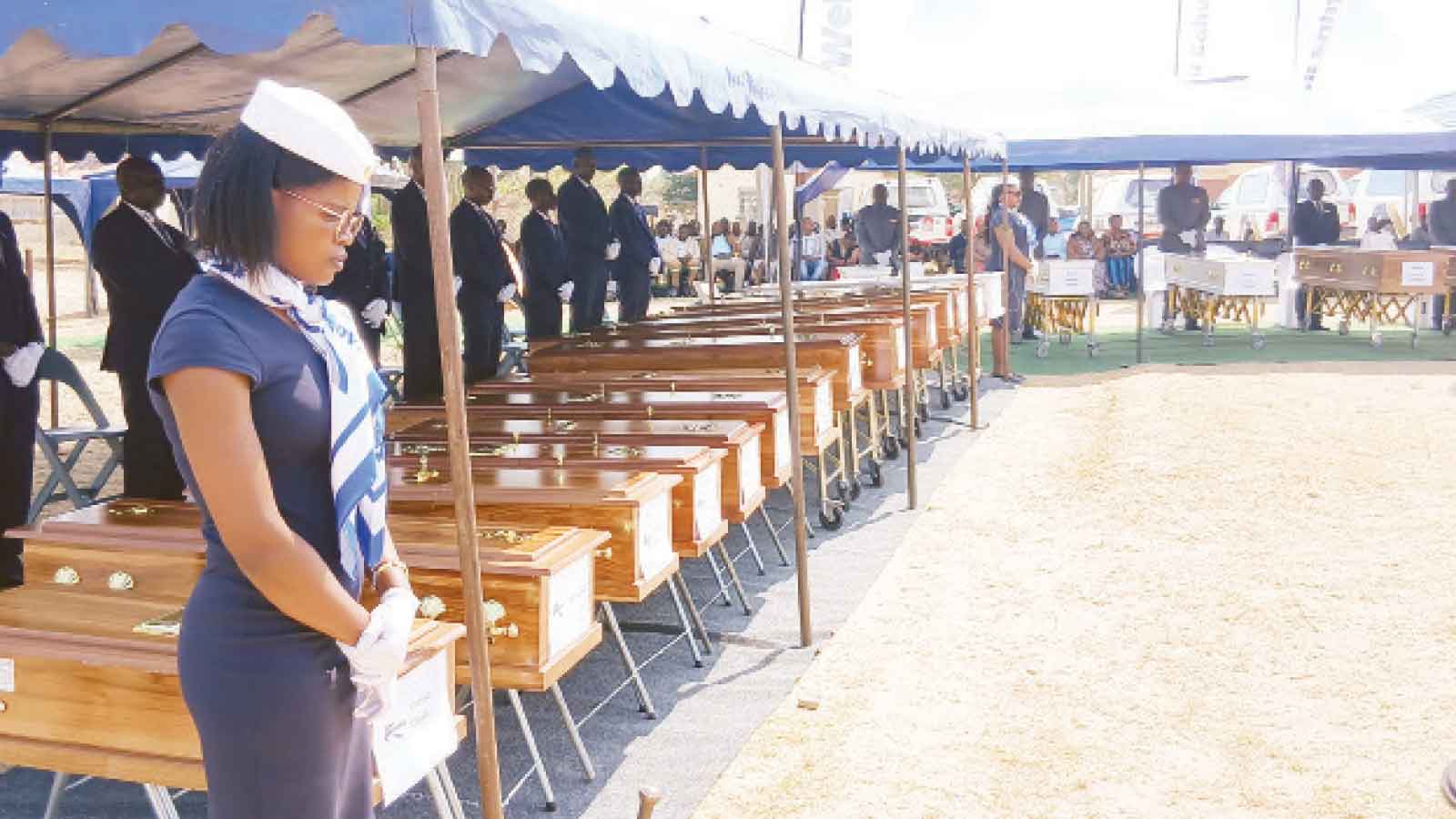
A: The Cubans and Russians took over and directed the burials in mass graves while providing medical assistance for the injured.
After that, we were moved to different bases in our companies. That is how we left the Boma Camp.
The new group that had come as recruits trained as one company in different bases.
They joined the third group that had suffered some casualties.
After training, they went back to Zambia when everything had settled down.
We had to abandon the whole camp when we went to Karipande to receive a group that was coming from Hurungwe.
We had to switch to Malanje, another province found when going towards Luanda.
That is where we opened the last Zimbabwe People’s Revolutionary Army (ZIPRA) base in Angola.
There were no incidents there.
It was just normal operations — training recruits and sending them back home to fight.
Until recently, no one has talked about these bombings, and that was disturbing.
Previously, it was Jabu Dabengwa who made an effort to visit and talk about it, yet other camps are frequently visited and talked about.
For your own information, I was recently phoned by a lady who said she was a Cuban ambassador here in Zimbabwe.
She told me she was coming down here (Matabeleland) looking for anyone trained by Cubans.
She informed me that she heard all the guys trained by the Cubans were all dead.
I asked her who had referred her to me and she said Colonel Dube (Retired).
But remember, when we talk of locals trained by Cubans, we are not only referring to those trained by Cubans in Angola; some were actually trained by Cubans in Cuba.
The first group trained by the Cubans, as can be corroborated by Brigadier-General Ambrose Mutinhiri (Retired), who was one of our commanders during the war, was led by the late Cde Robson Manyika.
Next week, Cde Charles Makhuya will conclude his account by giving us an overview of the military training in Angola. He will detail how they advanced their fighting techniques, before discussing his life after independence.