Online Reporter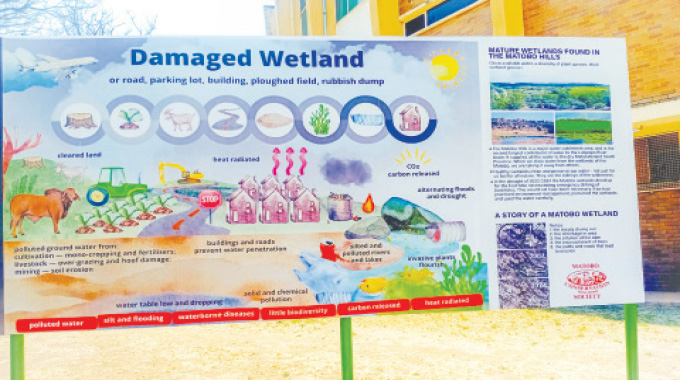
Maita S Zizhou
THE soothing sound of birdsong greets visitors as they step into the grounds of the Natural History Museum of Bulawayo, offering a calm escape from the honking cars and fast-paced chaos of the city centre. But there is more brewing here than just peace and quiet. A ground-breaking project is taking shape, set to transform the museum into a hub of biodiversity and a beacon of environmental conservation.
The museum has embarked on an ambitious wetland restoration project, a first of its kind in the city, using harvested rainwater to create a thriving man-made ecosystem. This green sanctuary will not only showcase the natural beauty of wetlands but also highlight their vital role in protecting the environment.
A wetland is no ordinary ecosystem. It is where land and water meet, creating a fertile space for a stunning variety of plants and animals. Think frogs croaking in harmony, snakes slithering through reeds, and rare birds nesting among lush greenery. Yet, these magical spaces are under siege from pollution, deforestation and climate change.
“Wetlands are like nature’s kidneys,” explained project co-ordinator Mthokozisi Moyo. “They clean water, prevent floods and support countless species. When they are destroyed, we see the ripple effects — polluted groundwater, dying rivers and rising temperatures.”
Moyo warned that when wetlands vanish, so does our quality of life. “Bulawayo relies heavily on clean water sources fed by wetlands. If we lose them, the impact is felt in our taps, our health and our economy.”
This message hit home during the devastating 2022-2024 drought, when the Matobo Hills wetland, a crucial water catchment area, dried up for the first time in recorded history. The area supplies water to Matabeleland South and contributes to the Limpopo River Basin, making its decline a crisis for thousands of people.
Experts traced the disaster to a combination of factors: shrinking water tables, poor rainfall, rampant siltation and encroachment from roads and human settlement. The loss was a stark reminder of how fragile these ecosystems are and how urgently they need protection.
Determined to reverse the damage, the museum teamed up with passionate conservation groups and private partners including WasteMoney Pvt Ltd, Birdlife Zimbabwe, Green Hut Trust, Bubye Valley Conservancy, WEZ Matabeleland Branch and the Matobo Conservancy Society.
The goal is to build a thriving wetland right in the heart of Bulawayo, serving as both a conservation site and a living classroom. Community members, schoolchildren and researchers will be able to explore the space, learning first-hand why wetlands matter.
The project has already started drawing attention and volunteers, with people excited to play a role in healing nature. If successful, it could inspire similar initiatives across Zimbabwe, turning neglected urban spaces into green lifelines.
“This is about more than just a wetland,” Moyo said with pride. “It’s about protecting our future. When we save nature, we save ourselves.”



 derick.khumalo