

 admin
admin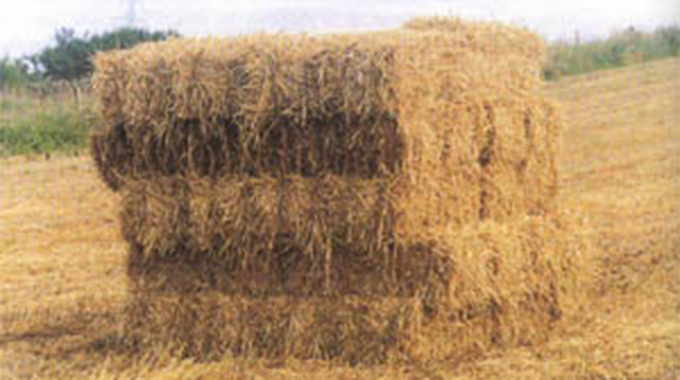
Sharon Shayanewako
WITH calls to utilise locally available resources to reduce production costs growing louder by the day, experts have urged farmers to capitalise on this season’s record high wheat hectarage and bale the residue for later use as feeds.
The move will feed into the current national push to re-build the national herd, which requires farmers to provide supplementary feeding options for cattle during the dry season. Converting the wheat straws into stock feed is also a form of value addition.
Agricultural and Rural Development Advisory Services principal agriculture extension specialist Mrs Chipo Zishiri said this year’s bumper wheat hectarage would also yield bumper straws, which was a bonus to livestock farmers.
“Wheat straw is very good and nutritious when used as supplementary feed for beef in pen-fattening and dairy animals. It is essential for hay making and it can be stored for a long period of time before deterioration,” said Mrs Zishiri.
Zimbabwe Commercial Farmers Union president Dr Shadreck Makombe concurred saying farmers can receive additional income from selling baled wheat straws to livestock producers to improve their animals’ body condition to earn high prices.
“As wheat harvesting commences, we encourage farmers to preserve wheat residues for future use. In that way, we will be promoting the use of locally available resources,” said Dr Makombe.
Matopo District field officer for Enhanced Resilience for Vulnerable Households in Zimbabwe, Mr Tatenda Mudavanhu observed that Matabeleland provinces are in Natural Region 5 where crop production is not viable due to erratic rains with farmers expected to provide supplementary feeding for their livestock to survive during the dry season.
“The months of September, October and November are the most difficult and need mandatory feed supplementation to livestock. We also encourage the use of bush meals as livestock feed. These are resources we get from the bush to formulate feeds, for example, the acacia pods,” said Mr Mudavanhu.
Preventing livestock deaths using locally available resources is a sustainable way of livestock production and has the potential to increase the national herd.
Apart from poverty deaths, Zimbabwe has lost thousands of cattle to tick borne disease.
Zimbabwe Commercial Farmers Union president Dr Shadreck Makombe acknowledged the need to bale crop residues for use as livestock feed in future.
“As wheat harvesting commences, we encourage farmers to preserve wheat residues for future use. That way, we will be promoting the use of locally available resources,” he said.



 Online Reporter