Online Reporter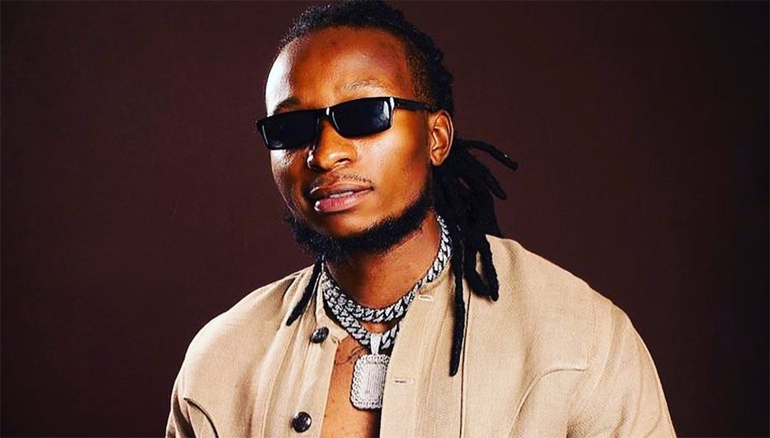
Lloyd Makonya
Correspondent
BRAVEMAN Chizvino Mwanza, popularly known as Baba Harare, has once again captured the nation’s attention.
His recently released 12th studio album, Pedzai Navo, which marks his official return to the jiti genre, has quickly become one of Zimbabwe’s most talked-about musical projects. Yet, it is not only the music that has dominated public discourse.
The now-viral “Tsa Tsa Tsa” dance challenge has ignited a passionate national debate that extends far beyond entertainment. At the heart of the discussion lies a difficult question: where do we draw the line between preserving culture and promoting content that may have unintended social consequences?
Baba Harare has firmly defended his artistic direction. In a widely circulated social media statement, he argued that jiti is an authentic Zimbabwean cultural expression inherited from previous generations. He maintains that traditional dances have always celebrated life, community, womanhood and manhood and that colonialism conditioned many Africans to view their own cultural expressions with discomfort.
From his perspective, he is not introducing something foreign or immoral, but modernising a distinctly Zimbabwean musical tradition for a new generation.
His argument deserves serious consideration. Culture is not static. It evolves with time.
Every generation reinterprets its traditions through contemporary music, fashion, language and technology.
Many cultural practices that were once performed in villages are today finding expression on digital platforms, reaching audiences that previous generations could never have imagined.
Indeed, Zimbabwe should celebrate artistes who preserve indigenous genres at a time when many young musicians gravitate towards foreign sounds.
Jiti, sungura, chimurenga and mbira music are part of our national identity and deserve protection and promotion. However, preserving culture and commercialising culture are not necessarily the same thing.
The controversy surrounding “Tsa Tsa Tsa” is not simply about jiti itself. It is largely about how the music is being interpreted and consumed in the age of social media. Viral dance challenges have become powerful marketing tools. The more sensational the choreography, the more views, likes and shares a song receives. Unfortunately, algorithms reward attention rather than cultural authenticity.
Across Facebook, TikTok, Instagram and WhatsApp, dance challenges associated with the song have featured sexually suggestive movements, with some female influencers such as Feli Nandi and Natasha Nyemba performing choreography that many critics believe goes well beyond cultural celebration. The participation of respected artistes and influencers has only amplified the discussion because public figures often shape what younger audiences perceive as acceptable.
Whether intentionally or not, influencers have become educators of social behaviour.
Young people copy what they admire. Children imitate what they repeatedly see. This is not unique to Zimbabwe; it is how popular culture has always functioned. When celebrities normalise particular forms of dress, language or behaviour, those patterns often filter into schools, homes and communities.
This reality places public figures in a unique position.
Freedom of expression remains a cornerstone of any democratic society.
Artistes should enjoy the liberty to create, innovate and challenge convention without unnecessary censorship. History is full of examples where artistic expression has provoked important conversations and reflected changing societies.
Yet freedom has always existed alongside responsibility. The Constitution protects freedom of expression, but every constitutional right exists within a broader framework that also recognises the rights and welfare of others, including children. Society routinely accepts reasonable restrictions where public safety, public order or the protection of minors is concerned.
The debate surrounding “Tsa Tsa Tsa” therefore is not necessarily about silencing artistes. Rather, it is about asking whether artistic freedom should also consider the influence content has on impressionable audiences.
There is another important distinction that perhaps deserves greater attention. Traditional dances such as jerusarema, mbakumba, muchongoyo, mhande and dinhe were performed within specific cultural contexts.
They carried social, ceremonial and spiritual significance understood by participating communities. While some movements celebrated fertility, adulthood or courtship, they existed within cultural frameworks governed by communal values and expectations.
Social media strips away much of that context. A 15-second TikTok clip viewed by millions around the world does not communicate cultural philosophy; it communicates visual entertainment. What may have held symbolic meaning within traditional ceremonies can easily become sexualised when detached from its original setting and repackaged for viral consumption.
That distinction matters. This debate should therefore, not become a battle between culture and morality, nor should it descend into calls for blanket censorship.
Instead, Zimbabwe should use this moment to have a mature national conversation involving artists, cultural practitioners, educators, parents, churches, traditional leaders and policymakers. The objective should not be to police creativity but to promote responsible creativity.
Parents equally have an important role. No amount of regulation can replace active parenting in an age where children access content from around the world through smartphones.
Families must continue teaching values, guiding media consumption and discussing the messages children encounter online.
Likewise, artistes like Baba Harare have an opportunity to demonstrate leadership. Influence is a powerful gift. Those with millions of followers can shape conversations, preserve heritage and inspire positive social values while still producing commercially successful music. Creativity and responsibility need not be mutually exclusive.
Baba Harare deserves credit for championing jiti at a time when indigenous music competes against overwhelming global influences.
His passion for Zimbabwean culture is evident and commendable. At the same time, those raising concerns about the increasingly provocative nature of some dance challenges should not automatically be dismissed as enemies of culture. Many are expressing genuine concern about the values being modelled before children and young people.
Perhaps both sides are asking the same underlying question from different perspectives: How do we preserve the Zimbabwean culture without compromising the moral and social fabric that culture was originally meant to strengthen?
The answer is unlikely to be found in censorship or outrage. It will be found in balance.
As Zimbabwe celebrates its rich cultural heritage, it must also recognise that cultural preservation carries responsibility. Public figures have every right to entertain, provoke discussion and celebrate tradition. Equally, society has every right to question the messages that accompany that influence.
Culture should unite generations, not divide them. And as our traditions evolve in the digital age, the challenge before artistes and audiences alike is to ensure that what we preserve is not only our rhythm and dance, but also the values that have long defined us as a people.